IntermediatePeacefulReef Safe
Sweetlips
Plectorhinchus chaetodonoides
Family: Haemulidae · Grunts & Sweetlips
Also known as: Harlequin Sweetlips, Clown Sweetlips, Spotted Sweetlips
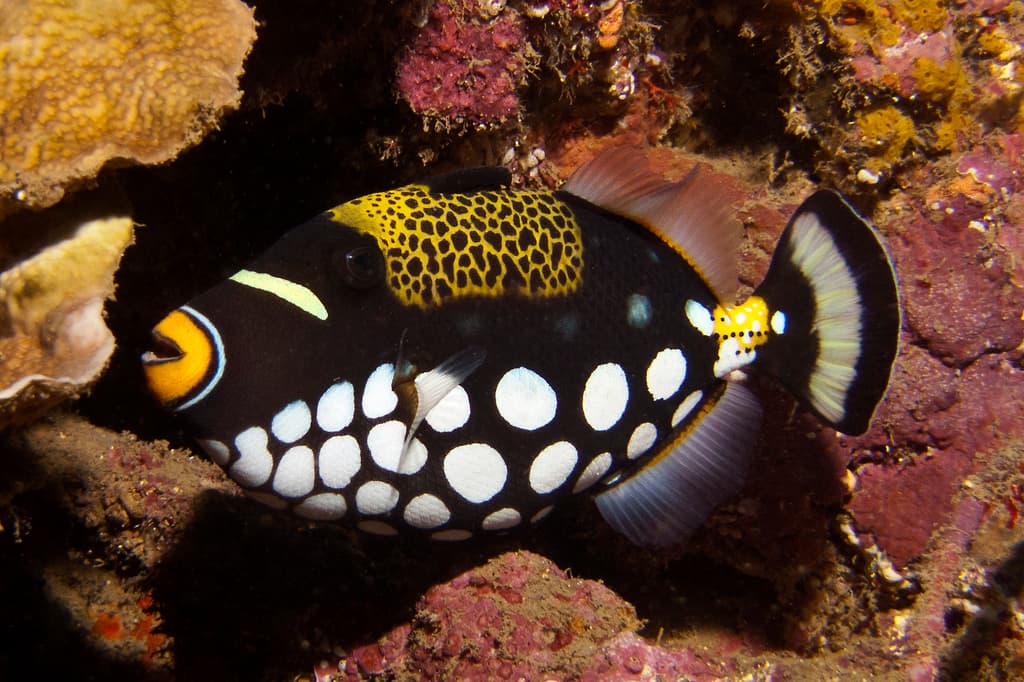
(c) Francois Libert, some rights reserved (CC BY-NC)
Max Size
28"
Min Tank
300 gal
Lifespan
10-20 years
Origin
Indo-Pacific, Western Pacific
Diet
Carnivore
Swims
Middle
About
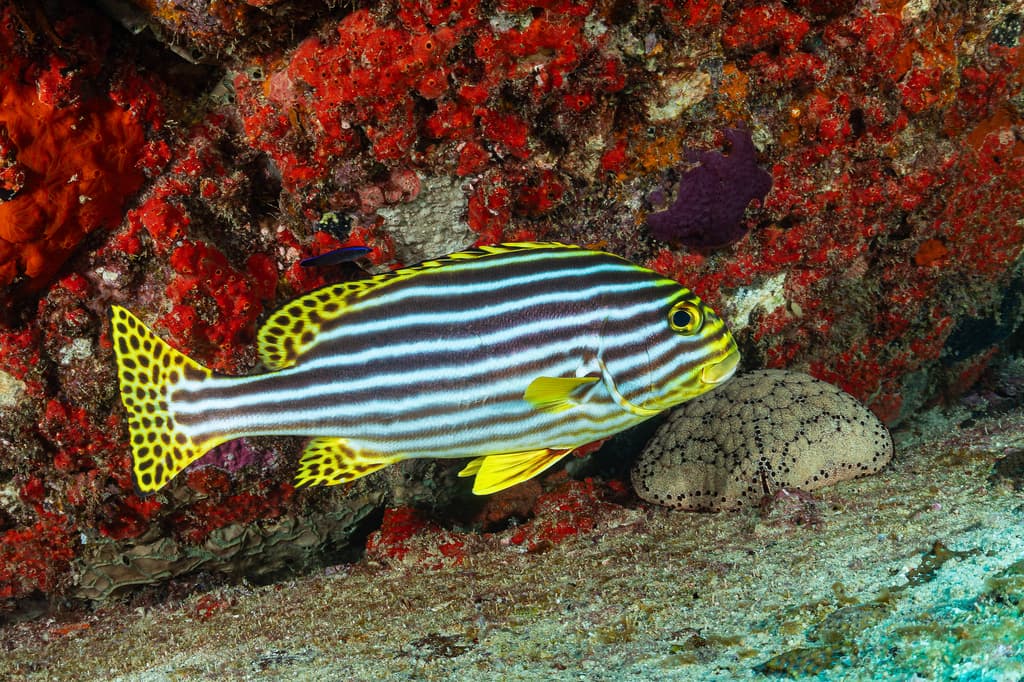
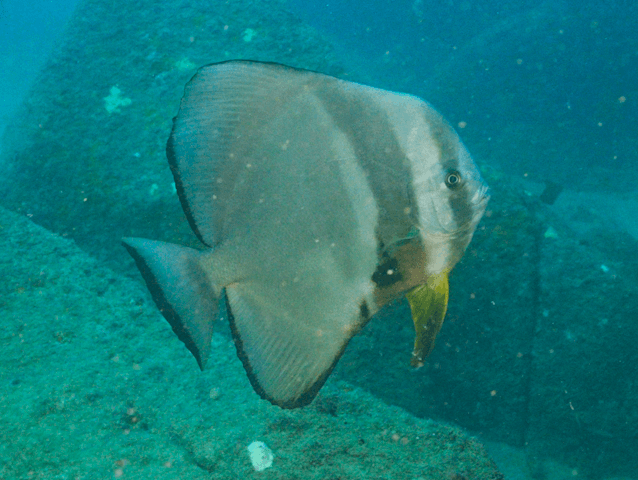
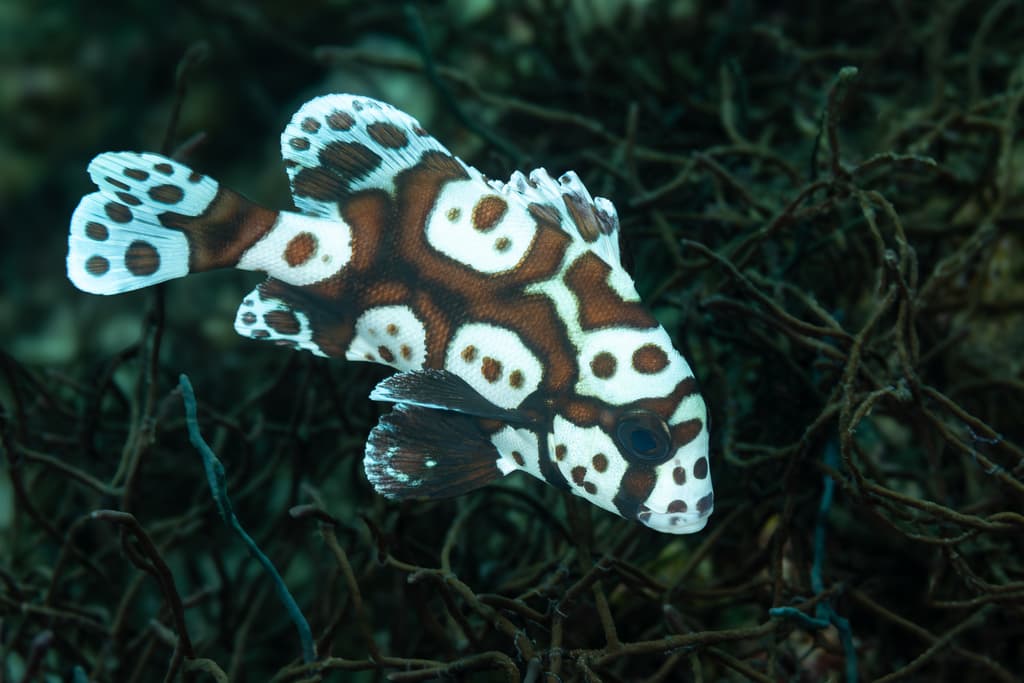
The Harlequin Sweetlips is one of the most visually striking and dramatically transforming fish found on Indo-Pacific coral reefs. Juveniles are a rich chocolate brown covered with large, irregular white spots and swim with an exaggerated, almost comical waggling motion that is thought to mimic the movement of toxic flatworms. As the fish matures, this pattern gradually shifts into the adult livery of a cream to grey body densely covered with dark brown to black spots, creating a polka-dotted appearance that gives this species its enduring appeal.
In the wild, Plectorhinchus chaetodonoides inhabits coral reefs and lagoons throughout the Western Pacific, from Indonesia and the Philippines to the Great Barrier Reef. Juveniles shelter among branching corals and crevices, while adults form small groups around reef overhangs and caves during the day, venturing out at night to feed on crustaceans, worms, and small benthic invertebrates. Adults can reach an impressive 28 inches, making them a substantial presence on the reef.
In the aquarium, the Harlequin Sweetlips presents a significant but rewarding challenge. Newly imported specimens are notoriously difficult to wean onto prepared foods, and many refuse to eat in captivity. Success requires patience, live foods during acclimation, and a very large, well-established aquarium with excellent water quality. Those that do acclimate become hardy, long-lived fish with captivating personalities, but their eventual large size demands a minimum of 300 gallons.
Feeding & Diet
Carnivore
Harlequin Sweetlips are carnivores that feed on crustaceans, worms, and small invertebrates in the wild. In captivity, start with live foods such as live brine shrimp, ghost shrimp, or blackworms to entice feeding, then gradually wean onto frozen mysis shrimp, chopped silversides, krill, and quality marine pellets. Feed juveniles two to three times daily and adults once or twice daily.
Compatibility
peacefulgentle-giantFOWLRlarge-tanknocturnal-feeder
The Harlequin Sweetlips is a peaceful species despite its large adult size. It does well with other large, non-aggressive tankmates such as tangs, large angelfish, and wrasses. Avoid pairing with highly aggressive species that may bully it or outcompete it for food. It will eat ornamental shrimp and worms but generally leaves corals alone.
Check CompatibilityBreeding
Not bred in captivity
Harlequin Sweetlips have not been successfully bred in home aquariums. They are pelagic spawners that release eggs into the water column in the wild. The dramatic transformation from the spotted juvenile to the polka-dotted adult occurs gradually over several years. Juveniles are commonly collected for the aquarium trade due to their striking appearance.
Special Requirements
- Extremely difficult to wean onto prepared foods — live food often required initially
- Very large tank of 300+ gallons needed for adult size
- Pristine water quality essential — sensitive to ammonia and nitrite
- Provide plenty of caves and overhangs for daytime shelter
- Undergoes dramatic juvenile-to-adult color transformation
Water Parameters
Temperature72–80°F
Specific Gravity1.02–1.026 sg
pH8.1–8.4
Alkalinity8–12 dKH
Coloration
brown (juvenile)white spots (juvenile)grey (adult)black spots (adult)cream
Tags
peacefulgentle-giantFOWLRlarge-tanknocturnal-feeder