IntermediateSemi-AggressiveReef Safe with CautionIUCN: Least Concern
Miniatus Grouper
Cephalopholis miniata
Family: Serranidae · Groupers & Basslets
Also known as: Coral Hind, Coral Grouper, Coral Trout, Vermilion Hind
(c) Ian Shaw, all rights reserved
Max Size
18"
Min Tank
125 gal
Lifespan
15-20 years
Origin
Indo-Pacific, Red Sea
Diet
Carnivore
Swims
Middle
Did You Know?
- Miniatus Groupers can change sex from female to male as they age and grow larger
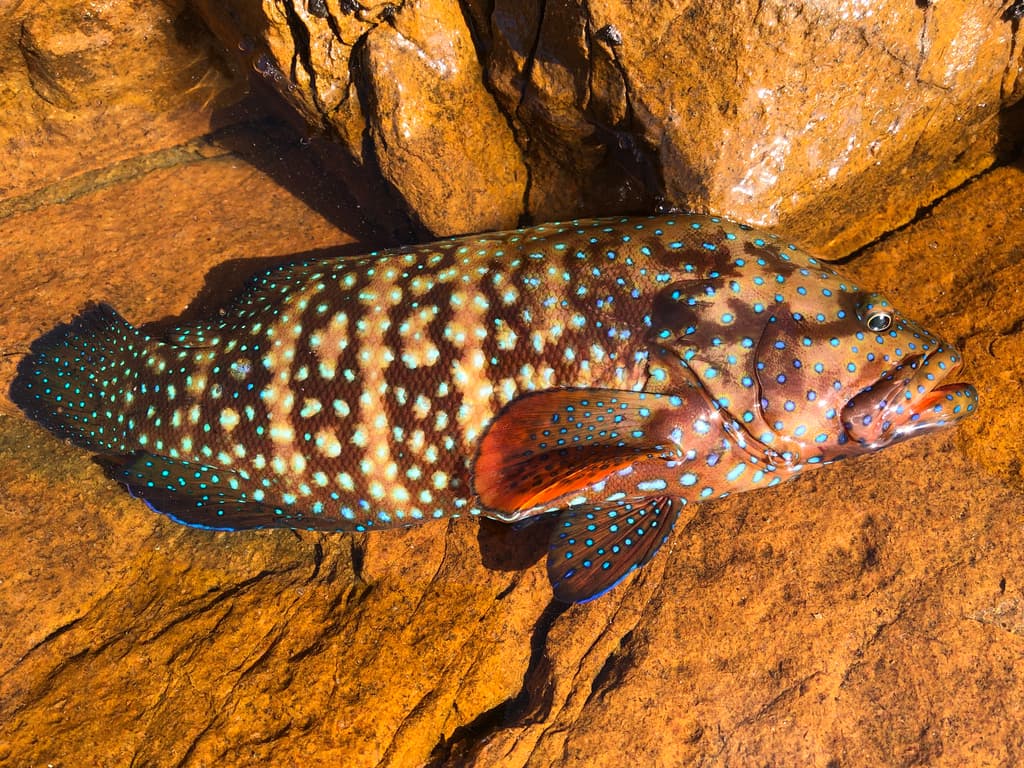
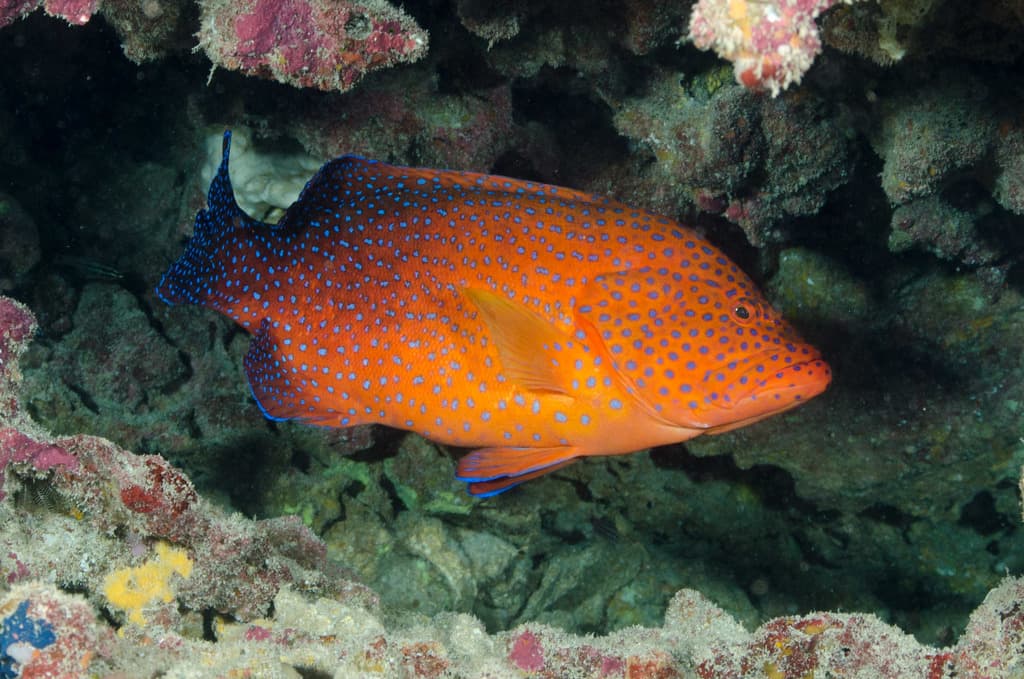
- Their blue spots are thought to help break up their body outline among coral, providing camouflage despite their bright coloration
- They can strike at prey with incredible speed, using suction feeding to engulf fish in a fraction of a second
About
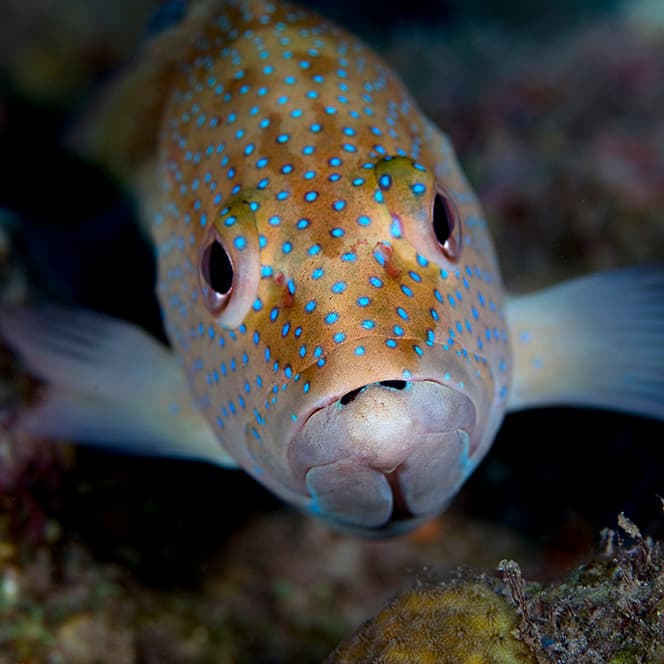
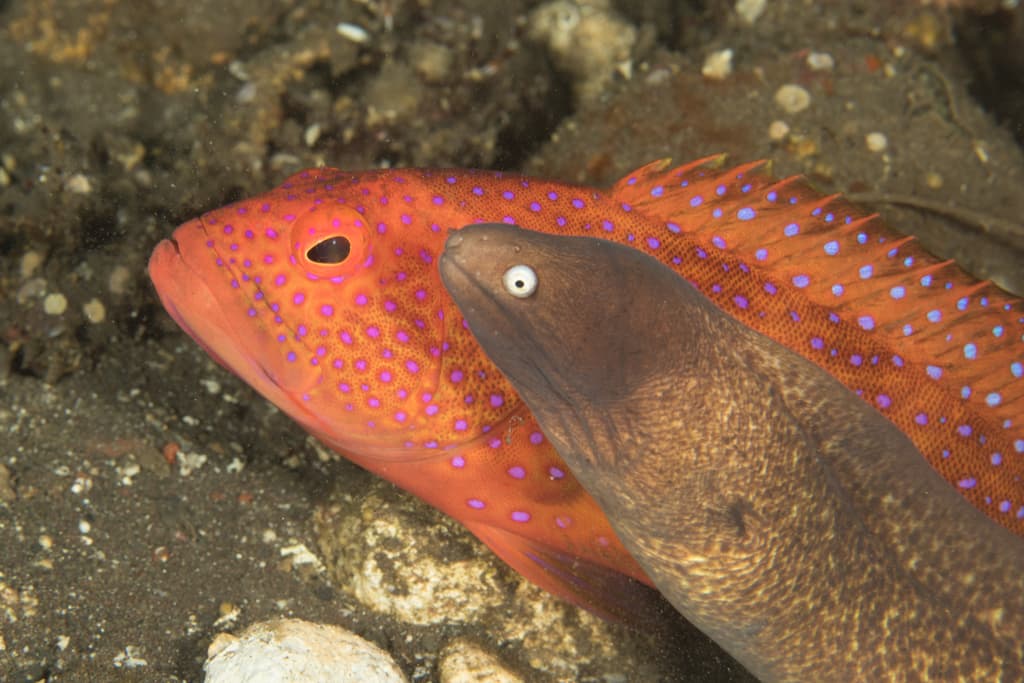
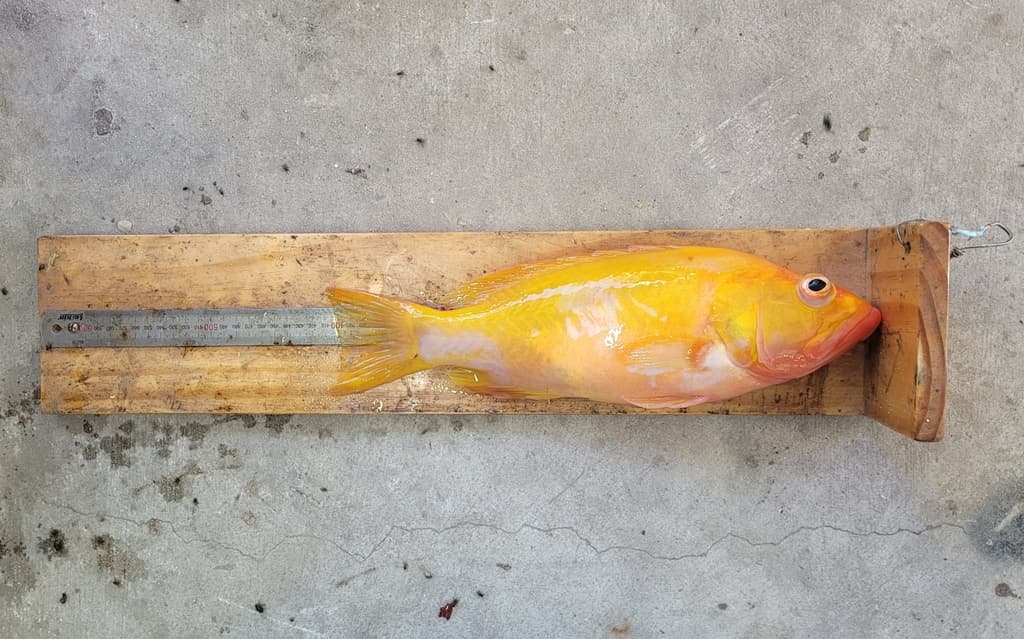
The Miniatus Grouper is one of the most visually striking members of the grouper family, featuring a brilliant red-orange body covered in bright blue spots. This predatory fish is a staple of large fish-only and FOWLR (Fish Only With Live Rock) aquariums, where its bold coloration and confident personality make it a true centerpiece species.
In the wild, Miniatus Groupers inhabit coral-rich reef slopes and lagoons at depths of 2-150 meters. They are ambush predators that lurk near coral formations, waiting to strike at passing prey fish and crustaceans with explosive speed. Despite their predatory nature, they are generally peaceful toward fish too large to eat.
In captivity, these groupers are hardy and adaptable once acclimated, readily accepting frozen foods and eventually pellets. They grow to about 18 inches in aquariums and require a tank of at least 125 gallons. While they are not reef-safe due to their predatory nature and tendency to consume ornamental shrimp and small fish, they make excellent inhabitants of large predator community tanks alongside similarly sized robust species.
Feeding & Diet
Carnivore
The Miniatus Grouper is a strict carnivore that feeds primarily on smaller fish and crustaceans. In captivity, offer a varied diet of frozen silversides, krill, shrimp, squid, and high-quality carnivore pellets. Feed every other day for adults and daily for juveniles. Avoid overfeeding as groupers are prone to fatty liver disease.
Compatibility
predatorlarge-fish-onlyFOWLRhigh-bioload
Miniatus Groupers are relatively peaceful toward fish they cannot eat but will consume any tankmate small enough to fit in their large mouths. Best kept with similarly sized or larger robust fish such as tangs, large angelfish, triggerfish, and other groupers. Not safe with small fish, ornamental shrimp, or most invertebrates.
Check CompatibilityBreeding
Not bred in captivity
Miniatus Groupers are protogynous hermaphrodites, beginning life as females and transitioning to males as they mature. Captive breeding has not been achieved due to the species' large size and complex spawning behavior requiring deep-water pelagic egg dispersal.
Special Requirements
- Requires a large tank with plenty of caves and overhangs
- Will eat any fish small enough to fit in its mouth
- Needs high-quality protein-rich diet to prevent fatty liver disease
- Provide strong filtration due to heavy bioload
Water Parameters
Temperature72–78°F
Specific Gravity1.02–1.025 sg
pH8.1–8.4
Alkalinity8–12 dKH
Coloration
redorangeblue spots
Tags
predatorlarge-fish-onlyFOWLRhigh-bioload
Scientific Resources & Research
Best Tank Mates
Sources & References
- [1]FishBase: Cephalopholis miniataFishBase
- [2]IUCN Red List: Cephalopholis miniataIUCN