AdvancedAggressiveNot Reef SafeIUCN: Vulnerable
Panther Grouper
Cromileptes altivelis
Family: Serranidae · Groupers & Basslets
Also known as: Humpback Grouper, Barramundi Cod, Polka Dot Grouper, High-Finned Grouper
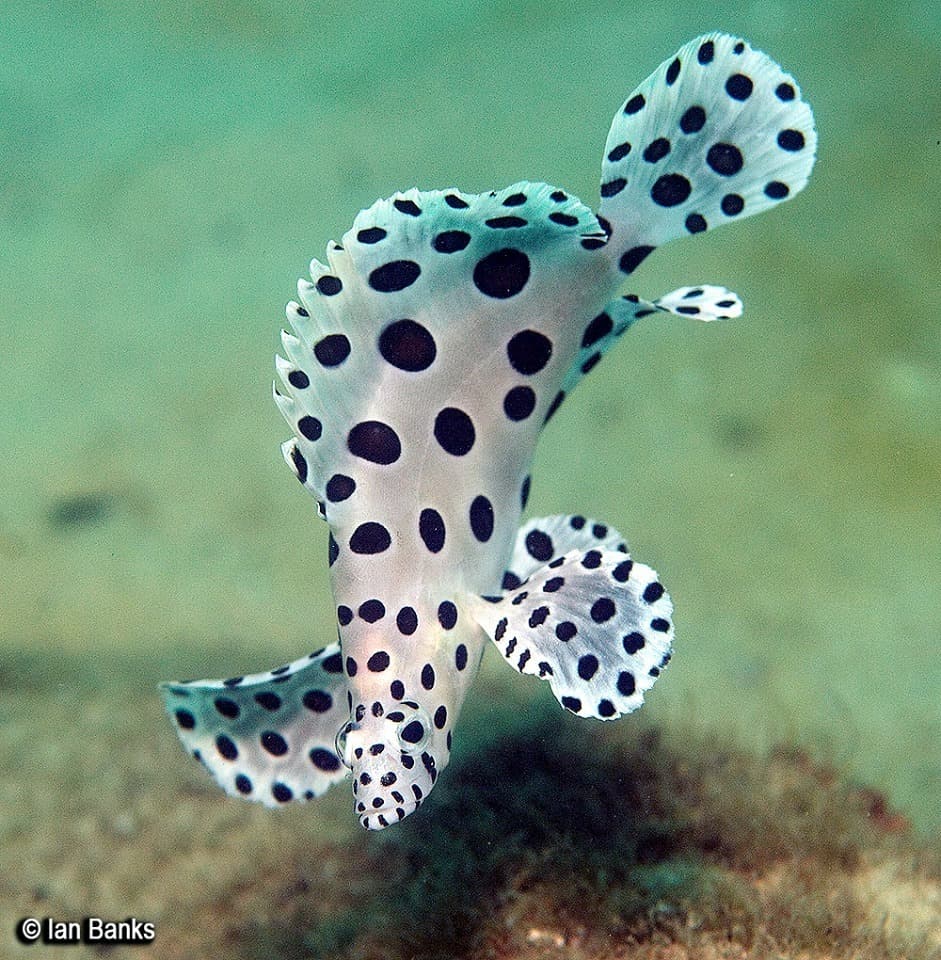
(c) Ian Banks, some rights reserved (CC BY-NC)
Max Size
27"
Min Tank
300 gal
Lifespan
15-20 years
Origin
Indo-Pacific, Western Pacific
Diet
Carnivore
Swims
All
Did You Know?
- Juvenile Panther Groupers are sometimes observed mimicking toxic flatworms in their swimming behavior, undulating their bodies to deter predators
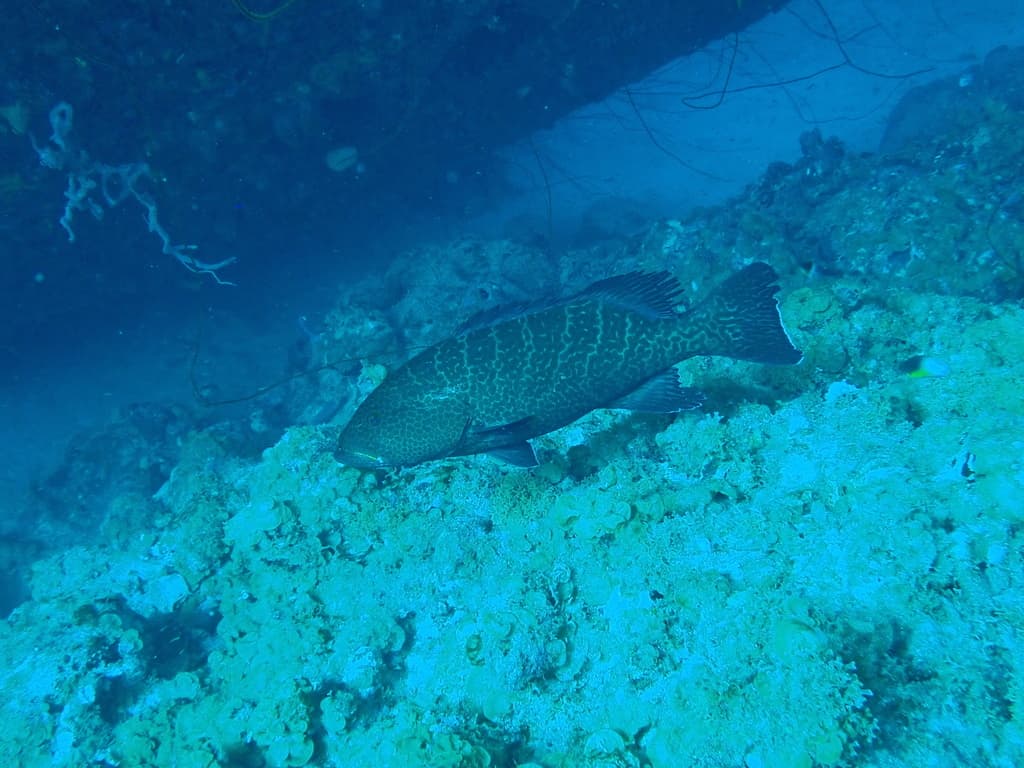
- Their concave head profile is unique among groupers and becomes more pronounced as they age, earning them the name Humpback Grouper
- Panther Groupers are considered a high-value food fish in Southeast Asia, where they are raised in mariculture operations and can command premium prices at seafood markets
About
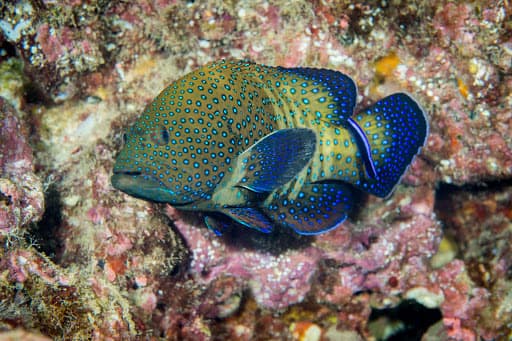
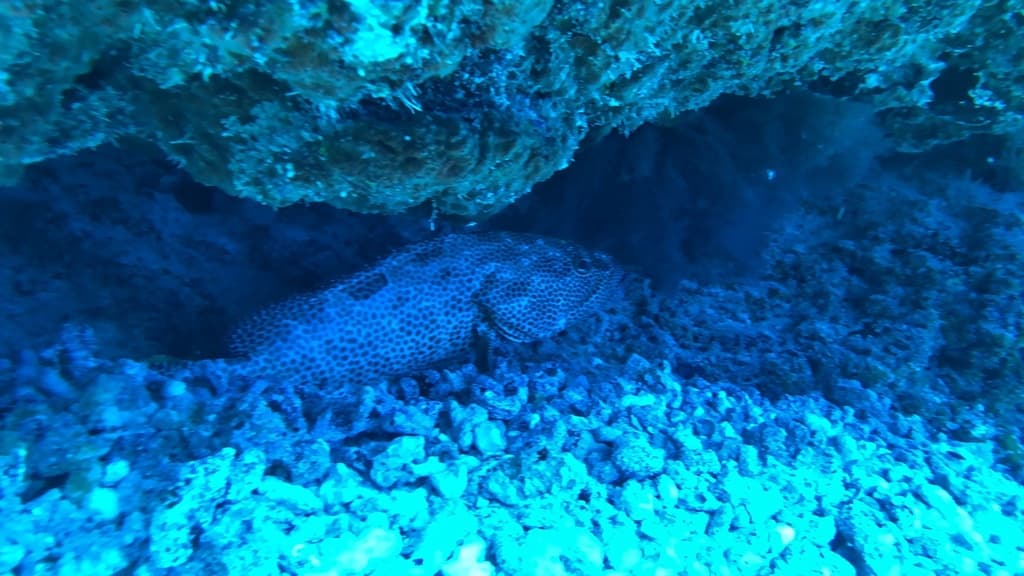
The Panther Grouper is one of the most visually distinctive members of the grouper family, featuring a white to silvery body densely covered with bold black polka dots that give it a striking panther-like pattern. Juveniles are particularly appealing, with oversized spots on a bright white body and a characteristic concave head profile that becomes more pronounced with age. Unfortunately, this attractiveness as a juvenile leads many hobbyists to purchase them without understanding the enormous size these fish will ultimately reach.
In the wild, Panther Groupers inhabit coral reefs, lagoons, and coastal waters at depths ranging from 2 to 40 meters. They are solitary ambush predators that use their protrusible mouths to create powerful suction, engulfing prey fish and crustaceans in a single explosive strike. As they mature, their appetite becomes truly voracious, and they are capable of consuming surprisingly large prey relative to their own body size. Adults can reach up to 27 inches in length and are heavy-bodied fish that produce a significant bioload.
This species requires an exceptionally large aquarium of at least 300 gallons to accommodate its adult size and active swimming habits. The Panther Grouper is not reef-safe and will consume any fish or invertebrate small enough to fit in its cavernous mouth. Despite their predatory nature, they are often surprisingly personable fish that learn to recognize their keepers and will eagerly approach the front of the tank at feeding time. They are hardy and disease-resistant once established, but their massive adult size makes them suitable only for the most dedicated hobbyists with appropriately sized systems.
Feeding & Diet
Carnivore
The Panther Grouper is a voracious carnivore that feeds on fish, crustaceans, and cephalopods in the wild. In captivity, offer a varied diet of frozen silversides, krill, shrimp, squid, and high-quality carnivore pellets. Feed juveniles daily and adults every other day. Avoid using freshwater feeder fish. Supplement with vitamin-enriched foods to prevent fatty liver disease, which is common in captive groupers that are overfed.
Compatibility
predatorlarge-fish-onlyFOWLRhigh-bioloadaggressive
The Panther Grouper is an aggressive predator that will consume any tankmate small enough to swallow. Only keep with very large, robust fish such as large tangs, adult angelfish, triggerfish, and other similarly sized groupers. Absolutely not safe with any invertebrates, small fish, or ornamental shrimp. Best suited for large fish-only or FOWLR systems with equally imposing tankmates.
Check CompatibilityBreeding
Not bred in captivity
Panther Groupers are protogynous hermaphrodites, meaning they begin life as females and can transition to males as they mature. Captive breeding has not been achieved in home aquariums due to their enormous adult size and complex pelagic spawning requirements. This species is cultured in some aquaculture facilities in Southeast Asia for the food fish trade.
Special Requirements
- Requires an extremely large aquarium of 300+ gallons for adult size
- Will eat any fish or crustacean small enough to fit in its mouth
- Produces a very heavy bioload requiring robust filtration and protein skimming
- Grows rapidly from a small, appealing juvenile to a very large adult
- Needs large caves and overhangs for shelter
- Prone to fatty liver disease if overfed with rich foods
Water Parameters
Temperature72–78°F
Specific Gravity1.02–1.026 sg
pH8–8.4
Alkalinity8–12 dKH
Coloration
whitesilverblack spots
Tags
predatorlarge-fish-onlyFOWLRhigh-bioloadaggressive