IntermediatePeacefulReef Safe
Black Ray Shrimp Goby
Stonogobiops nematodes
Family: Gobiidae · Gobies
Also known as: Filament-Finned Prawn Goby, Black-Rayed Shrimp Goby, Nematode Goby
(c) Mark Rosenstein, some rights reserved (CC BY-NC)
Max Size
2"
Min Tank
10 gal
Lifespan
3-5 years
Origin
Western Pacific, Indonesia
Diet
Carnivore
Swims
Bottom
About
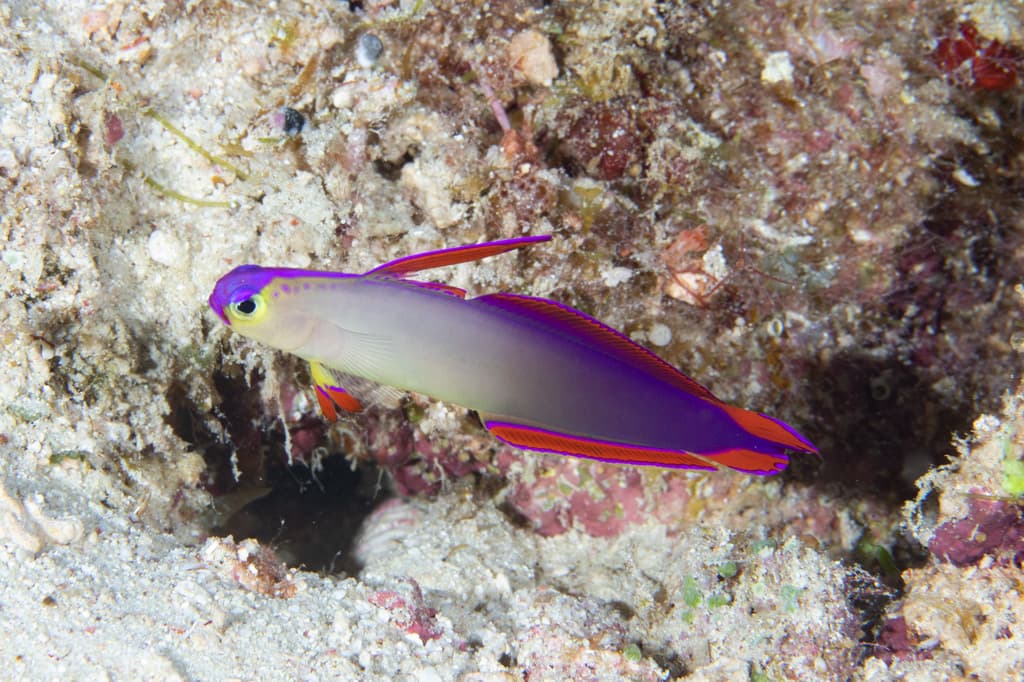
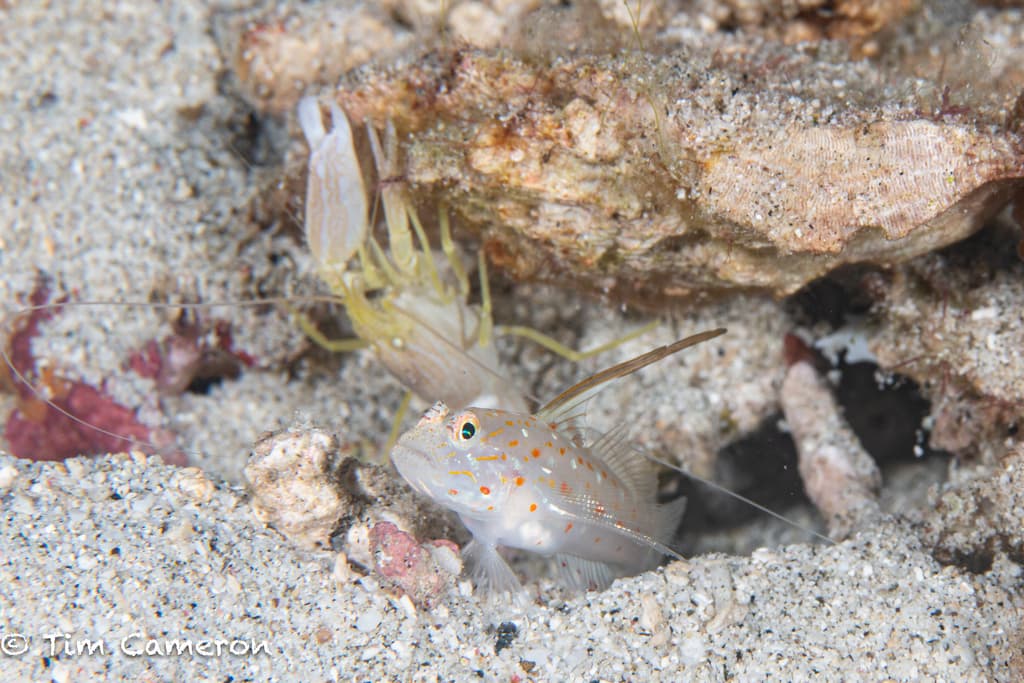
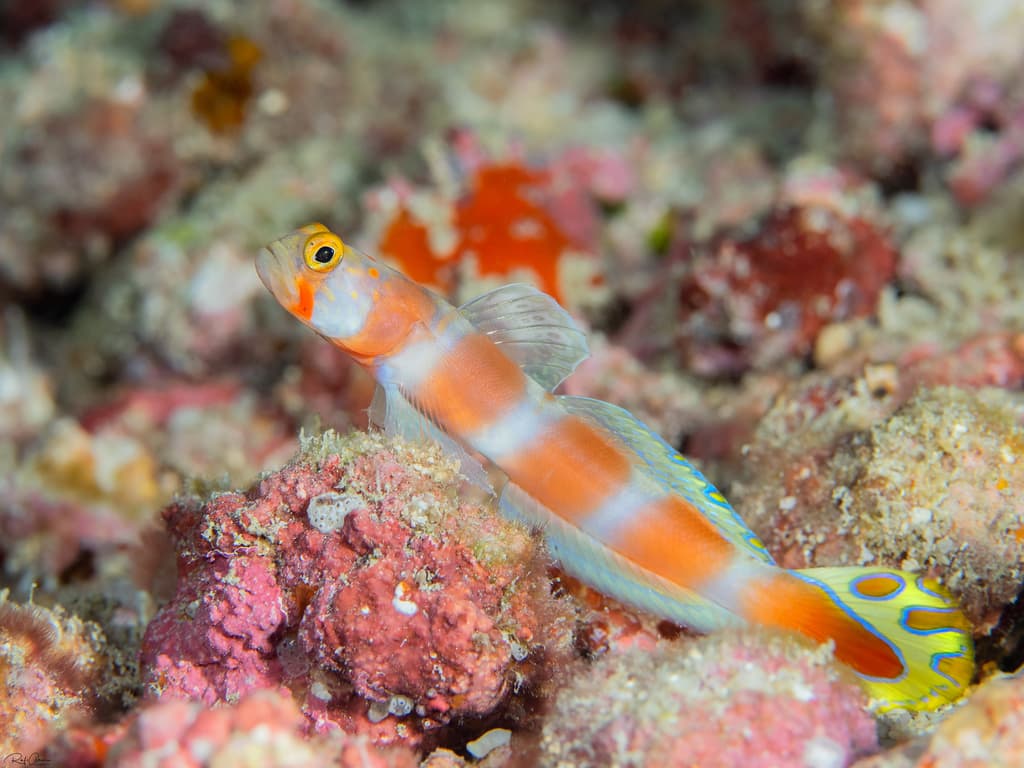
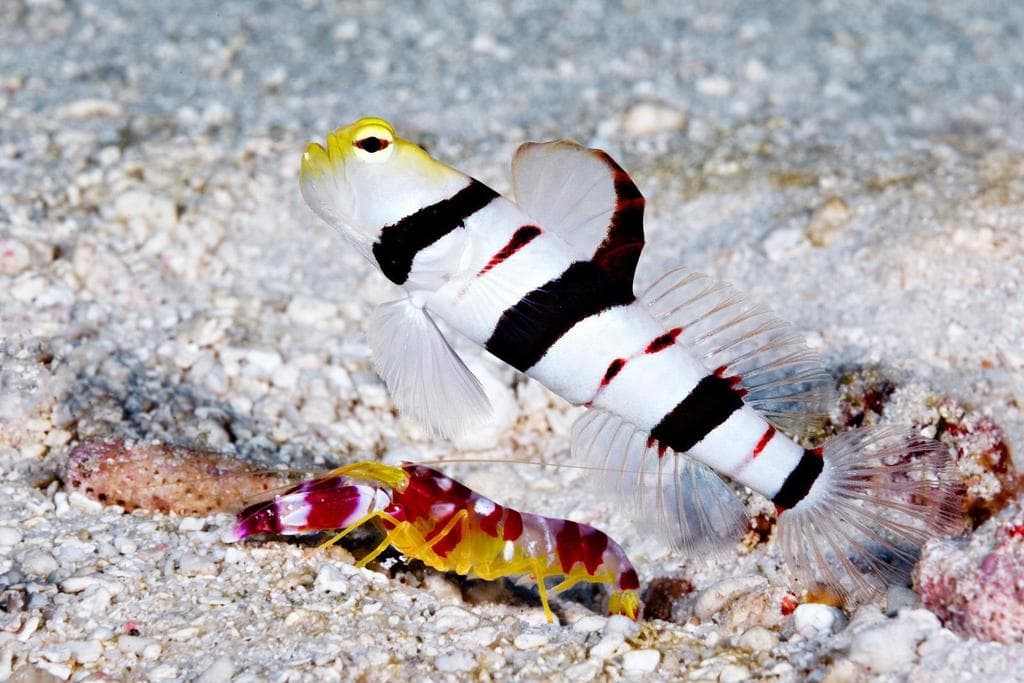
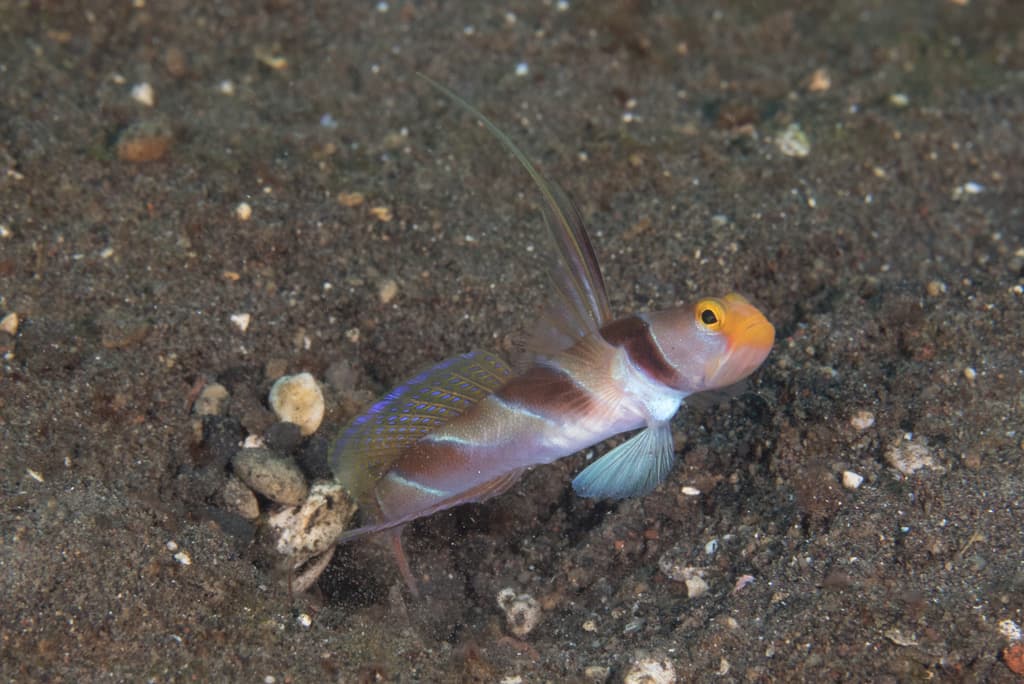
The Black Ray Shrimp Goby is one of the smallest and most endearing shrimp gobies available in the marine aquarium hobby. Reaching only about 2 inches in length, this diminutive species is easily identified by the prominent black ray extending from its dorsal fin, which gives the species its common name. Its body is white to pale lavender with thin dark horizontal stripes along the flanks, and the face often shows subtle yellow or orange highlights.
As a member of the genus Stonogobiops, this goby maintains a close symbiotic relationship with Alpheid pistol shrimp. The tiny goby perches alertly at the burrow entrance while its shrimp partner excavates and maintains their shared home. The elongated dorsal ray is thought to serve as a signal flag to the shrimp, enhancing communication between the symbiotic partners. This behavior is thoroughly captivating and provides a window into one of the ocean's most remarkable partnerships.
Due to its tiny size, the Black Ray Shrimp Goby is well suited for nano reef aquariums as small as 10 gallons. It requires a fine sand substrate for burrowing and a calm environment free from aggressive or overly active fish. This species is shy and may take time to acclimate, but once settled, it becomes a bold and entertaining inhabitant of the lower aquarium zones.
Feeding & Diet
Carnivore
Black Ray Shrimp Gobies are carnivores that feed on tiny benthic crustaceans and zooplankton. In captivity, offer frozen cyclops, baby brine shrimp, mysis shrimp, and other finely sized frozen foods. Feed twice daily with food targeted near the sand substrate.
Compatibility
reef-safepeacefulbottom-dwellershrimp-symbiosisnano-reef
Black Ray Shrimp Gobies are extremely peaceful and can be kept with other small, calm reef fish. They may be territorial toward other shrimp gobies in nano tanks. Their tiny size makes them vulnerable to predation from larger fish.
Check CompatibilityBreeding
Difficult
Breeding in captivity is uncommon. Pairs bond and spawn within their burrow. The larvae are extremely small and planktonic, making successful rearing a significant challenge even for experienced breeders.
Special Requirements
- Fine sand substrate for burrowing
- Pairs well with small Alpheid pistol shrimp
- Secure lid required to prevent jumping
- Suitable for nano reef aquariums of 10 gallons or more
- Avoid housing with large or aggressive tankmates
Water Parameters
Temperature72–80°F
Specific Gravity1.02–1.026 sg
pH8.1–8.4
Alkalinity8–12 dKH
Coloration
whiteblacklavender
Tags
reef-safepeacefulbottom-dwellershrimp-symbiosisnano-reef