IntermediatePeacefulReef Safe
Aurora Goby
Amblyeleotris aurora
Family: Gobiidae · Gobies
Also known as: Pinkbar Goby, Aurora Shrimp Goby, Aurora Prawn Goby
(c) Rafi Amar, some rights reserved (CC BY-NC)
Max Size
4"
Min Tank
20 gal
Lifespan
3-5 years
Origin
Western Indian Ocean, East Africa
Diet
Carnivore
Swims
Bottom
About
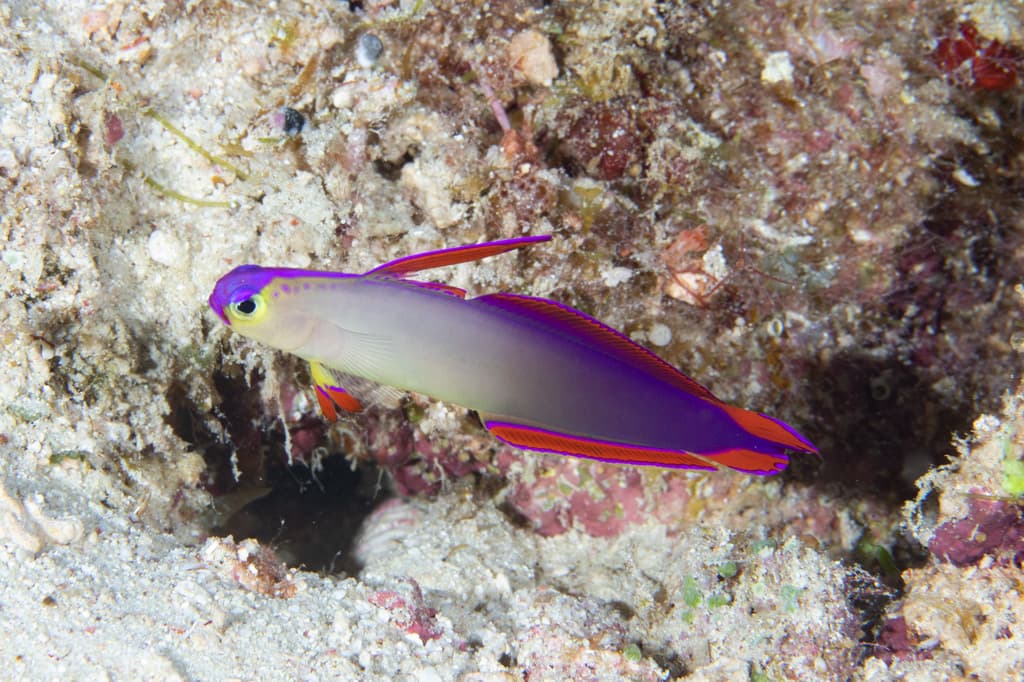
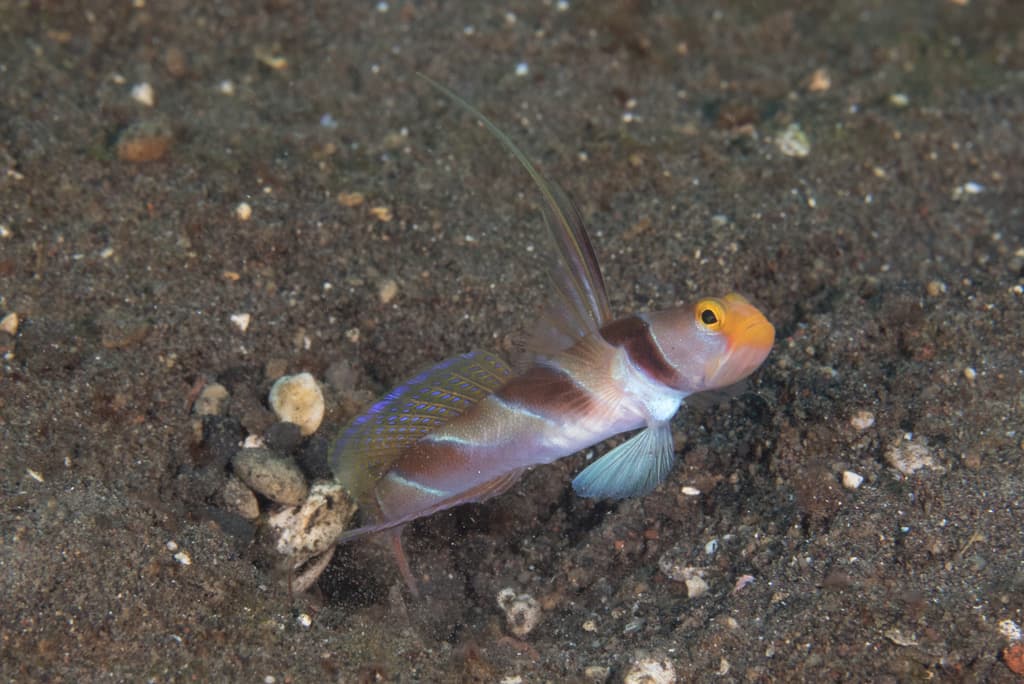
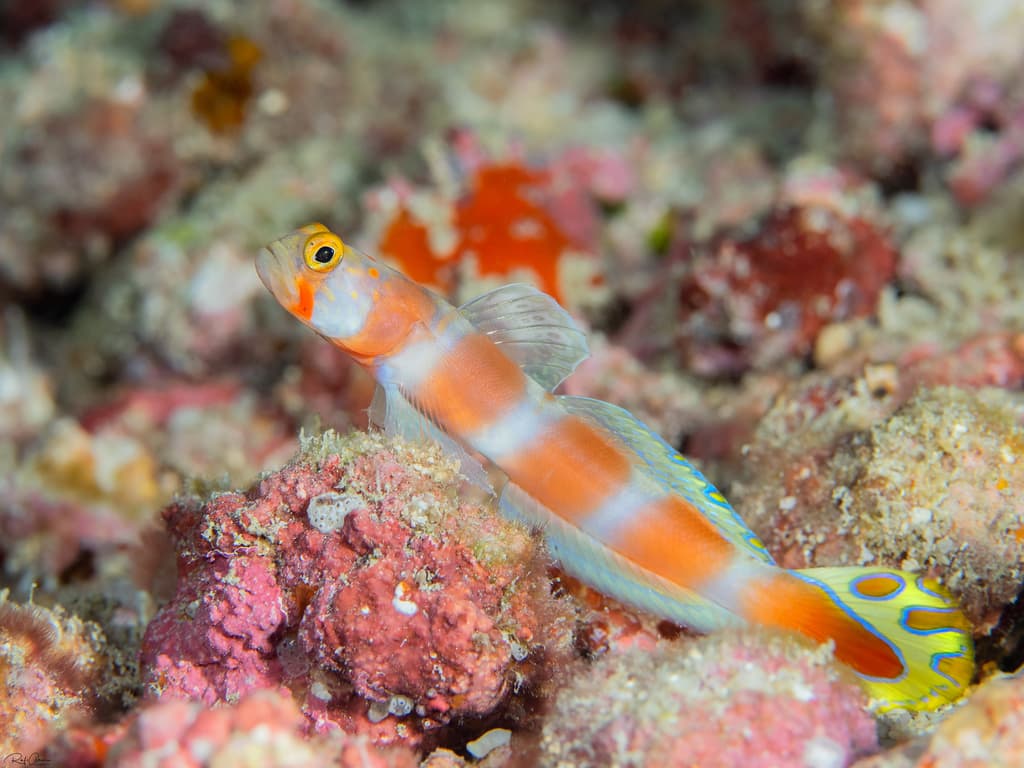
The Aurora Goby is a strikingly patterned shrimp goby native to the western Indian Ocean and Red Sea. Its elongated body displays alternating pinkish-white and reddish-brown bands that run vertically along its length, creating a bold and attractive appearance. The dorsal fin is tall and sail-like, adding to the visual appeal of this species. Adults reach approximately 4 inches in length, making them a moderately sized goby for the home aquarium.
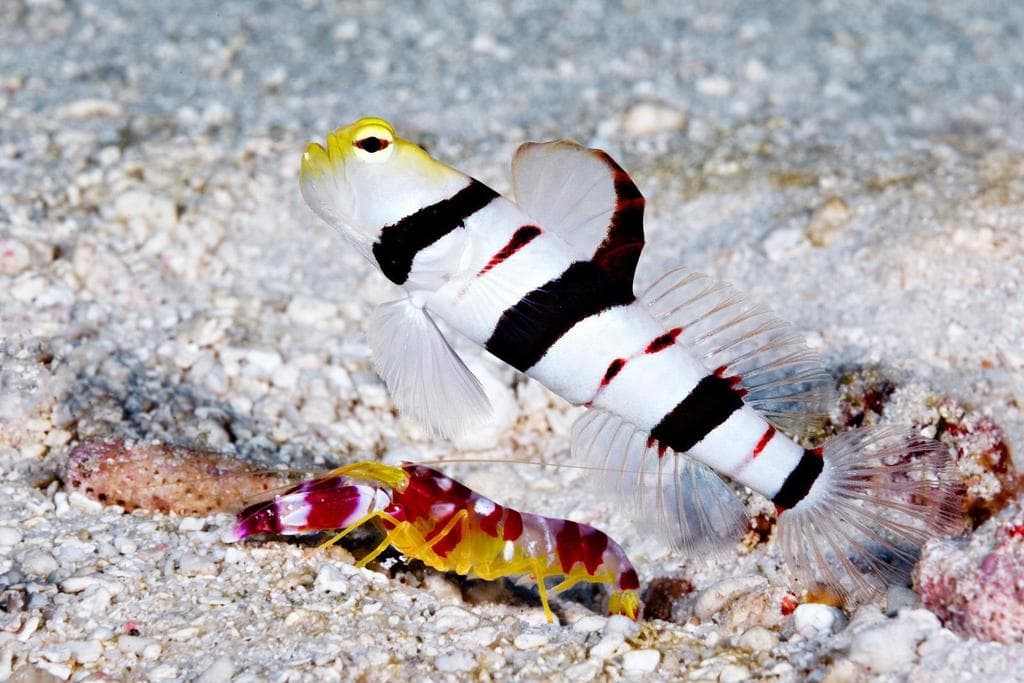
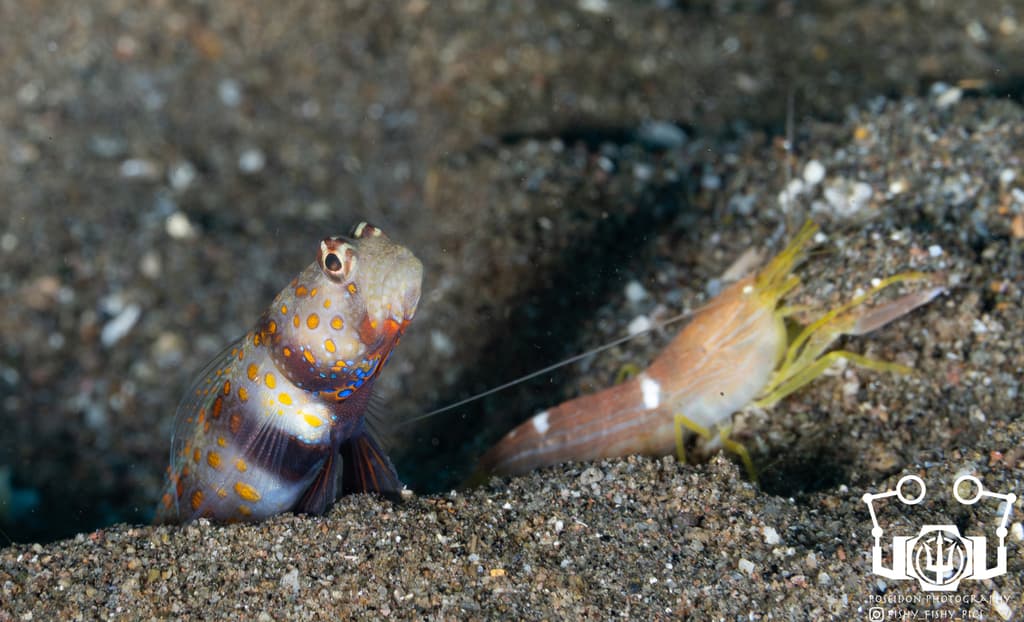
Like other Amblyeleotris species, the Aurora Goby forms a fascinating symbiotic partnership with pistol shrimp of the genus Alpheus. The nearly blind shrimp digs and maintains a shared burrow, while the goby serves as a vigilant lookout, warning the shrimp of approaching danger with subtle tail flicks. This mutualistic behavior is one of the most captivating displays available in a marine aquarium and provides endless entertainment for hobbyists.
In captivity, the Aurora Goby requires a sand substrate of at least two inches for burrowing and a peaceful environment free from aggressive tankmates. It spends most of its time hovering near its burrow entrance, darting inside when startled. A tight-fitting lid is recommended as this species may jump when frightened. Provide a pistol shrimp companion for the most natural and rewarding display.
Feeding & Diet
Carnivore
Aurora Gobies are carnivores that feed on small crustaceans, worms, and zooplankton in the wild. In captivity, they accept frozen mysis shrimp, enriched brine shrimp, and finely chopped seafood. Feed twice daily, ensuring food reaches the bottom substrate where the goby forages.
Compatibility
reef-safepeacefulbottom-dwellershrimp-symbiosis
Aurora Gobies are peaceful and compatible with most community reef fish. They may be territorial toward other shrimp gobies in small tanks, so keep only one shrimp goby species per tank unless the aquarium is large with well-separated territories.
Check CompatibilityBreeding
Moderate
Aurora Gobies form monogamous pairs and spawn within their shared burrow. The male guards the eggs until hatching. Larvae are planktonic and difficult to rear in captivity, requiring rotifers and microalgae as first foods.
Special Requirements
- Sand substrate of at least 2 inches for burrowing
- Best kept with an Alpheus pistol shrimp for symbiotic pairing
- Tight-fitting lid required as this species may jump
- Provide rubble and small rocks near sand for burrow construction
- Peaceful environment free from aggressive tankmates
Water Parameters
Temperature72–80°F
Specific Gravity1.02–1.026 sg
pH8.1–8.4
Alkalinity8–12 dKH
Coloration
pinkwhitebrown
Tags
reef-safepeacefulbottom-dwellershrimp-symbiosis