IntermediateAggressiveNot Reef Safe
Tessalata Moray Eel
Gymnothorax favagineus
Family: Muraenidae · Eels
Also known as: Honeycomb Moray, Tessellated Moray, Leopard Moray Eel, Laced Moray
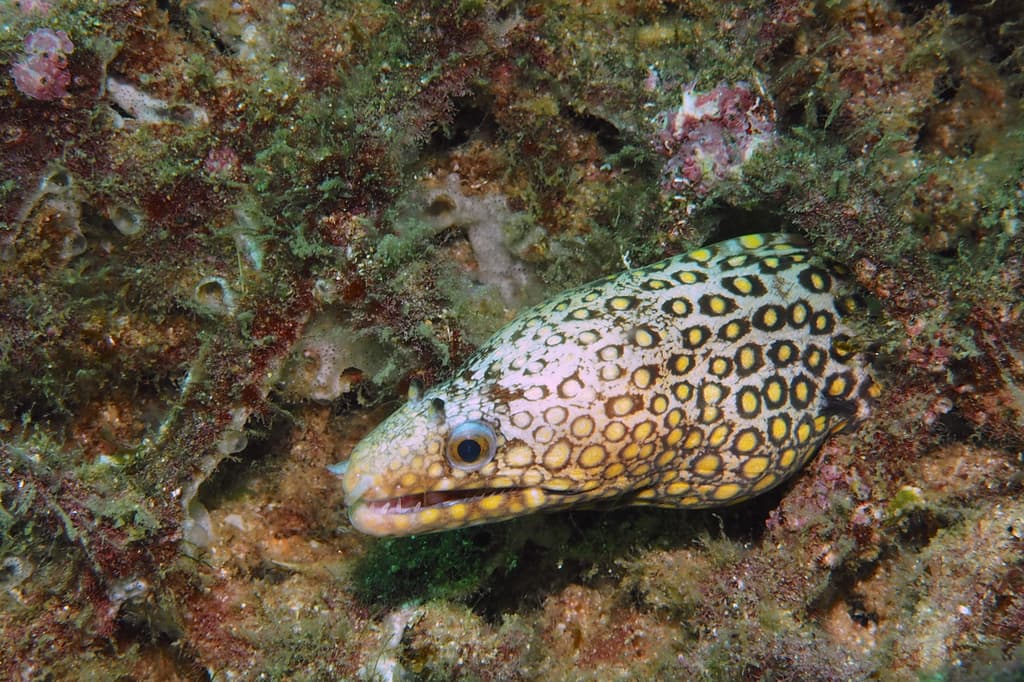
(c) Patrick James, some rights reserved (CC BY-NC)
Max Size
72"
Min Tank
300 gal
Lifespan
15-25 years
Origin
Indo-Pacific, Red Sea
Diet
Carnivore
Swims
Bottom
About
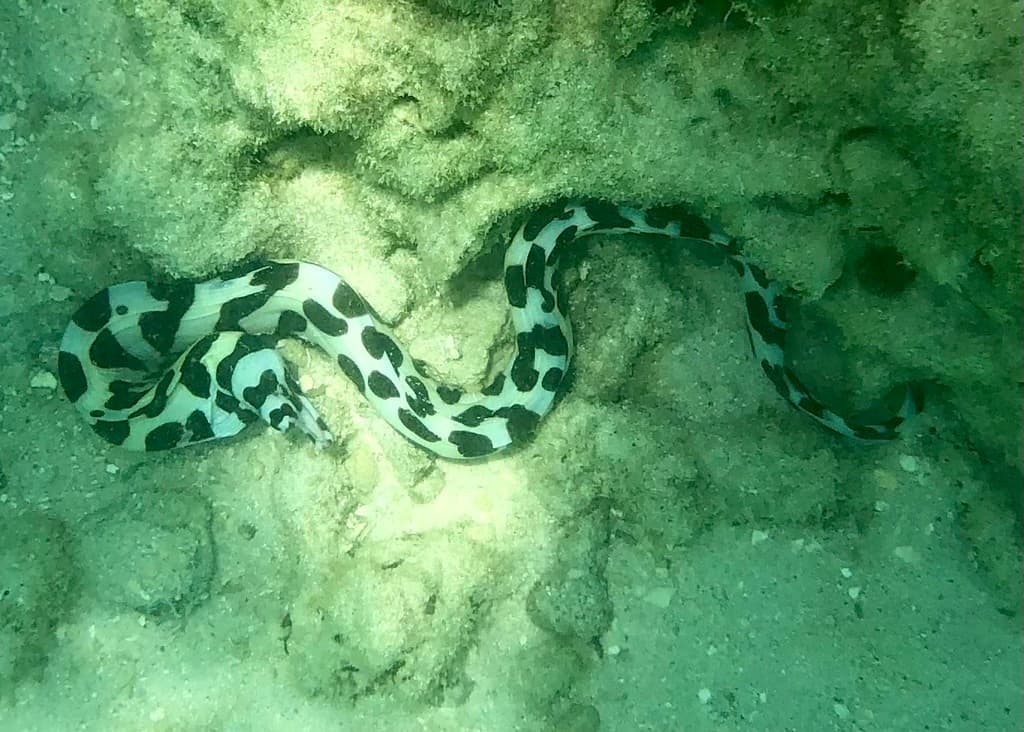
The Tessalata Moray Eel is a massive and visually stunning species distinguished by its bold honeycomb-like pattern of dark brown to black spots on a white to pale yellow background. This distinctive leopard-print appearance makes it one of the most recognizable moray eels in the world. Growing to an impressive six feet in length and possessing a thick, muscular body, the Tessalata Moray is an imposing predator that commands respect and a very large aquarium.
In the wild, Tessalata Moray Eels are found throughout the Indo-Pacific in coral reefs, rocky shorelines, and reef slopes. They are powerful predators with large, sharp teeth designed for seizing and holding fish and cephalopods. Unlike the Snowflake Moray's blunt crushing teeth, the Tessalata possesses needle-sharp teeth that can inflict serious lacerating wounds. They are one of the moray species most frequently associated with ciguatera poisoning in regions where the toxin is present, as they accumulate the toxin through the food chain.
Keeping a Tessalata Moray Eel is a serious commitment that requires a minimum 300-gallon aquarium with robust filtration, an absolutely escape-proof lid, and careful tankmate selection. This species will consume any fish or invertebrate it can overpower. It is emphatically not reef-safe and should only be kept in a predator or species-specific system. Long feeding tongs are mandatory, as bites from this species can cause significant injury. Despite these challenges, the Tessalata is a charismatic and intelligent aquarium inhabitant that often develops a recognizable personality and bonds with its keeper during feeding.
Feeding & Diet
Carnivore
Tessalata Moray Eels are aggressive carnivores that consume fish, crustaceans, and cephalopods. In captivity, offer frozen silversides, squid, shrimp, crab, and whole fish. Use long feeding tongs to avoid dangerous bites. Feed two to three times per week for adults. Vary the diet for optimal nutrition. Due to their large size, each feeding session produces significant waste requiring powerful filtration.
Compatibility
not-reef-safeaggressiveapex-predatorescape-artistlarge-tank-onlypredator-tank
The Tessalata Moray Eel is a large predator that will consume any fish, crustacean, or invertebrate it can capture. Only very large, robust fish can safely coexist with this species. Potential tankmates include large groupers, large triggers, large puffers, and other predatory fish too large to be eaten. Other large moray eels may coexist in very large systems if introduced simultaneously. This species is absolutely not reef-compatible.
Check CompatibilityBreeding
Not bred in captivity
Tessalata Moray Eels have never been bred in captivity. In the wild, they produce pelagic eggs that develop into leptocephalus larvae requiring an extended oceanic planktonic phase. The enormous adult size and complex larval development make captive breeding infeasible for the foreseeable future.
Special Requirements
- Very large tank required - minimum 300 gallons
- Heavy-duty, escape-proof lid is absolutely critical
- Long feeding tongs mandatory - can inflict serious bite wounds
- Commercial-grade filtration and protein skimming required
- Very large caves and hiding structures needed
- Will consume virtually any tankmate it can overpower
- Not for beginning marine aquarists
- Heavy bioload - robust water change schedule needed
Water Parameters
Temperature72–80°F
Specific Gravity1.02–1.026 sg
pH8.1–8.4
Alkalinity8–12 dKH
Coloration
whitebrownblackyellow
Tags
not-reef-safeaggressiveapex-predatorescape-artistlarge-tank-onlypredator-tank