IntermediateAggressiveNot Reef Safe
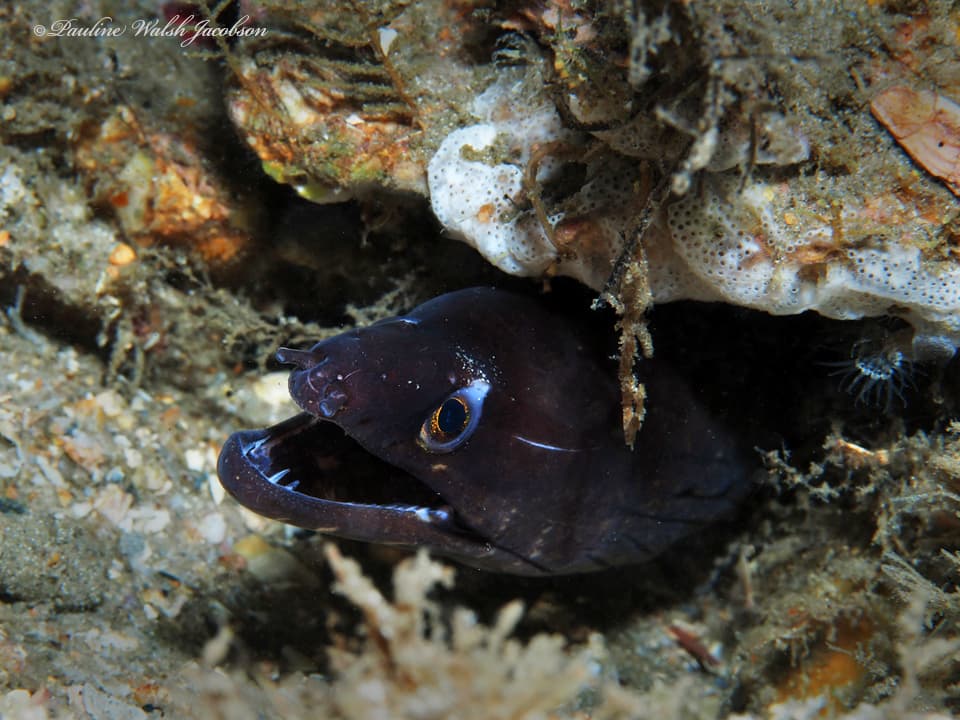
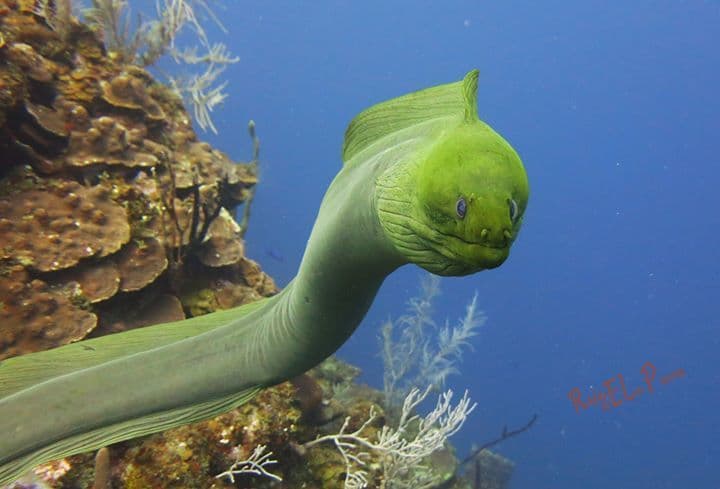
Green Moray Eel
Gymnothorax funebris
Family: Muraenidae · Eels
Also known as: Green Moray, Atlantic Green Moray
(c) Grampus de la Parra, some rights reserved (CC BY-NC)
Max Size
96"
Min Tank
300 gal
Lifespan
15-25 years
Origin
Western Atlantic, Caribbean
Diet
Carnivore
Swims
Bottom
About
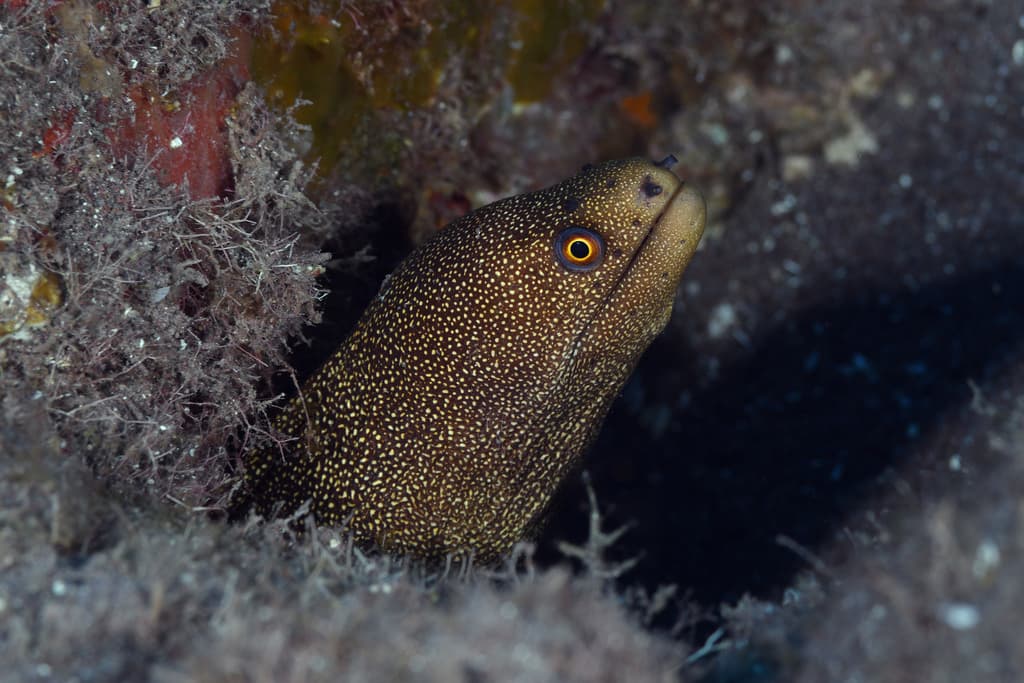
The Green Moray Eel is one of the largest and most iconic moray eel species, reaching a formidable length of eight feet and weighing up to 65 pounds. Its distinctive green coloration is actually an optical illusion created by a combination of its yellow mucus coating over blue-gray skin, producing the characteristic green appearance. This massive eel is a familiar sight to divers throughout the Western Atlantic and Caribbean, where it inhabits coral reefs, rocky shorelines, and mangrove channels.
In the wild, Green Moray Eels are apex predators of the reef, capable of consuming fish, crustaceans, octopus, and virtually any animal they can overpower. Their muscular bodies, powerful jaws, and pharyngeal jaws (a second set of jaws in the throat) make them formidable hunters. Despite their fearsome appearance and reputation, Green Morays are generally not aggressive toward divers unless provoked or cornered. However, they can inflict serious bite wounds with their sharp teeth, and bites often become infected due to bacteria in their mucus.
Keeping a Green Moray Eel in captivity is a massive undertaking reserved for only the most dedicated aquarists with enormous systems. A minimum tank size of 300 gallons is required, and larger is strongly preferred for an adult specimen. The aquascape must include very large caves and structures that can accommodate the eel's bulk. A commercial-grade filtration system is necessary to handle the heavy bioload. This species is absolutely not reef-safe and will consume any fish or invertebrate it can overpower. Only large, robust tankmates should be considered.
Feeding & Diet
Carnivore
Green Moray Eels are voracious carnivores that eat fish, crustaceans, and cephalopods in the wild. In captivity, offer large portions of frozen silversides, squid, shrimp, crab, and whole fish. Use long feeding tongs to avoid dangerous bites. Feed two to three times per week for adults. Overfeeding leads to obesity and liver disease. Due to their size, each feeding produces significant waste that must be managed with robust filtration.
Compatibility
not-reef-safeaggressiveapex-predatorescape-artistlarge-tank-only
The Green Moray Eel is an apex predator that will eat any fish, crustacean, or invertebrate it can capture. Only very large, robust fish can safely coexist with this species, and even then there is always risk. Potential tankmates include large groupers, large tangs, large angelfish, and other very large fish. Never house with anything remotely small enough to be consumed. Other large moray eels may coexist in very large systems. This is absolutely not a reef-compatible species.
Check CompatibilityBreeding
Not bred in captivity
Green Moray Eels have never been bred in captivity. In the wild, they release pelagic eggs into the water column, and the resulting leptocephalus larvae undergo a prolonged oceanic planktonic stage lasting many months before settling onto the reef and metamorphosing into juvenile eels. The enormous size of the adults and the complexity of the larval stage make captive breeding infeasible.
Special Requirements
- Extremely large tank required - minimum 300 gallons
- Heavy-duty, escape-proof lid is absolutely critical
- Commercial-grade filtration and protein skimming required
- Can inflict serious bite wounds - always use long feeding tongs
- Very large caves and hiding structures needed
- Heavy bioload - frequent water changes necessary
- Not suitable for the vast majority of home aquariums
- Will consume virtually any tankmate it can overpower
Water Parameters
Temperature72–80°F
Specific Gravity1.02–1.026 sg
pH8.1–8.4
Alkalinity8–12 dKH
Coloration
greenyellowbrowngray
Tags
not-reef-safeaggressiveapex-predatorescape-artistlarge-tank-only