IntermediateAggressiveNot Reef Safe
Goldentail Moray
Gymnothorax miliaris
Family: Muraenidae · Eels
Also known as: Goldentail Moray Eel, Golden Tail Eel, Banana Eel, Conger Moray
(c) terence zahner, some rights reserved (CC BY-NC)
Max Size
27.5"
Min Tank
125 gal
Lifespan
10-15 years
Origin
Western Atlantic, Caribbean
Diet
Carnivore
Swims
Bottom
About
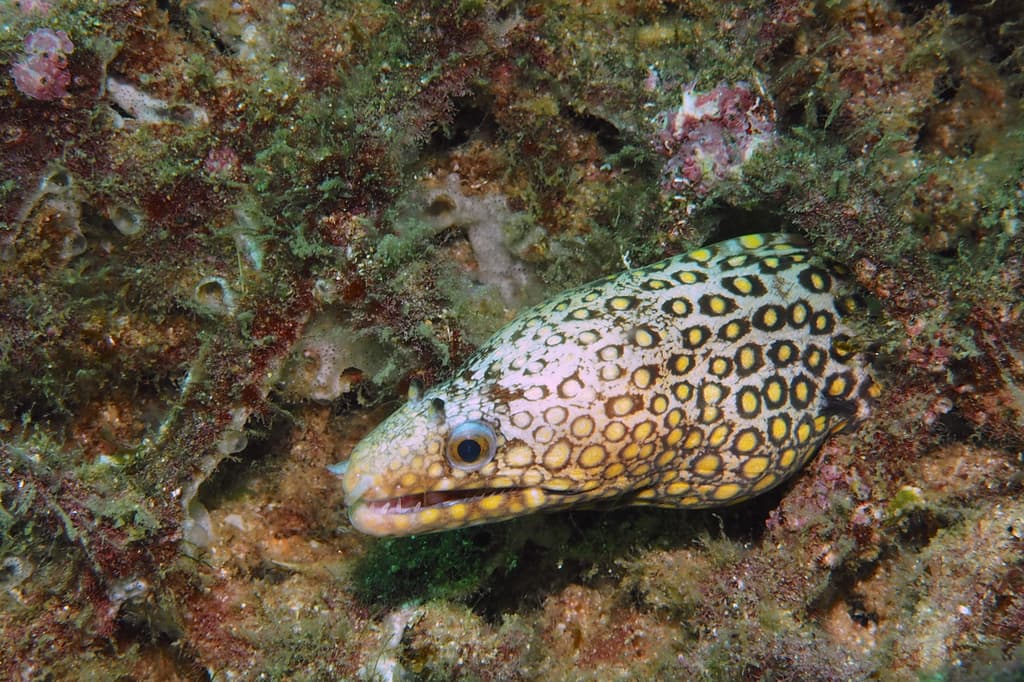
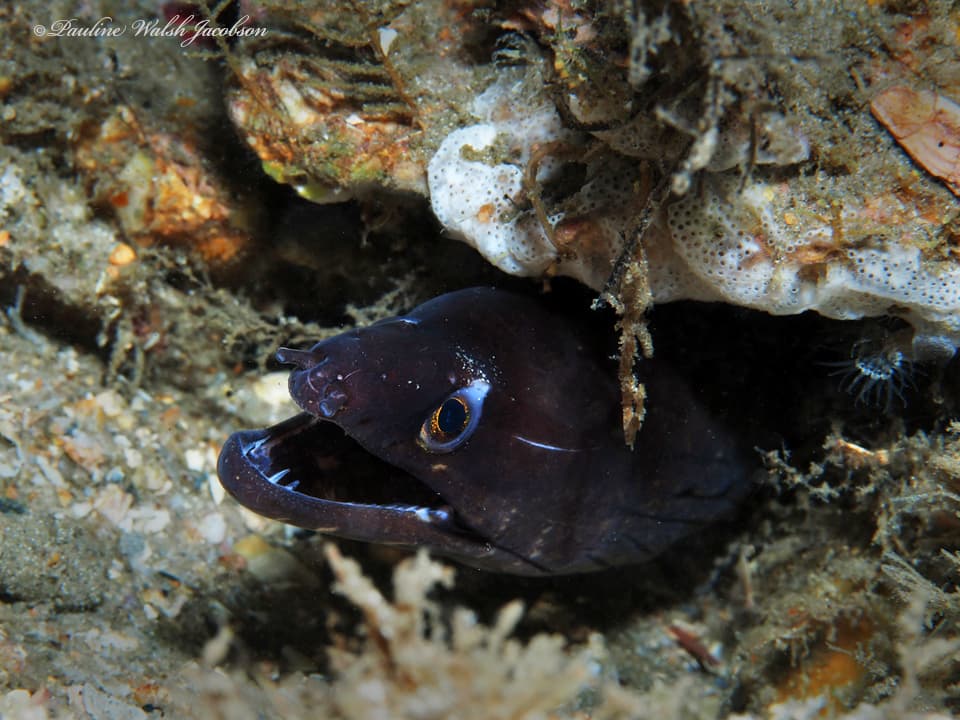
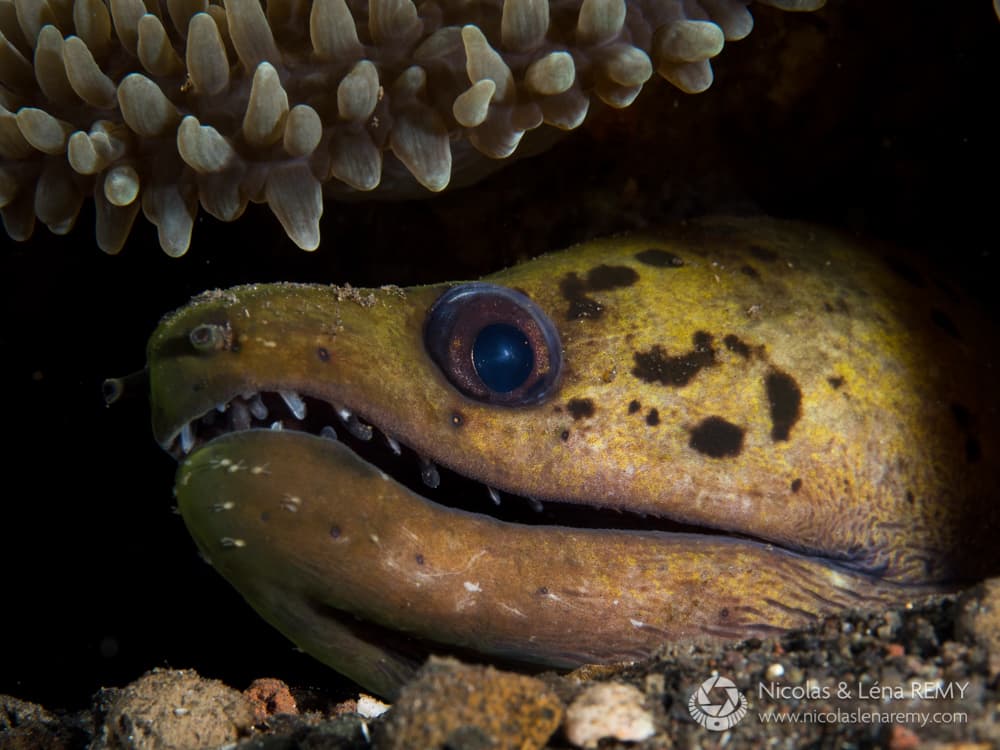
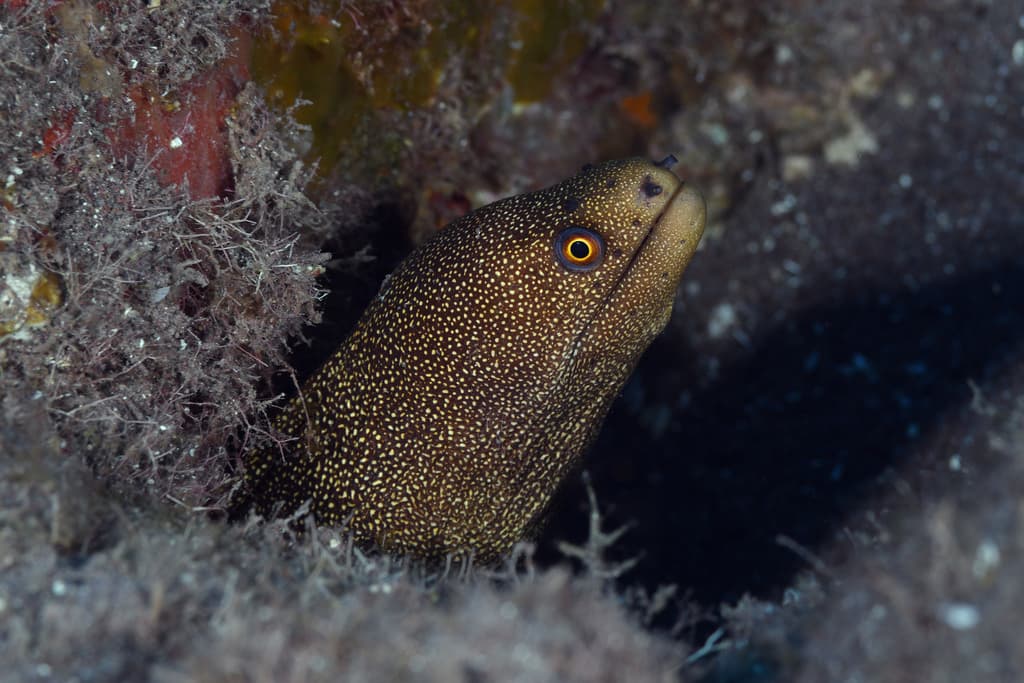
The Goldentail Moray is one of the most commonly encountered moray eels in the Western Atlantic and Caribbean, recognized by its dark brown body adorned with tiny golden-yellow spots and, most distinctively, a bright golden-yellow tail tip that gives the species its common name. Growing to approximately 27.5 inches, it is a medium-sized moray that is frequently available in the marine aquarium trade due to its wide distribution and relative abundance.
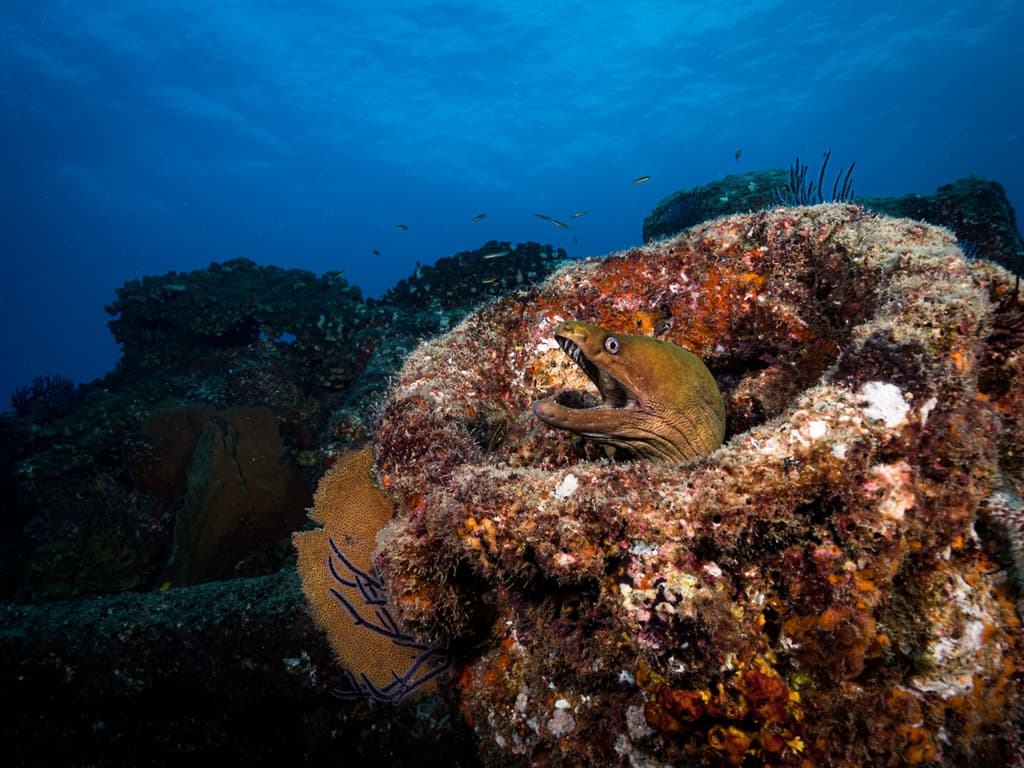
In the wild, the Goldentail Moray is found on coral reefs, rocky shorelines, and around pier pilings throughout the Caribbean and Western Atlantic. It is a nocturnal predator that spends daylight hours tucked into reef crevices, often with only its head visible, mouth agape to facilitate respiration. At night, it actively prowls the reef in search of small fish, crustaceans, and octopuses. This species is known to be particularly bold and may approach divers, especially if food has been offered in the past.
In the aquarium, the Goldentail Moray is a hardy species that adapts well to captivity once established. It is an aggressive predator that is not reef-safe and will consume any small fish or crustaceans it encounters. Like all moray eels, a secure lid is absolutely essential. Its manageable size and Caribbean origins make it a popular choice for predator-themed aquariums, though its sharp teeth and aggressive feeding response demand respect and careful handling during maintenance.
Feeding & Diet
Carnivore
Goldentail Morays are voracious carnivores that feed on fish, crustaceans, and octopuses in the wild. In captivity, offer frozen silversides, shrimp, squid, and other meaty marine foods. Always use long feeding tongs to present food and avoid bites. Feed two to three times per week. This species typically develops a strong feeding response and readily accepts frozen foods after a brief acclimation period.
Compatibility
not-reef-safeaggressivefish-predatorescape-artistpredator-tank
The Goldentail Moray is an aggressive predator that will consume any fish or crustacean small enough to overpower. House only with similarly sized or larger tankmates such as large angelfish, tangs, groupers, and triggerfish. Not suitable for reef or community aquariums. Can coexist with other moray eels in large systems with ample hiding spots, but territorial disputes may occur.
Check CompatibilityBreeding
Not bred in captivity
Goldentail Morays have not been bred in home aquariums. In the wild, they are protogynous hermaphrodites, with individuals starting as females and transitioning to males as they mature. Spawning involves the release of pelagic eggs, and the resulting leptocephalus larvae undergo an extended planktonic phase before settling onto the reef.
Special Requirements
- Secure, tight-fitting lid is absolutely essential
- Extensive rockwork with caves and crevices for hiding
- Use long feeding tongs - aggressive feeding response
- Will consume fish and crustaceans - not reef safe
- Strong filtration and protein skimming required
- Seal all openings including overflow boxes and plumbing gaps
Water Parameters
Temperature72–80°F
Specific Gravity1.02–1.026 sg
pH8.1–8.4
Alkalinity8–12 dKH
Coloration
browngolden yellowspotted
Tags
not-reef-safeaggressivefish-predatorescape-artistpredator-tank