IntermediateAggressiveReef SafeCaptive-Bred Available
Neon Dottyback
Pseudochromis aldabraensis
Family: Pseudochromidae · Dottybacks
Also known as: Arabian Dottyback, Neon Pseudochromis, Aldabra Dottyback
(c) Brian Mayes, all rights reserved
Max Size
3.5"
Min Tank
30 gal
Lifespan
5-7 years
Origin
Western Indian Ocean, Arabian Sea
Diet
Carnivore
Swims
Middle
About
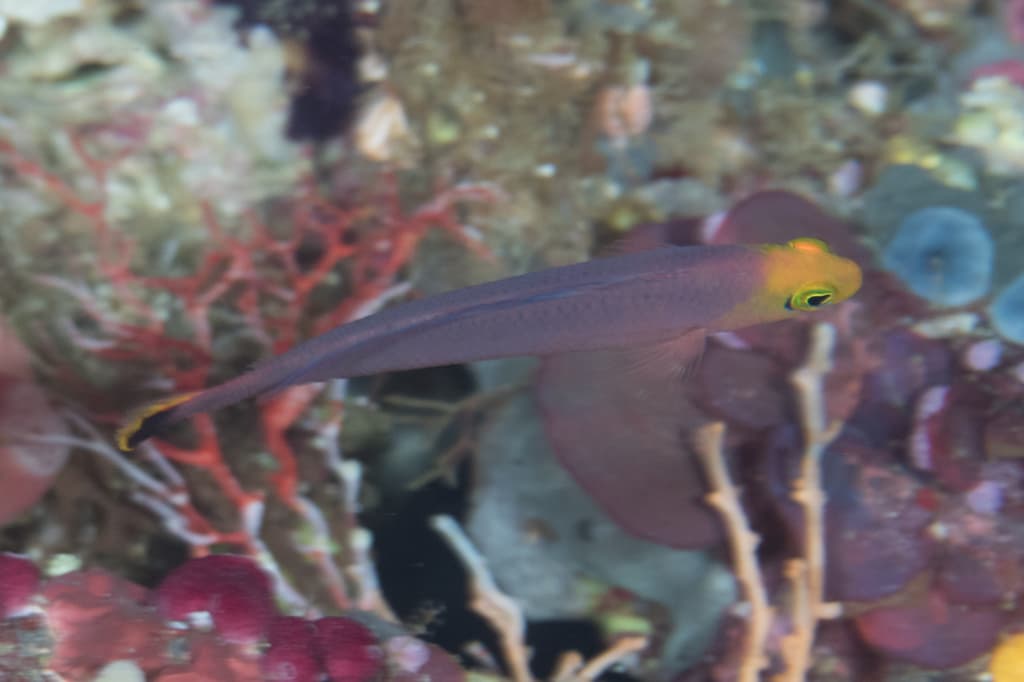
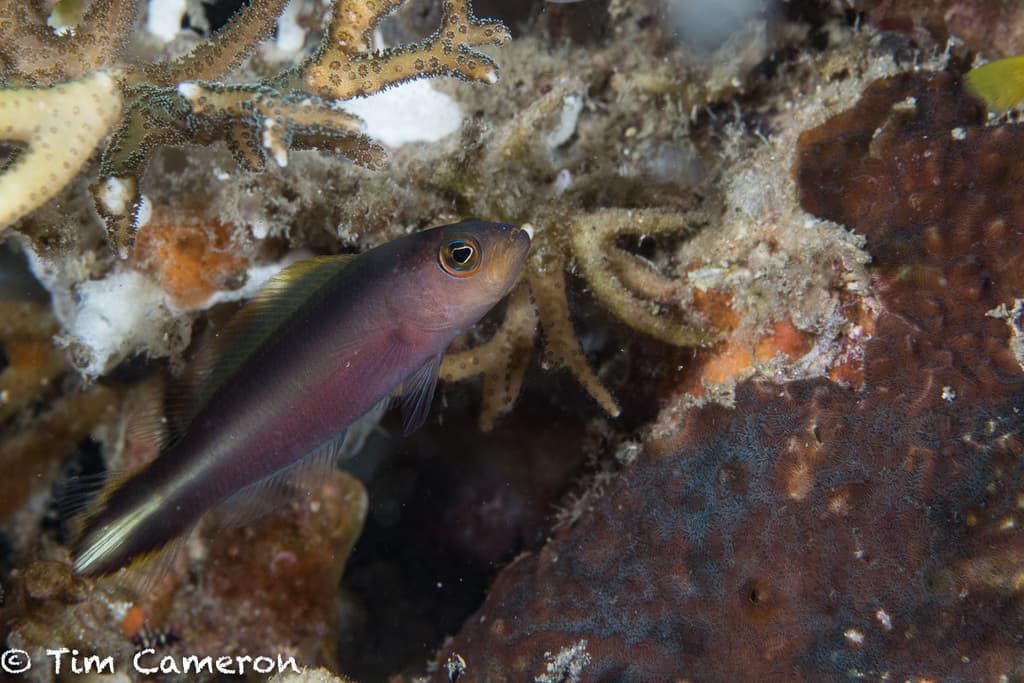
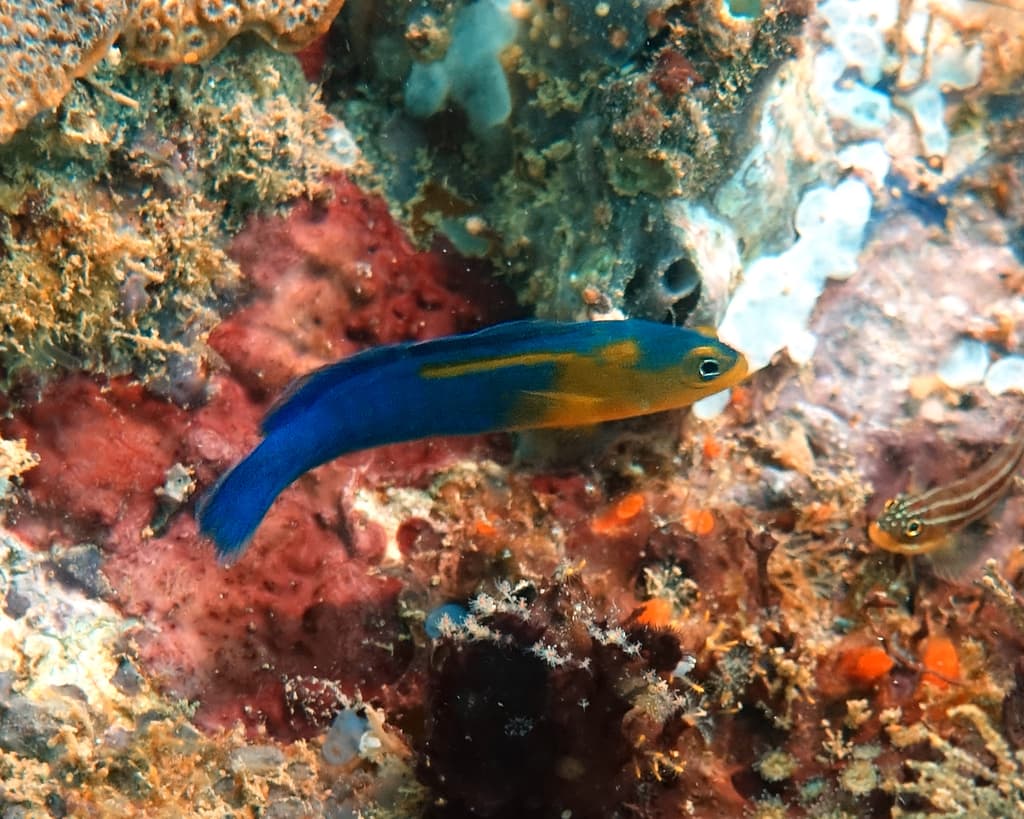
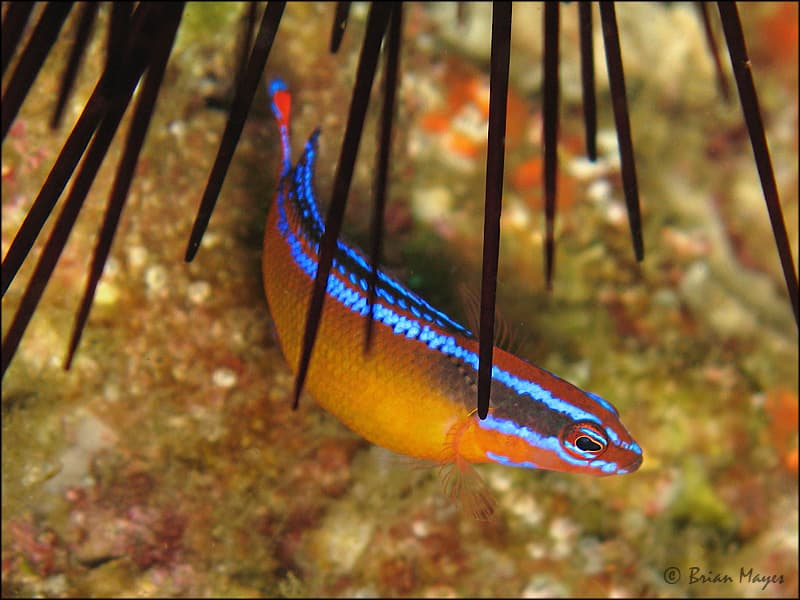
The Neon Dottyback is a small but strikingly colored fish featuring a vibrant two-toned color scheme of electric blue along the dorsal half and bright orange-yellow along the ventral half. This bold color contrast gives it a neon-like appearance that immediately draws the eye in any aquarium. Native to the western Indian Ocean, this species inhabits rocky reefs and rubble zones where it darts among crevices hunting small prey.
While beautiful, the Neon Dottyback is notably more aggressive than its cousin the Orchid Dottyback. It will aggressively defend its chosen territory and may harass smaller, more passive tankmates. This species is best kept in tanks with robust, similarly-sized fish that can hold their own. Despite its small size, it has a bold and sometimes pugnacious personality that belies its diminutive stature.
The Neon Dottyback is hardy and readily accepts prepared foods, making it easy to care for in terms of basic husbandry. It is completely reef-safe and will not harm corals or sessile invertebrates. Like other dottybacks, it is an effective predator of bristleworms and small pests. Captive-bred specimens are available and tend to be somewhat less aggressive than wild-caught individuals.
Feeding & Diet
Carnivore
Neon Dottybacks are carnivores that feed on small crustaceans, worms, and zooplankton. In captivity, they readily accept frozen mysis shrimp, brine shrimp, marine pellets, and flake food. Feed two to three times daily in small amounts.
Compatibility
reef-safeaggressiveterritorialbristleworm-eatercaptive-bred-available
The Neon Dottyback can be quite aggressive and territorial, especially in smaller tanks. It will chase and harass smaller, timid fish such as firefish and small gobies. Best kept with moderately assertive tankmates like clownfish, wrasses, and tangs. Completely reef-safe with corals and invertebrates.
Check CompatibilityBreeding
Moderate
Neon Dottybacks can be bred in captivity and captive-bred specimens are commercially available. They are protogynous hermaphrodites. Males court females and guard egg clutches in cave nests. Larvae can be raised on rotifers and baby brine shrimp.
Special Requirements
- Provide plenty of rockwork with caves and hiding spots
- Best kept with robust, similarly-sized tankmates
- Avoid housing with timid or very small species
- Captive-bred specimens recommended for reduced aggression
- Keep singly to avoid conspecific fighting
Water Parameters
Temperature74–80°F
Specific Gravity1.02–1.026 sg
pH8.1–8.4
Alkalinity8–12 dKH
Coloration
blueorangeyellow
Tags
reef-safeaggressiveterritorialbristleworm-eatercaptive-bred-available