BeginnerPeacefulReef SafeCaptive-Bred Available
Percula Clownfish
Amphiprion percula
Family: Pomacentridae · Clownfish
Also known as: True Percula Clownfish, Orange Clownfish
(c) Bird Explorers, some rights reserved (CC BY-NC)
Max Size
3"
Min Tank
20 gal
Lifespan
10-15 years
Origin
Western Pacific, Great Barrier Reef
Diet
Omnivore
Swims
Middle
Did You Know?
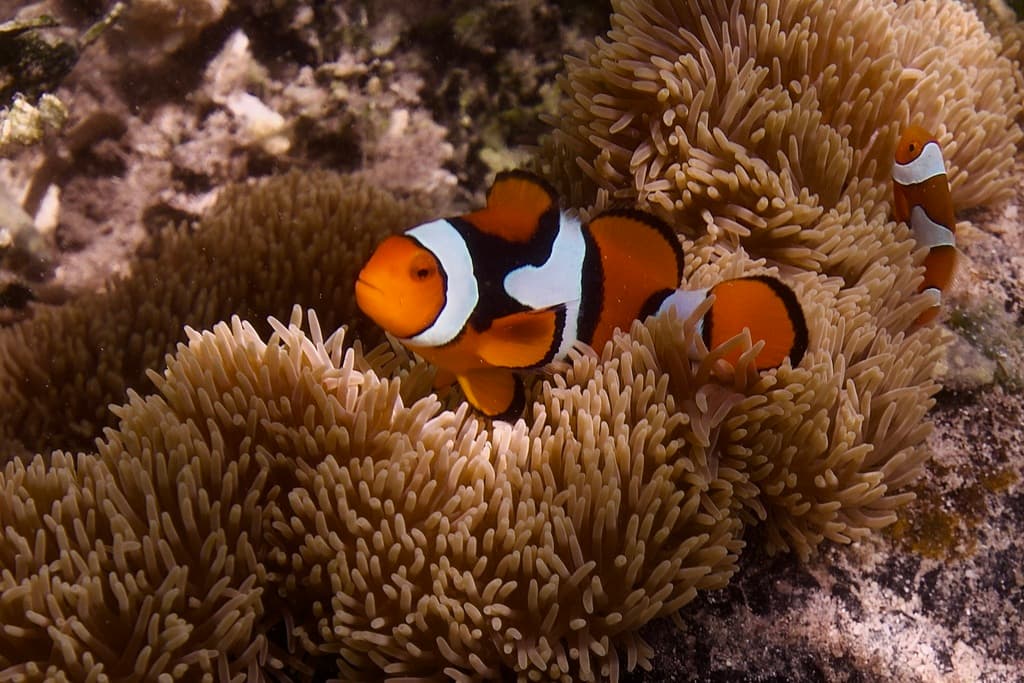
- The True Percula can be distinguished from the Ocellaris by its thicker black borders on the white bars and typically brighter orange coloration
- Percula Clownfish have one of the most restricted natural ranges of any clownfish — found mainly around Papua New Guinea and the Solomon Islands
About
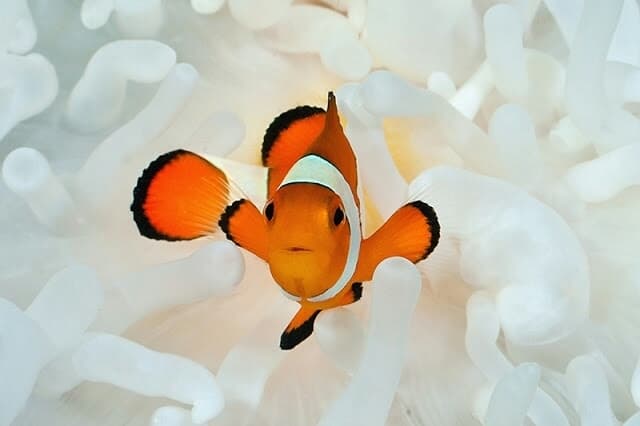
The Percula Clownfish, often called the True Percula to distinguish it from its close relative the Ocellaris, is a stunning marine fish with bold orange coloration and thick black borders around its three white bars. While visually similar to the Ocellaris Clownfish, the Percula can be identified by its more vivid orange coloration, thicker black margining on the white bands, and slightly smaller adult size. The species has a more limited natural range, found primarily around Papua New Guinea, the Solomon Islands, and the northern Great Barrier Reef.
Like all clownfish, the Percula is a protandrous hermaphrodite and forms a strict social hierarchy within its group. The largest, most dominant individual becomes the breeding female, while the second-largest serves as the breeding male. All other individuals remain sexually immature. This social structure means that in the home aquarium, it is best to keep Percula Clownfish as a single specimen or a bonded pair to avoid aggression between conspecifics.
The Percula Clownfish is an excellent aquarium inhabitant that is well-suited to beginners. Captive-bred specimens are widely available and adapt quickly to aquarium life, accepting prepared foods within days of introduction. While they naturally associate with Heteractis crispa and Stichodactyla gigantea anemones, they readily adopt substitutes such as torch corals, hammer corals, or even powerhead outputs in the absence of a true anemone host.
Feeding & Diet
Omnivore
Percula Clownfish are unfussy omnivores that accept a broad range of foods. Offer a varied diet of high-quality marine pellets, frozen mysis shrimp, enriched brine shrimp, and finely chopped table shrimp or fish. Supplement with Spirulina-based flakes or nori for balanced nutrition. Feed small portions two to three times daily.
Compatibility
community-safereef-safepeacefulpairs-wellbeginner-friendlycaptive-bred-available
Percula Clownfish are peaceful toward most tankmates and are excellent community reef fish. They may become territorial around their host anemone but are generally non-aggressive. Avoid housing with other clownfish species to prevent territorial disputes. Compatible with most small to medium peaceful reef fish.
Check CompatibilityBreeding
Easy
Percula Clownfish breed readily in captivity once a bonded pair is established. The female deposits 100-400 eggs on a flat surface near their anemone or territory. The male guards and aerates the eggs for 7-10 days until hatching. Raising larvae requires rotifers and microalgae cultures for the first 7-10 days before transitioning to newly hatched Artemia.
Special Requirements
- Best kept as a mated pair or single specimen
- Thicker black margining distinguishes from Ocellaris
- Host anemone appreciated but not required
- Captive-bred specimens preferred for hardiness
Water Parameters
Temperature74–82°F
Specific Gravity1.02–1.026 sg
pH7.8–8.4
Alkalinity8–12 dKH
Coloration
orangewhiteblack
Tags
community-safereef-safepeacefulpairs-wellbeginner-friendlycaptive-bred-available