BeginnerPeacefulReef Safe
Orangethroat Cardinalfish
Apogon cyanosoma
Family: Apogonidae · Cardinalfish
Also known as: Orange-Lined Cardinalfish, Yellowstriped Cardinalfish, Goldbelly Cardinalfish
(c) John Sear, some rights reserved (CC BY-NC)
Max Size
3"
Min Tank
20 gal
Lifespan
4-6 years
Origin
Indo-Pacific, Red Sea
Diet
Carnivore
Swims
Middle
About
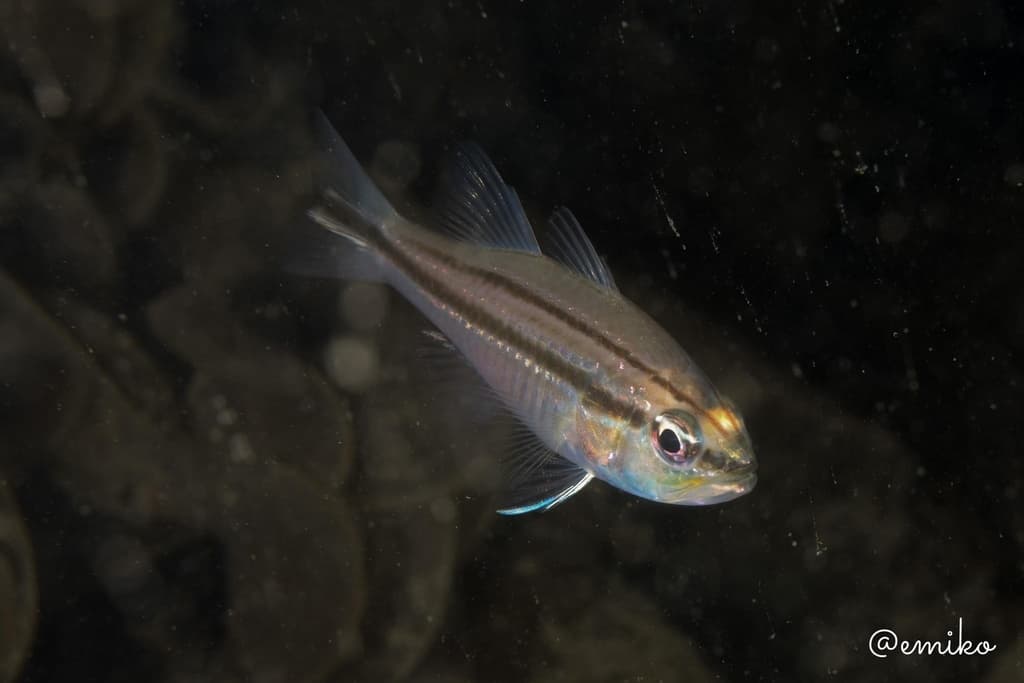
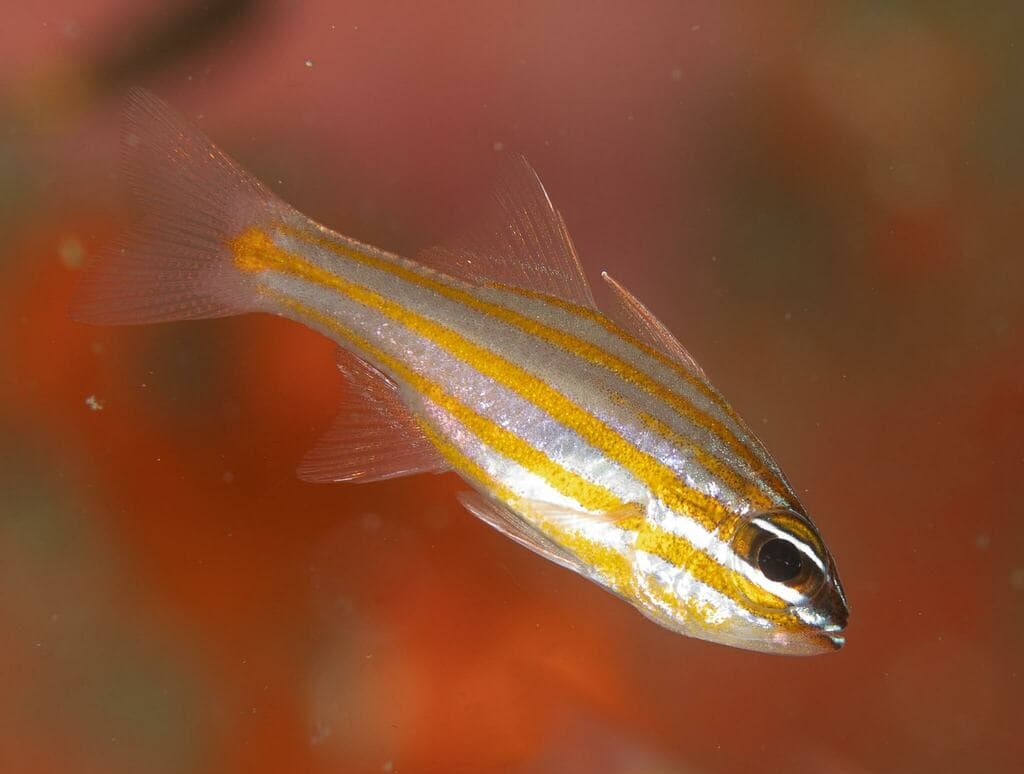
The Orangethroat Cardinalfish is a beautifully colored species that features a striking combination of blue body coloration highlighted by vivid orange to yellow horizontal stripes running from head to tail. The throat and belly display a warm orange hue that contrasts elegantly with the cooler blue tones of the upper body. This combination of colors makes it one of the more visually appealing cardinalfish available in the aquarium trade.
In the wild, this species forms large aggregations around branching corals and rock outcroppings on tropical reefs throughout the Indo-Pacific region. It is found from the Red Sea and East African coast through the Indian Ocean to the Western Pacific. In the aquarium, it retains its schooling instincts and is best kept in groups of three or more, where it creates a mesmerizing display of coordinated movement.
The Orangethroat Cardinalfish is exceptionally easy to care for and adapts quickly to aquarium life. It readily accepts frozen and prepared foods, tolerates a range of water conditions, and coexists peacefully with nearly all reef-safe community fish. Its small size and peaceful nature make it suitable for tanks as small as 20 gallons.
Feeding & Diet
Carnivore
Orangethroat Cardinalfish are carnivores that naturally feed on zooplankton and small crustaceans. In the aquarium, they eagerly accept frozen mysis shrimp, enriched brine shrimp, cyclops, and high-quality marine pellets. Feed two to three times daily with small portions to maintain optimal health and coloration.
Compatibility
reef-safepeacefulcommunity-safeschoolingbeginner-friendly
The Orangethroat Cardinalfish is an ideal community fish that coexists peacefully with virtually all reef-safe species. It does well alongside clownfish, gobies, blennies, wrasses, and other cardinalfish. Avoid pairing with large or aggressive fish that may intimidate or outcompete it for food. Groups generally coexist harmoniously.
Check CompatibilityBreeding
Moderate
Orangethroat Cardinalfish are paternal mouthbrooders. Males carry fertilized eggs in their mouths for approximately 7-10 days until hatching. Pairs form within groups and may breed regularly in well-maintained aquariums. Fry are small and require rotifers or newly hatched brine shrimp as first foods.
Special Requirements
- Best kept in groups of 3 or more for natural schooling behavior
- Provide branching corals or rockwork for shelter
- Nocturnal species - appreciates dimmer lighting zones
- Slow feeder - target feed if kept with aggressive eaters
Water Parameters
Temperature72–80°F
Specific Gravity1.02–1.026 sg
pH8.1–8.4
Alkalinity8–12 dKH
Coloration
blueorangeyellow
Tags
reef-safepeacefulcommunity-safeschoolingbeginner-friendly