IntermediateAggressiveNot Reef Safe
Passer Angelfish
Holacanthus passer
Family: Pomacanthidae · Large Angelfish
Also known as: King Angelfish, Passer Angel
(c) David R, some rights reserved (CC BY-NC)
Max Size
14"
Min Tank
175 gal
Lifespan
15-20 years
Origin
Eastern Pacific, Sea of Cortez
Diet
Omnivore
Swims
Middle
About
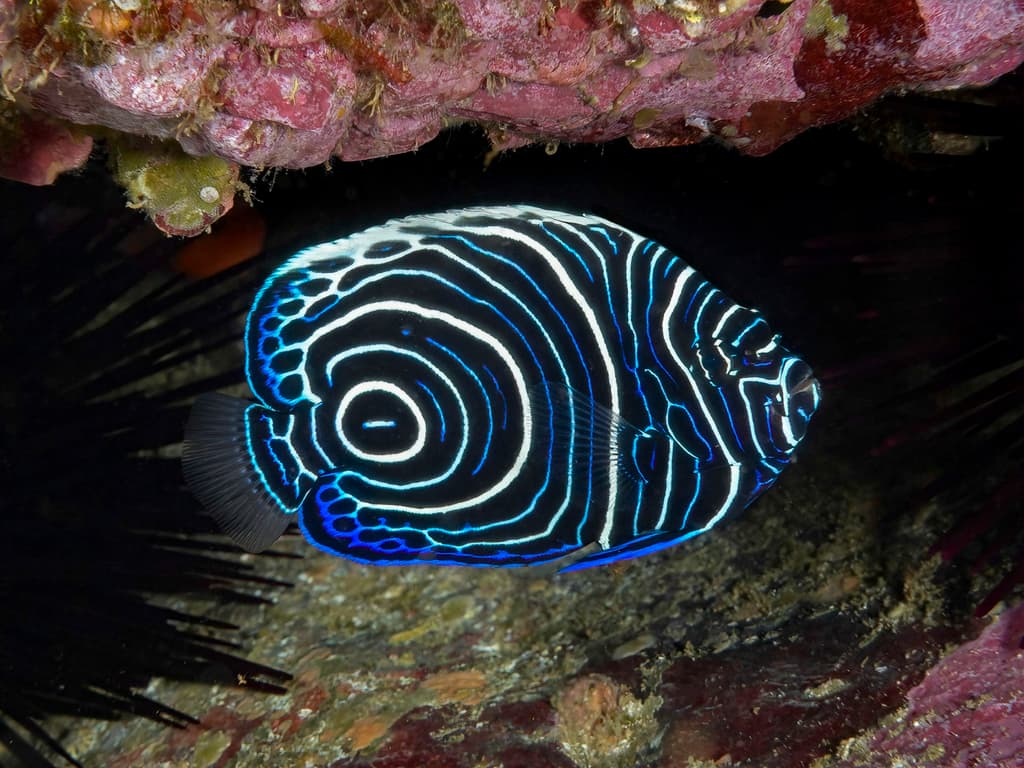
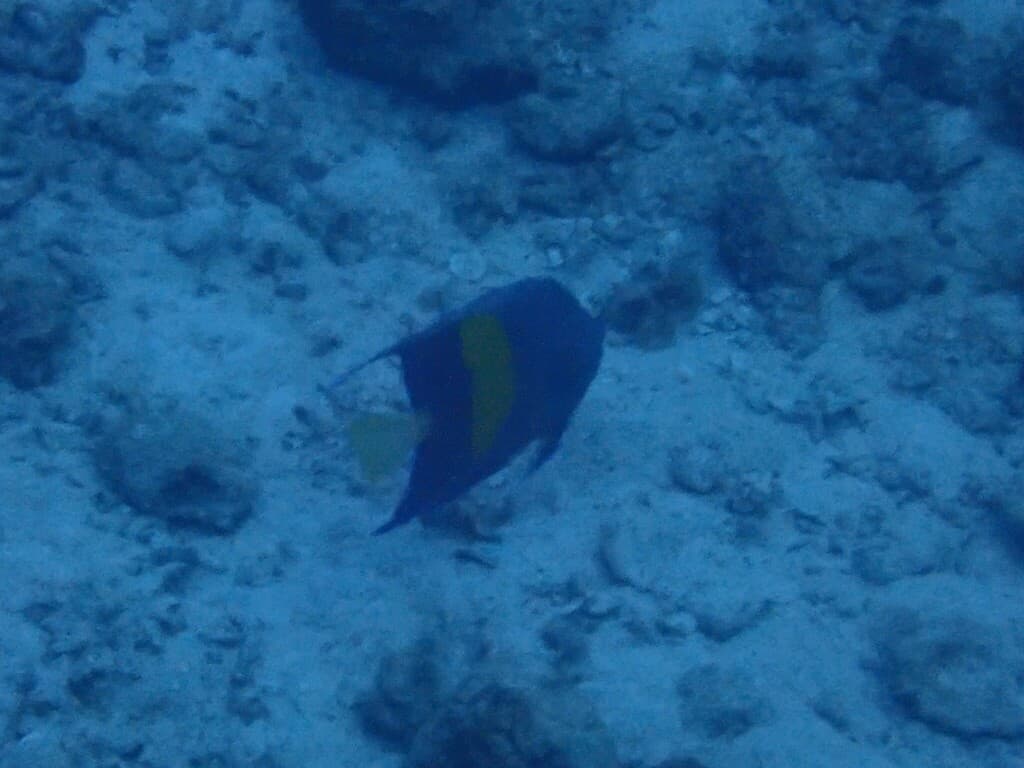
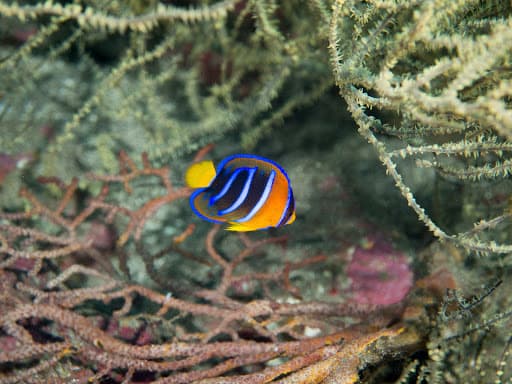
The Passer Angelfish, commonly known as the King Angelfish, is one of the most striking and dominant large angelfish species from the eastern Pacific. Adults display a bold dark navy-blue to black body bisected by a single broad white vertical bar just behind the pectoral fin, creating a dramatic two-tone appearance. The caudal fin is bright yellow, and the dorsal and anal fins feature vivid orange-yellow trailing edges. This regal color pattern, combined with the species' confident bearing, fully justifies its royal common name.
In the wild, Passer Angelfish are found along rocky reefs and boulder-strewn coastlines from the Sea of Cortez south to Peru, including the Galapagos Islands. They are among the most common large angelfish on eastern Pacific reefs, where they are frequently observed patrolling territories along reef walls and rocky drop-offs. Juveniles serve as cleaner fish for larger species, setting up cleaning stations where they pick parasites from willing clients including manta rays and sea turtles.
Reaching up to 14 inches in captivity, the Passer Angelfish requires a spacious aquarium of at least 175 gallons. This species is notably more aggressive than many other large angelfish and will aggressively defend its territory against similar-sized fish. It is not reef-safe and should be housed in fish-only systems. Despite its aggressive temperament, the King Angelfish is a hardy and long-lived species that adapts well to aquarium conditions, developing a bold personality and becoming a commanding centerpiece fish.
Feeding & Diet
Omnivore
Passer Angelfish are omnivores that readily accept a wide variety of foods. Offer sponge-based angelfish preparations, Spirulina-enriched pellets, frozen mysis shrimp, enriched brine shrimp, nori seaweed, and chopped seafood. Their aggressive feeding response makes them easy to train onto prepared foods. Feed two to three times daily.
Compatibility
not-reef-safelarge-angelfish-territorialaggressive-dominantcoral-nipperfish-only-preferred
Passer Angelfish are notably aggressive and will dominate most tankmates. Best kept with equally robust and assertive fish such as large tangs, triggers, and groupers. Should be the only large angelfish in the system. Avoid housing with peaceful or timid species that may be bullied.
Check CompatibilityBreeding
Not bred in captivity
Passer Angelfish are pelagic spawners that release eggs into the water column during dusk. Captive breeding has not been achieved due to the extended larval phase and aggressive adult behavior making pair formation challenging. All aquarium specimens are wild-caught.
Special Requirements
- Minimum 175 gallon aquarium required for adult size
- More aggressive than most large angelfish — careful tankmate selection essential
- Not reef-safe — will consume corals and sessile invertebrates
- Provide extensive live rock with caves and territories
- Best kept as the only large angelfish in the system
- Hardy and adaptable — one of the easier large angels to maintain
Water Parameters
Temperature72–80°F
Specific Gravity1.02–1.026 sg
pH8.1–8.4
Alkalinity8–12 dKH
Coloration
blueblackwhiteyelloworange
Tags
not-reef-safelarge-angelfish-territorialaggressive-dominantcoral-nipperfish-only-preferred