IntermediateAggressiveNot Reef Safe
Blue Angel
Holacanthus bermudensis
Family: Pomacanthidae · Large Angelfish
Also known as: Blue Angelfish, Bermuda Blue Angelfish, Common Angelfish
(c) Danielle Orcutt, all rights reserved
Max Size
15"
Min Tank
220 gal
Lifespan
15-20 years
Origin
Caribbean, Western Atlantic
Diet
Omnivore
Swims
Middle
About
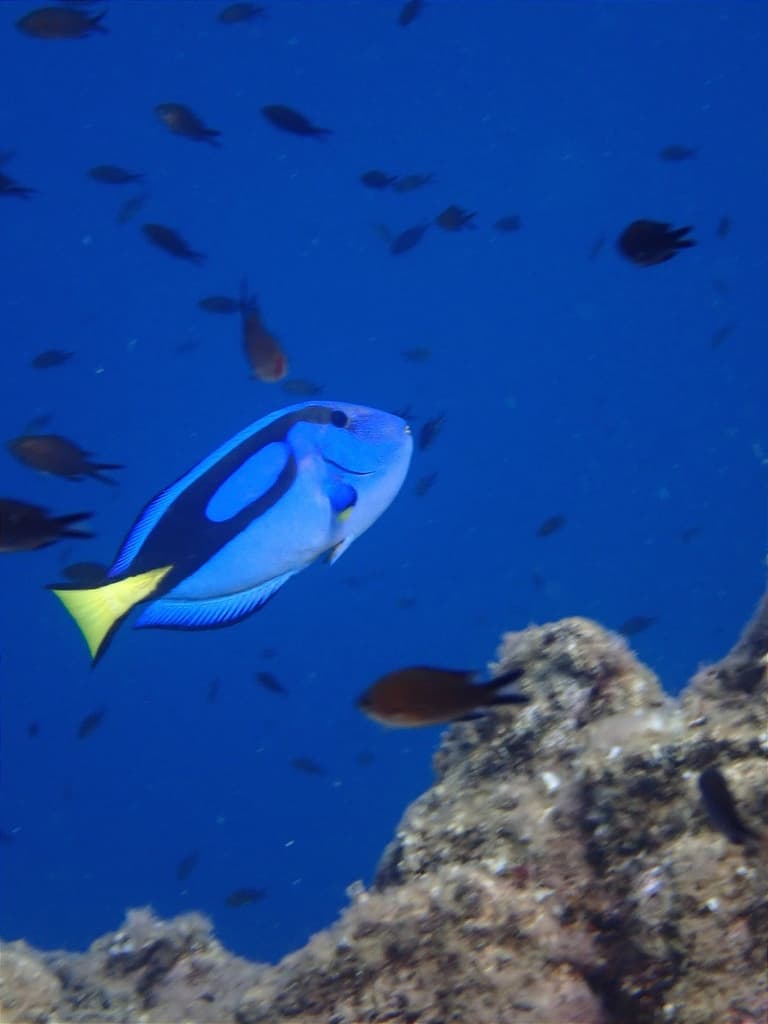
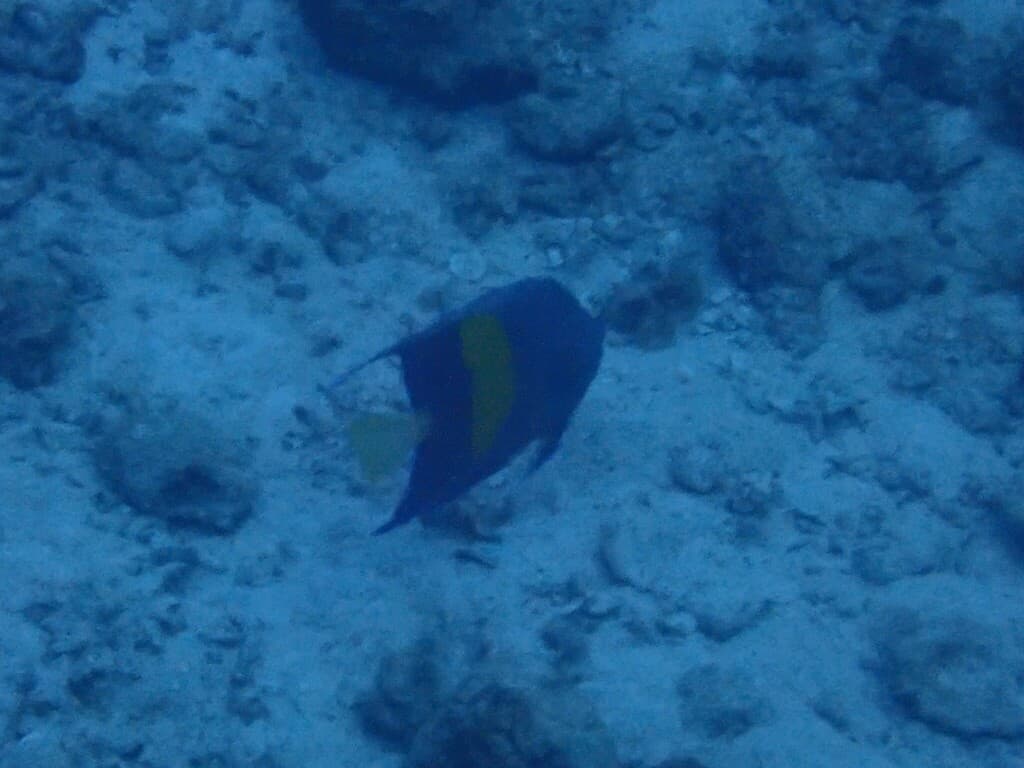
The Blue Angel is a large and stately Caribbean angelfish that displays a deep blue body with subtle yellow-tipped scales creating a beautiful shimmering effect. It is closely related to the Queen Angelfish and the two species occasionally hybridize in the wild, producing offspring known as Townsend Angelfish. The Blue Angel can be distinguished from its Queen cousin by its overall darker blue coloration, the absence of a prominent blue crown, and its more uniformly colored body.
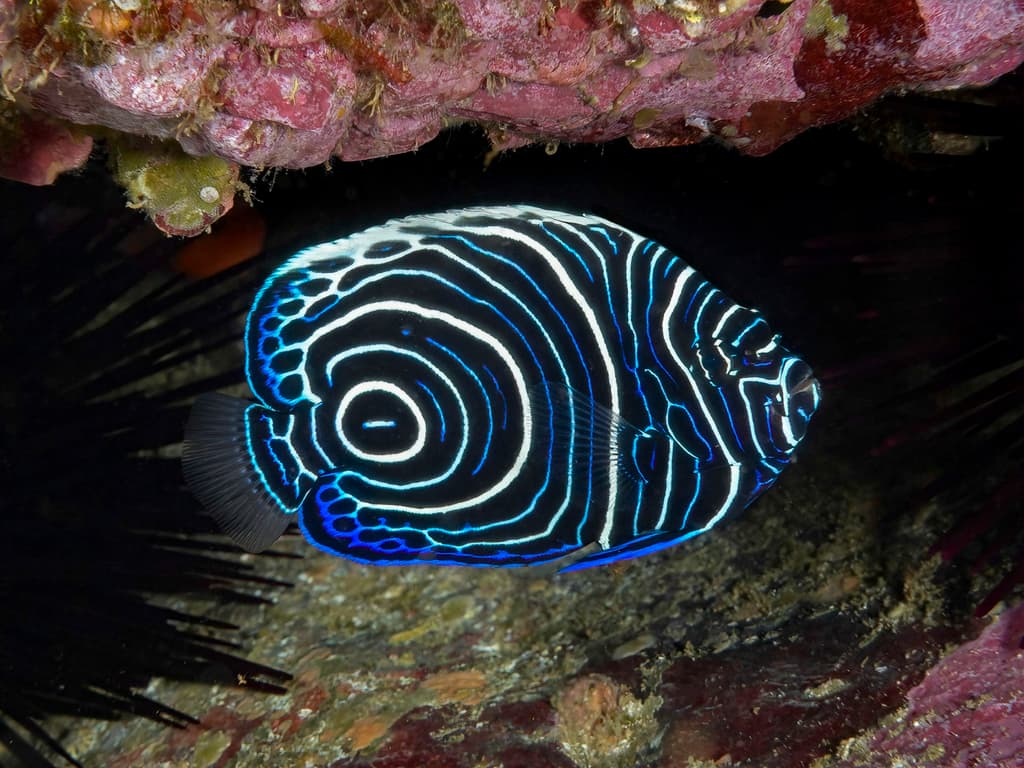
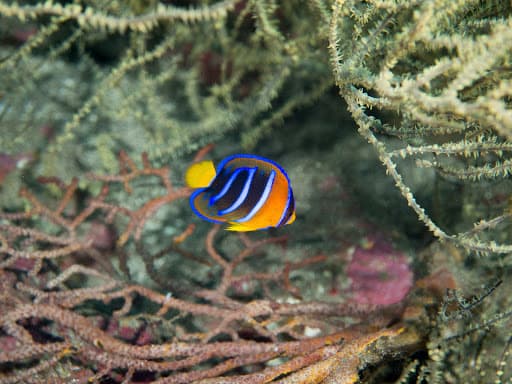
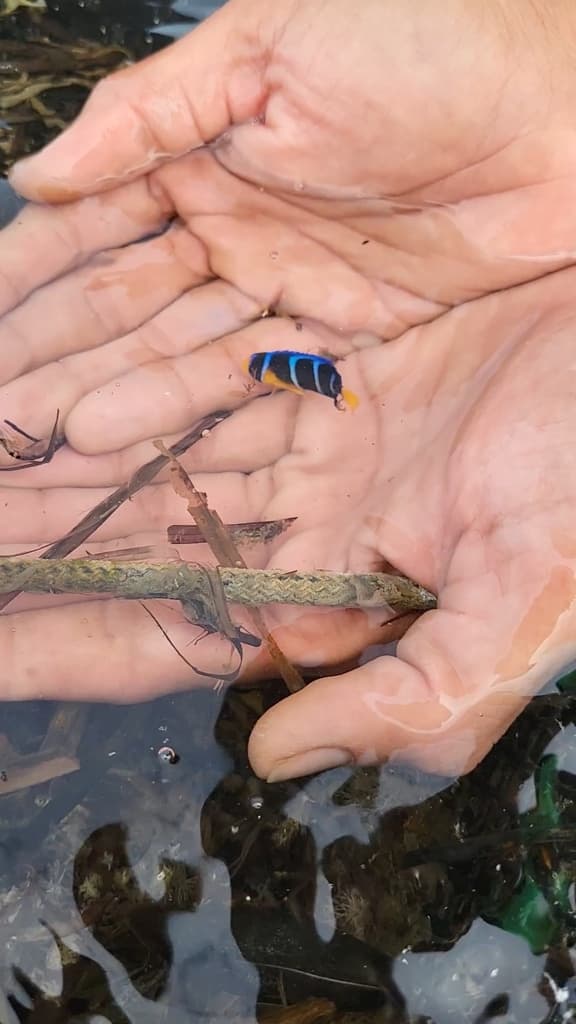
Juveniles undergo a dramatic color transformation similar to other large Holacanthus species. Young Blue Angels display a dark blue to black body with bright yellow vertical bars and a yellow caudal fin. As they mature, the yellow bars gradually fade and the adult blue coloration develops over several months. This transformation is a fascinating process to observe and is one of the appeals of purchasing juvenile specimens.
The Blue Angel is a hardy and adaptable species that does well in large aquariums of 220 gallons or more. Like most large angelfish, it is not considered reef-safe as it will readily nip at corals, sponges, and clam mantles. In the wild, sponges form a major component of its diet. It can be aggressive, particularly toward other angelfish and similarly shaped species, but generally coexists well with dissimilar tankmates in fish-only or fish-only-with-live-rock setups.
Feeding & Diet
Omnivore
Blue Angels are omnivores with sponges forming a significant part of their wild diet. In captivity, offer high-quality angelfish preparations containing marine sponge, Spirulina flakes, frozen mysis shrimp, enriched brine shrimp, nori seaweed, and finely chopped seafood. Feed two to three times daily to maintain health and coloration.
Compatibility
not-reef-safelarge-angelfish-territorialcommunity-compatiblecoral-nipperfish-only-preferred
The Blue Angel can be aggressive toward other large angelfish and similarly shaped fish. Only one Holacanthus species should be kept per tank unless the system is 300+ gallons. It coexists well with tangs, wrasses, triggerfish, and other robust community fish. Will hybridize with Queen Angelfish if housed together. Avoid housing with timid or small species.
Check CompatibilityBreeding
Not bred in captivity
Blue Angels are pelagic spawners that form pairs during evening spawning events. They are known to hybridize with Queen Angelfish in areas where their ranges overlap, producing Townsend Angelfish hybrids. Captive breeding has not been achieved due to the extended oceanic larval phase and large adult size.
Special Requirements
- Large aquarium of 220+ gallons required for adult size
- Not reef-safe - will nip corals, sponges, and clam mantles
- Provide abundant live rock with caves and overhangs for shelter
- Diet should include marine sponge-based preparations
- Only one large angelfish per tank unless system is very large
Water Parameters
Temperature72–80°F
Specific Gravity1.02–1.026 sg
pH8.1–8.4
Alkalinity8–12 dKH
Coloration
blueyellowpurple
Tags
not-reef-safelarge-angelfish-territorialcommunity-compatiblecoral-nipperfish-only-preferred