ExpertSemi-AggressiveNot Reef Safe
Goldflake Angelfish
Apolemichthys xanthopunctatus
Family: Pomacanthidae · Large Angelfish
Also known as: Gold-spangled Angelfish, Goldspot Angelfish, Yellow-spotted Angelfish
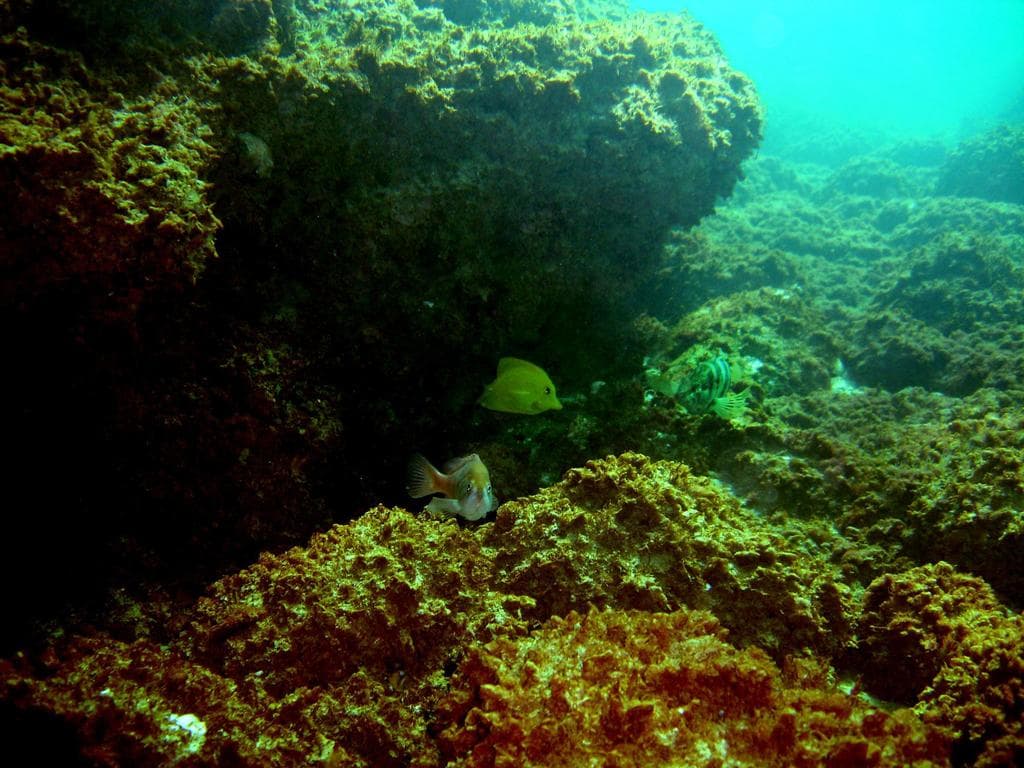
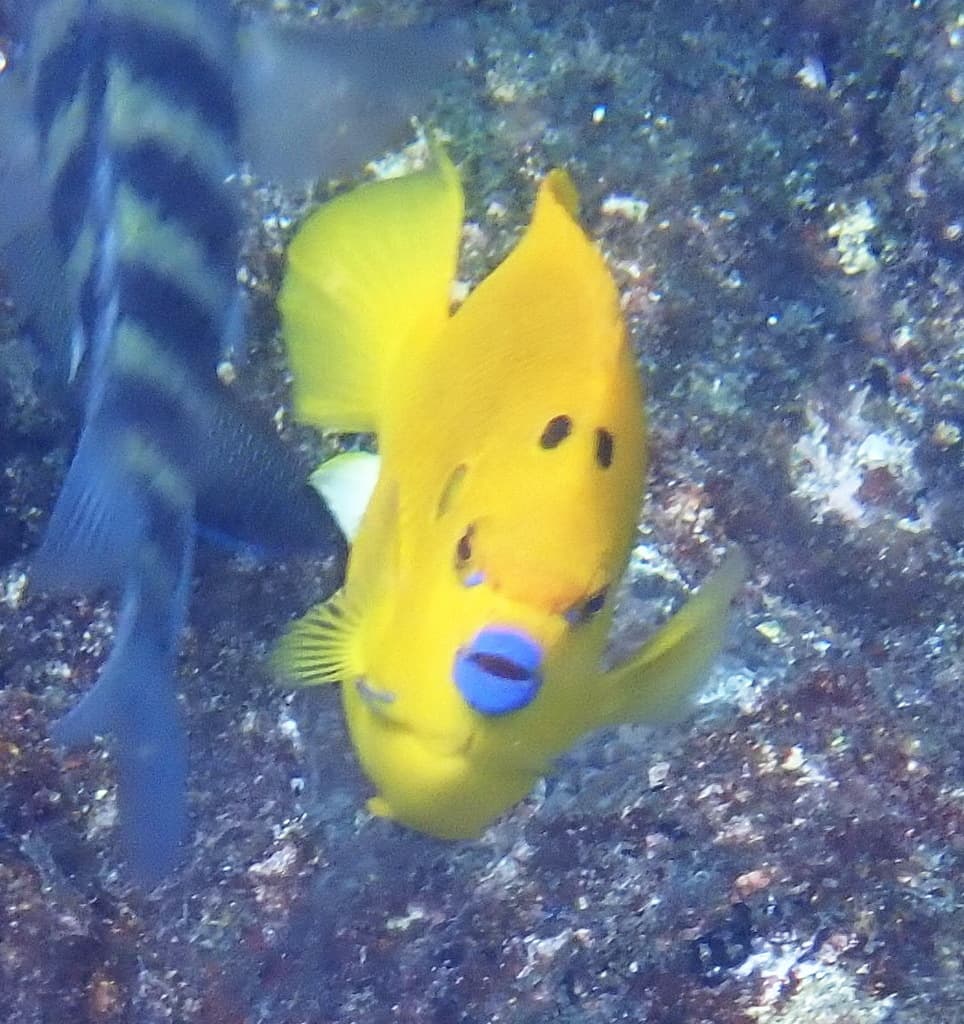
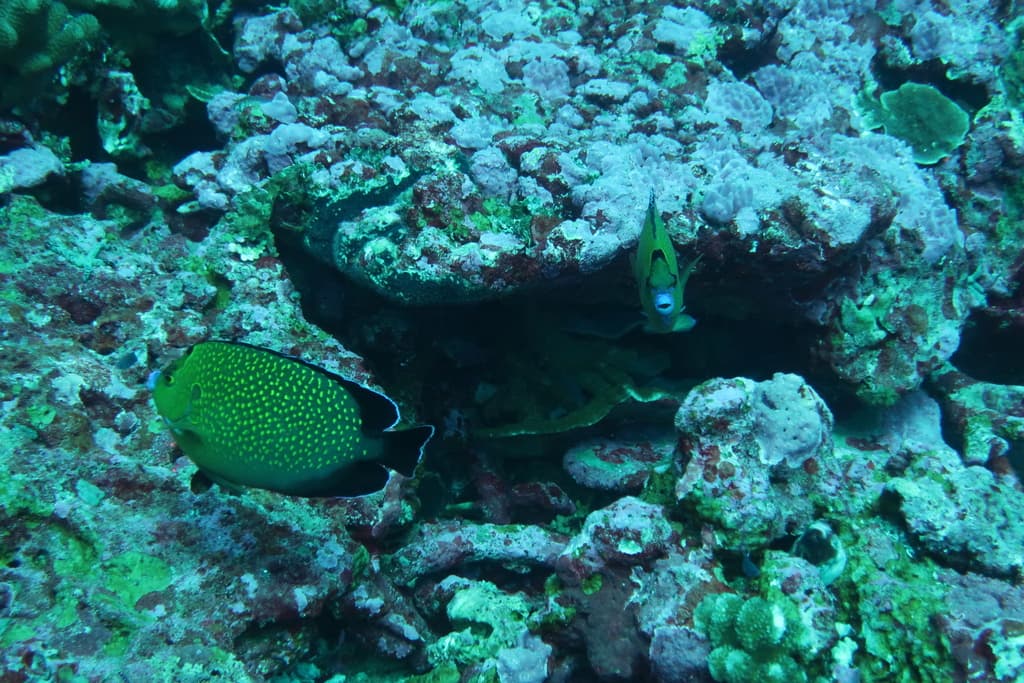
(c) National Coral Reef Monitoring Program - Pacific Region, some rights reserved (CC BY-NC)
Max Size
10"
Min Tank
180 gal
Lifespan
10-15 years
Origin
Central Pacific, Kiribati
Diet
Omnivore
Swims
Middle
About
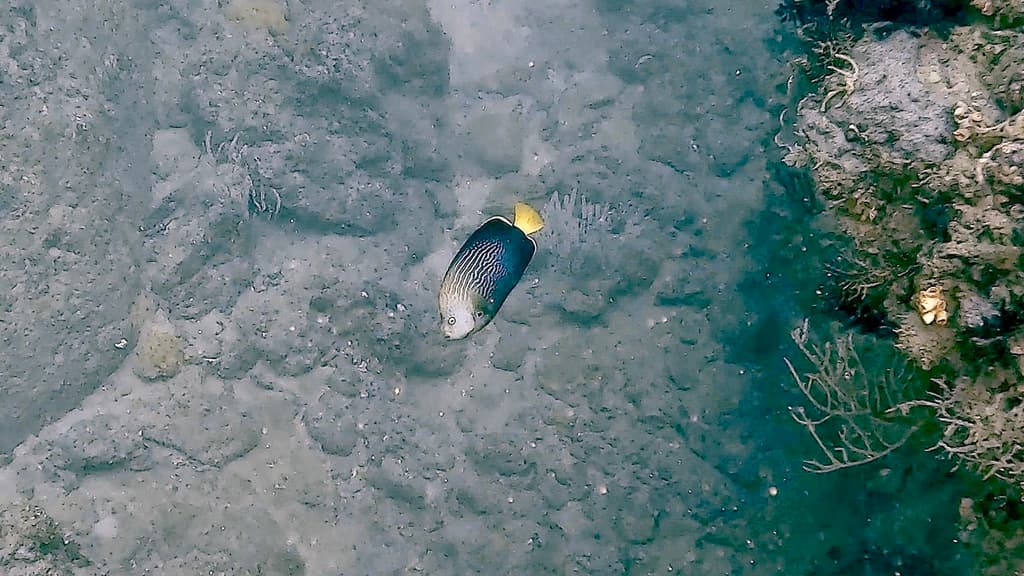
The Goldflake Angelfish is one of the most prized and expensive angelfish in the marine aquarium hobby, renowned for its breathtaking appearance and extreme rarity. Its body is a deep black base color generously peppered with brilliant gold to orange spots or flakes across the flanks, creating a glittering appearance that is truly unique among angelfish. The face and lips are often bright blue, and the caudal fin displays a striking yellow to orange hue, completing a color combination that makes this species instantly recognizable and highly desirable.
This species has an extremely limited natural range, found almost exclusively around the remote atolls of the central Pacific, including parts of Kiribati, the Line Islands, and the Gilbert Islands. It inhabits coral-rich reef slopes at moderate depths, typically between 10 and 50 meters. The combination of its restricted distribution, remote collection locations, and high demand from collectors has historically made wild-caught specimens extraordinarily expensive, with prices often reaching several thousand dollars.
The breakthrough captive breeding of the Goldflake Angelfish by Bali Aquarich and other specialty facilities has improved availability, though the species remains a premium fish. Expert-level care is required, as this species can be sensitive during acclimation and may initially refuse prepared foods. A spacious aquarium of at least 180 gallons with mature live rock, pristine water quality, and a carefully selected community of non-aggressive tankmates provides the best chance of long-term success with this magnificent fish.
Feeding & Diet
Omnivore
Goldflake Angelfish are omnivores that feed on sponges, tunicates, and algae in the wild. In captivity, offer premium sponge-based angelfish preparations, frozen mysis shrimp, enriched brine shrimp, spirulina, nori sheets, and high-quality marine pellets. A highly varied diet is essential. Captive-bred specimens typically accept prepared foods more readily than wild-caught individuals.
Compatibility
not-reef-safesemi-aggressivecommunity-compatiblelarge-angelfish-territorialsponge-eaterrare-species
The Goldflake Angelfish is semi-aggressive and territorial toward other large angelfish. It is best housed with robust but non-aggressive tankmates such as tangs, larger wrasses, and peaceful groupers. Avoid housing with overly boisterous species during the critical acclimation period.
Check CompatibilityBreeding
Very Difficult
The Goldflake Angelfish has been successfully captive bred by Bali Aquarich and a small number of other specialty breeders. It is a pelagic spawner that forms pairs in the wild. Captive breeding has been a significant achievement given the species' rarity and the difficulty of maintaining broodstock. Captive-bred juveniles are considerably hardier than wild-caught specimens.
Special Requirements
- Extremely rare and expensive — captive-bred by Bali Aquarich and others
- Expert-level care required — sensitive during acclimation period
- Minimum 180 gallon aquarium with pristine water quality
- Not reef safe — will eat sponges and may nip at corals and invertebrates
- Provide abundant live rock with caves and hiding spots
- Best kept as the only large angelfish in the system
- Patient feeding training may be required for wild-caught specimens
Water Parameters
Temperature72–78°F
Specific Gravity1.02–1.026 sg
pH8.1–8.4
Alkalinity8–12 dKH
Coloration
blackgoldorangeblue
Tags
not-reef-safesemi-aggressivecommunity-compatiblelarge-angelfish-territorialsponge-eaterrare-species