IntermediateSemi-AggressiveNot Reef Safe
Flagfin Angelfish
Apolemichthys trimaculatus
Family: Pomacanthidae · Large Angelfish
Also known as: Three-spot Angelfish, Threespot Angelfish, Yellow Angelfish
(c) Delana, all rights reserved
Max Size
10"
Min Tank
180 gal
Lifespan
10-15 years
Origin
Indo-Pacific, East Africa
Diet
Omnivore
Swims
Middle
About
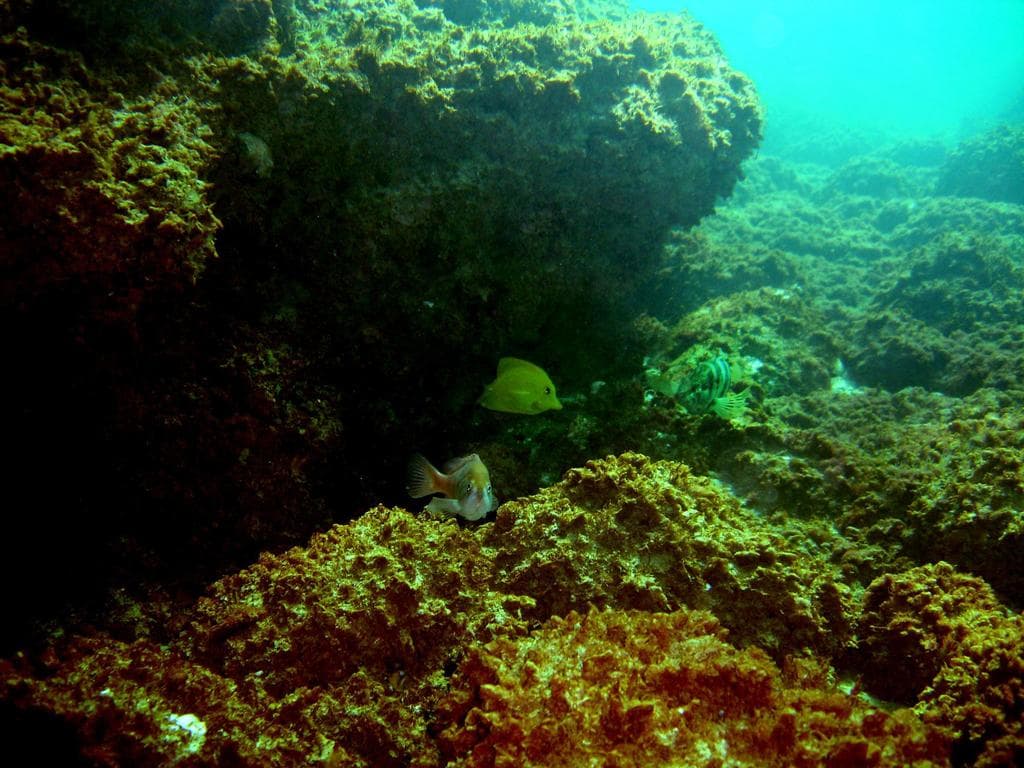
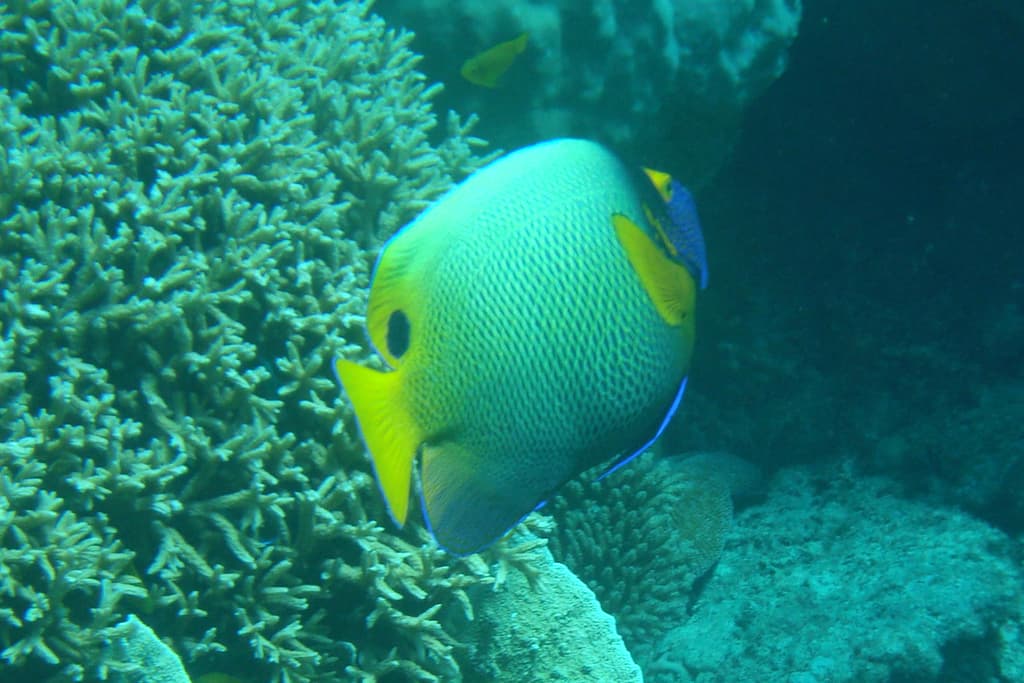
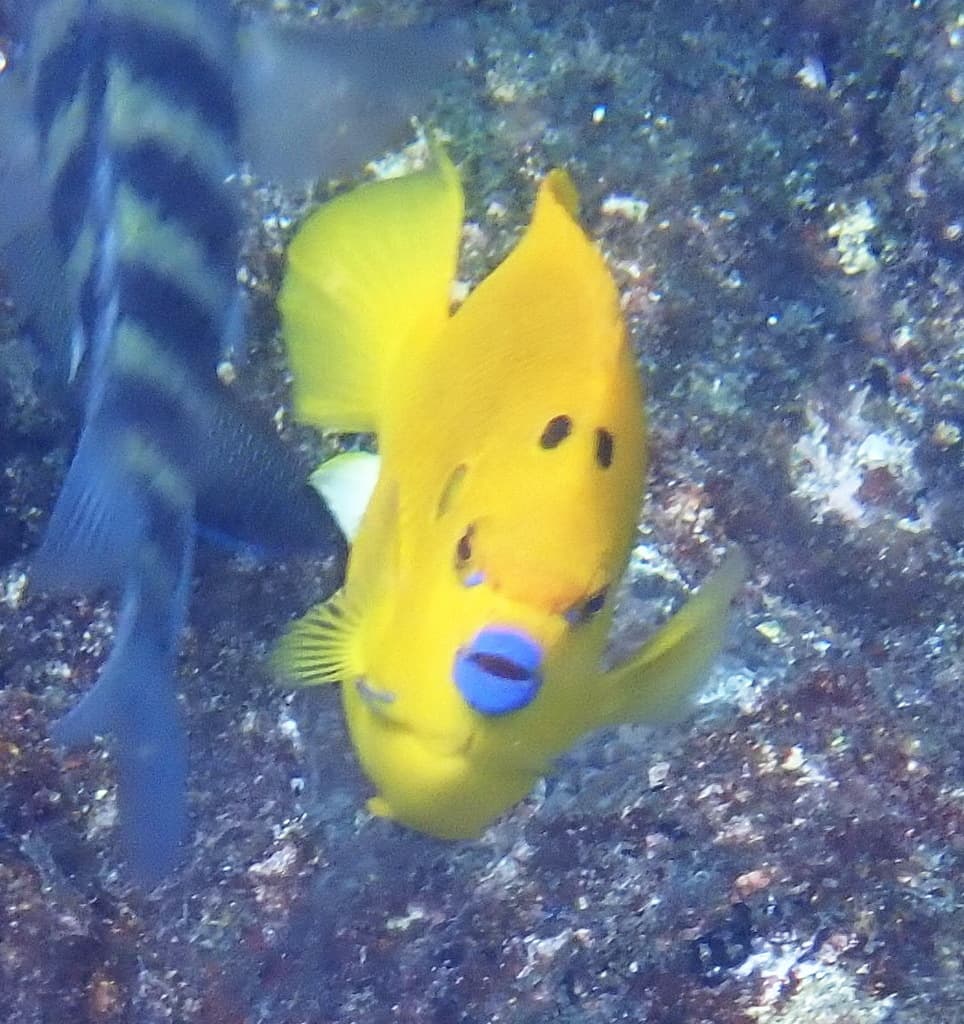
The Flagfin Angelfish is a handsome and widely distributed member of the Apolemichthys genus, admired for its vibrant yellow body adorned with distinctive dark markings. The body is a rich bright yellow with a prominent black spot on the forehead just above the mouth, a dark patch at the base of the dorsal fin, and another at the operculum, giving rise to its alternate name, the Three-spot Angelfish. The dorsal fin features a dramatic elongated filament or flag-like extension in mature specimens, which is the hallmark feature behind the Flagfin common name.
This species ranges across a broad Indo-Pacific distribution, from the coast of East Africa through Indonesia and out to the western Pacific including the Great Barrier Reef. It inhabits coral-rich reef slopes and lagoons, typically at depths of 5 to 40 meters, where it feeds on sponges, tunicates, and algae growing on reef surfaces. Its relatively wide distribution makes it more commonly available than many other Apolemichthys species, and captive-bred specimens have further improved accessibility.
The Flagfin Angelfish adapts well to aquarium life with moderate care requirements. At a maximum size of 10 inches, it needs a spacious tank of at least 180 gallons with ample live rock for grazing and hiding. While not considered reef safe due to its sponge-eating habits and tendency to pick at corals and clam mantles, it is an excellent choice for large fish-only systems. Its bold yellow coloration and active swimming behavior make it a visually commanding presence in any appropriately sized aquarium.
Feeding & Diet
Omnivore
Flagfin Angelfish are omnivores that feed heavily on sponges and tunicates in the wild. In captivity, offer sponge-based angelfish preparations, spirulina and nori sheets, frozen mysis shrimp, enriched brine shrimp, and high-quality marine pellets. A varied diet with both meaty and plant-based components is essential for maintaining health and coloration.
Compatibility
not-reef-safesemi-aggressivecommunity-compatiblelarge-angelfish-territorialsponge-eater
The Flagfin Angelfish is semi-aggressive and will defend its territory against other large angelfish. It coexists well with tangs, groupers, larger wrasses, and other robust fish of similar size. Avoid keeping with other Apolemichthys species or timid fish that may be bullied.
Check CompatibilityBreeding
Difficult
The Flagfin Angelfish has been captive bred, with availability increasing from specialty breeders. It is a pelagic spawner that forms pairs in the wild. Captive-bred juveniles acclimate to aquarium conditions more readily than wild-caught specimens and typically accept prepared foods sooner.
Special Requirements
- Minimum 180 gallon aquarium due to adult size of 10 inches
- Not reef safe — will eat sponges, tunicates, and may nip corals and clams
- Provide abundant live rock with caves and overhangs for security
- Captive-bred specimens available and recommended over wild-caught
- Varied diet including sponge-based foods important for long-term health
- Best kept as the only large angelfish in the system
Water Parameters
Temperature72–80°F
Specific Gravity1.02–1.026 sg
pH8.1–8.4
Alkalinity8–12 dKH
Coloration
yellowblackwhite
Tags
not-reef-safesemi-aggressivecommunity-compatiblelarge-angelfish-territorialsponge-eater