AdvancedPeacefulReef SafeIUCN: Not Evaluated
Leopard Wrasse
Macropharyngodon meleagris
Family: Labridae · Wrasses
Also known as: Black Leopard Wrasse, Spotted Wrasse, Guinea Fowl Wrasse
(c) Francois Libert, some rights reserved (CC BY-NC)
Max Size
6"
Min Tank
75 gal
Lifespan
5-8 years
Origin
Indo-Pacific, Indonesia
Diet
Carnivore
Swims
Bottom
Did You Know?
- Male and female Leopard Wrasses look so different that they were once described as entirely separate species before the sex-change relationship was understood
- Leopard Wrasses use a distinctive nose-down foraging posture, carefully scanning the substrate for microscopic prey items invisible to most other reef fish
- This species wraps itself in a mucus cocoon when sleeping buried in the sand, which is believed to help mask its scent from nocturnal predators
About
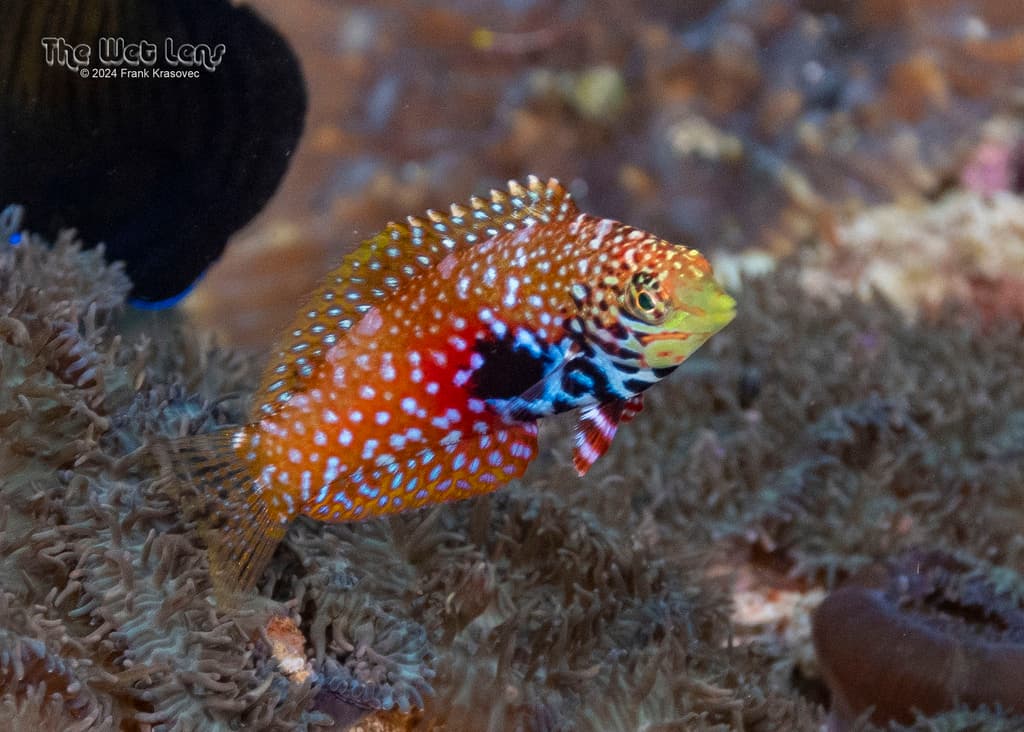
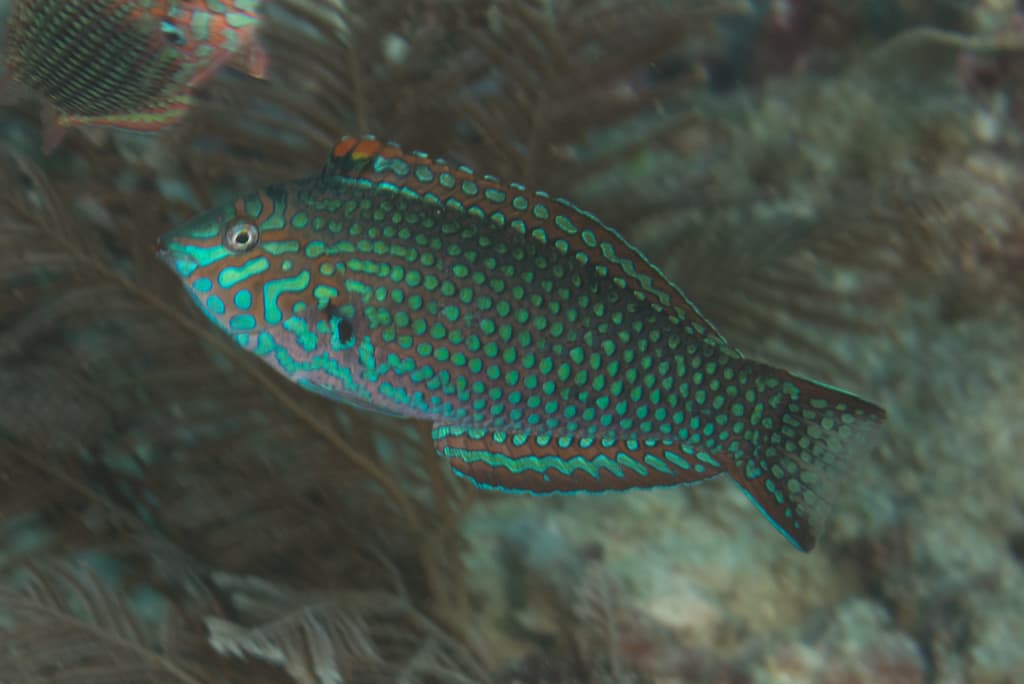
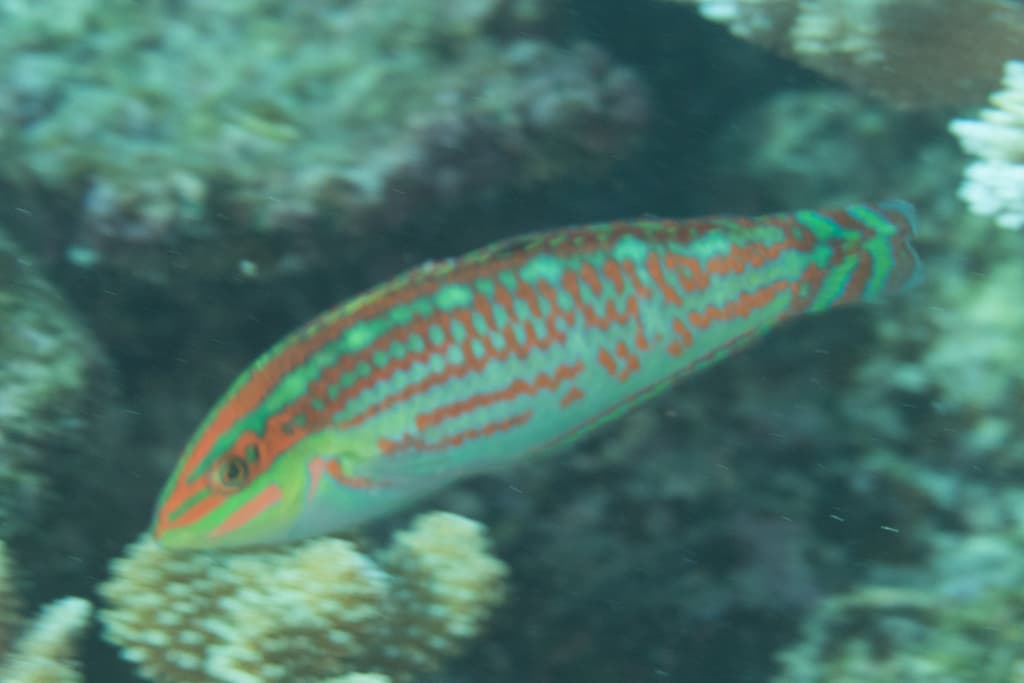
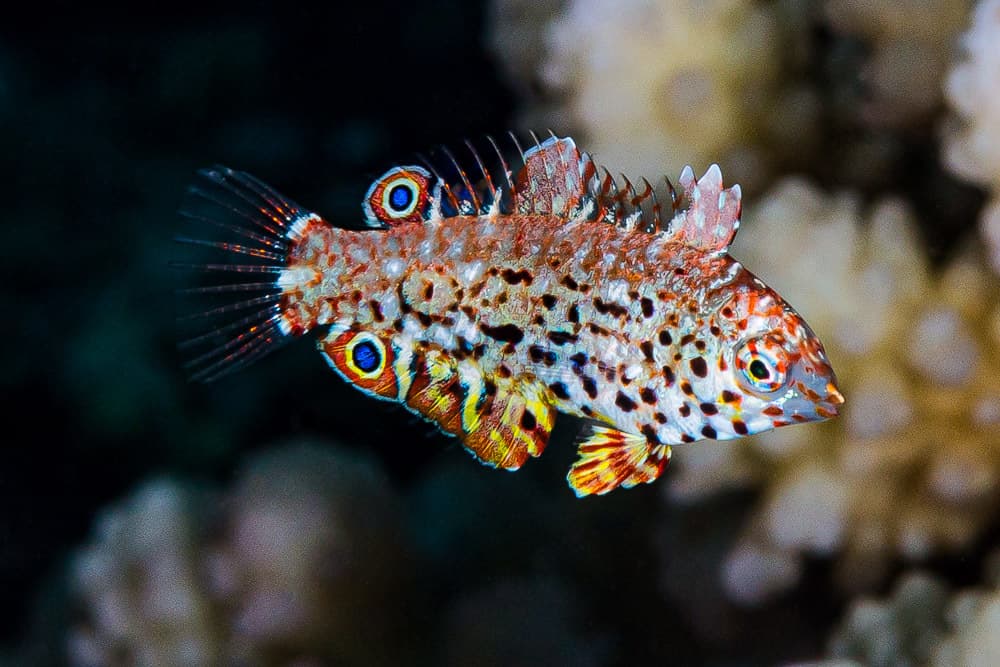
The Leopard Wrasse is one of the most visually captivating wrasses available in the marine aquarium hobby, displaying an intricate pattern of dark spots and rosettes across its body that closely resembles the coat of a leopard. Males exhibit a greenish-blue body covered with reddish-orange to dark leopard-like spots, while females and juveniles display a striking black body densely covered with white spots, giving them the alternative common name of Guinea Fowl Wrasse. The color difference between males and females is so pronounced that they were once considered separate species.
In the wild, Macropharyngodon meleagris is distributed throughout the Indo-Pacific, from the eastern coast of Africa to Polynesia. It inhabits sandy areas adjacent to coral reefs and rubble zones at depths of 1 to 30 meters, where it methodically searches the substrate for tiny invertebrates, foraminifera, and gastropods. The Leopard Wrasse uses a distinctive nose-down foraging posture, meticulously scanning the sand and rubble for prey items too small for most other fish to detect.
The Leopard Wrasse is considered an advanced-level species that presents significant challenges in captivity. Its primary difficulty lies in its highly specialized feeding behavior and small prey preference, which makes the transition to prepared aquarium foods challenging. Many specimens refuse prepared foods initially and require live copepods, amphipods, and other microfauna to survive. A mature reef aquarium with an established refugium producing a steady supply of live pods is strongly recommended. A deep sand bed of at least 3 inches is essential, as this species sleeps buried in the sand. Despite its challenges, a successfully maintained Leopard Wrasse is an extraordinarily rewarding fish that brings unmatched beauty and fascinating behavior to the reef aquarium.
Feeding & Diet
Carnivore
Leopard Wrasses are specialized carnivores that feed on tiny benthic invertebrates, foraminifera, and small gastropods in the wild. In captivity, they often require live foods initially, including copepods and amphipods from an established refugium. Gradually transition to frozen mysis shrimp, enriched brine shrimp, cyclops, and fish eggs. A mature tank with abundant microfauna is essential. Feed multiple small meals per day, as this species has a high metabolism.
Compatibility
reef-safepeacefulcommunity-safespecialized-dietsand-sleeper
The Leopard Wrasse is one of the most peaceful wrasse species available and will not bother any tankmates, corals, or invertebrates. It should not be kept with aggressive or boisterous fish that may outcompete it for food or cause stress. Ideal tankmates include gobies, blennies, clownfish, fairy wrasses, and other gentle community fish. Avoid housing with large aggressive wrasses or overly active feeders.
Check CompatibilityBreeding
Not bred in captivity
Leopard Wrasses are protogynous hermaphrodites, with females capable of transitioning to male. Males court females with color displays and spawning occurs at dusk with pelagic egg release. Captive breeding has not been achieved due to the specialized dietary requirements and the difficulty of rearing pelagic larvae. All specimens are wild-caught.
Special Requirements
- Deep sand bed required for sleeping (3+ inches)
- Established refugium producing live copepods and amphipods is strongly recommended
- Mature aquarium with abundant microfauna essential for feeding
- May refuse prepared foods initially - live foods often needed
- Multiple small feedings per day due to high metabolism
- Tight-fitting lid required - known jumper
- Peaceful and completely reef-safe
Water Parameters
Temperature72–80°F
Specific Gravity1.02–1.026 sg
pH8–8.4
Alkalinity8–12 dKH
Coloration
greenblueorangeredblackwhite
Tags
reef-safepeacefulcommunity-safespecialized-dietsand-sleeper