IntermediateAggressiveNot Reef Safe
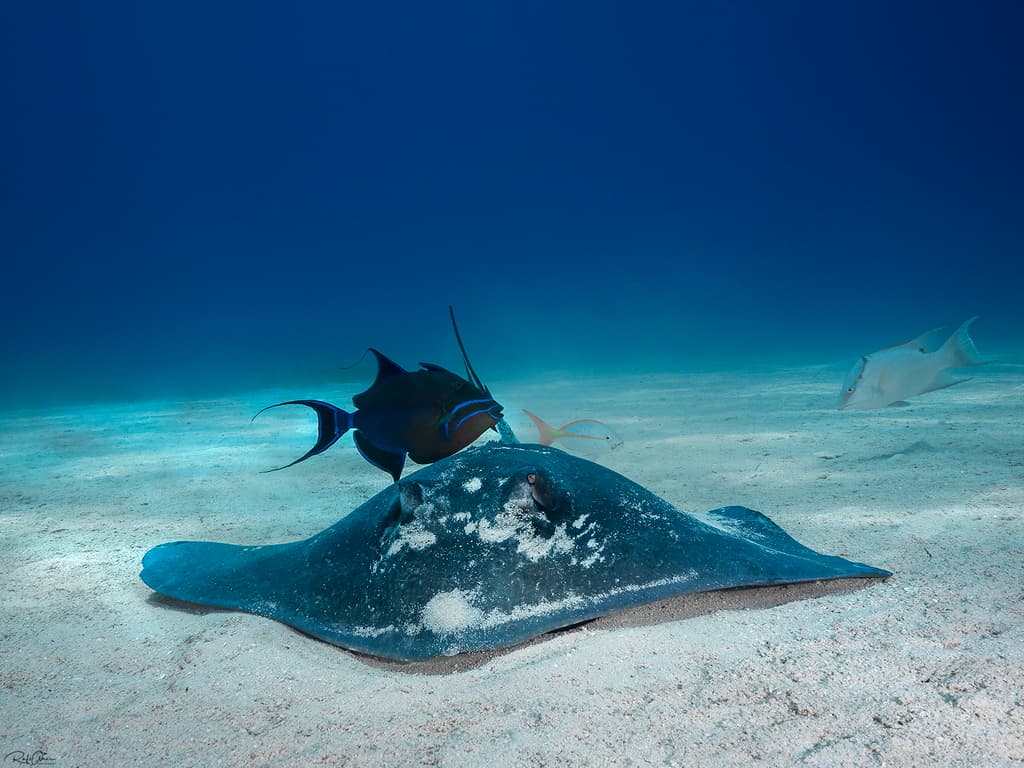
Queen Triggerfish
Balistes vetula
Family: Balistidae · Triggerfish
Also known as: Old Wife, Old Wench, Turbot
(c) Rafi Amar, some rights reserved (CC BY-NC)
Max Size
24"
Min Tank
300 gal
Lifespan
15-20 years
Origin
Atlantic, Caribbean
Diet
Carnivore
Swims
All
About
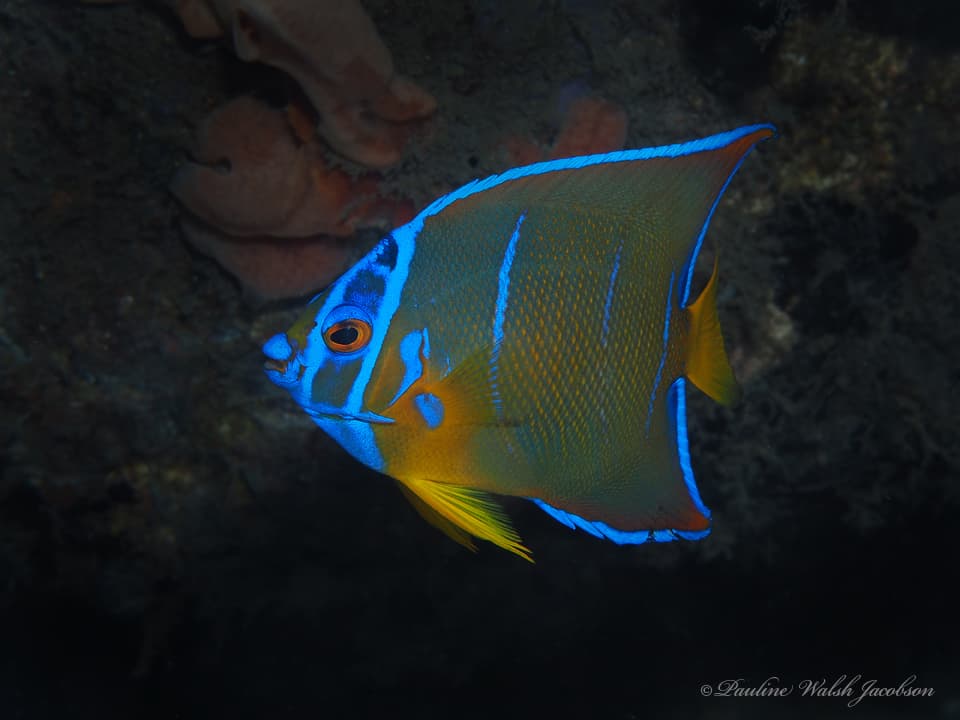
The Queen Triggerfish is one of the most colorful and majestic triggerfish species, renowned for its stunning palette of blues, greens, yellows, and purples that shifts and intensifies with mood, lighting, and maturity. The body is predominantly blue-green to purple with bold yellow-orange lines radiating from the eyes and mouth. The dorsal and anal fins are edged in brilliant blue, and long trailing filaments extend from the tips of the caudal fin, giving the fish a regal, flowing appearance that justifies its common name.
In the wild, the Queen Triggerfish is found across the tropical and subtropical Atlantic, from Florida and the Caribbean to Brazil and the eastern Atlantic coast of Africa. It inhabits coral reefs, rocky areas, and sandy bottoms, feeding primarily on sea urchins, which it dispatches with a clever technique of blowing water jets to flip the urchin over, exposing the vulnerable underside. It also feeds on crabs, mollusks, starfish, and various hard-shelled invertebrates.
The Queen Triggerfish is a hardy but demanding aquarium species that requires an extremely large tank due to its adult size of up to 24 inches. It is intelligent, interactive, and capable of recognizing its keeper, but it is also highly aggressive and territorial, particularly as it matures. Adults will dominate any tank they inhabit and may attack fish of considerable size. It is not reef-safe and will consume every invertebrate in the aquarium. This species is best suited for very large fish-only systems dedicated to aggressive predatory fish.
Feeding & Diet
Carnivore
Queen Triggerfish are carnivores specialized in crushing hard-shelled prey. In the wild, they feed heavily on sea urchins, crabs, mollusks, and starfish. In captivity, offer frozen krill, whole shrimp, squid, chopped clam, silversides, and marine pellets. Hard-shelled prey such as whole crabs, snails, and clams are essential for dental maintenance. Feed two to three times daily with generous portions.
Compatibility
not-reef-safeaggressiveintelligentfish-onlymay-rearrange-decorlarge-speciesatlantic-species
The Queen Triggerfish is highly aggressive and will dominate virtually any tankmate. Only house with other large, robust, aggressive species such as groupers, large moray eels, and other triggerfish in very large systems. It will consume all invertebrates without exception. Many experienced aquarists house large adults as solitary specimens or with only the most durable tankmates.
Check CompatibilityBreeding
Not bred in captivity
Queen Triggerfish have not been bred in home aquariums. In the wild, they excavate nests in sandy substrate where the female deposits eggs that are aggressively guarded by both parents. The pelagic larval phase and extreme adult aggression make captive breeding impractical.
Special Requirements
- Very large aquarium required - grows to 24 inches
- Highly aggressive - especially as adults mature
- Will rearrange rockwork and destroy equipment
- Heavy-duty, tight-fitting lid essential
- Provide hard-shelled foods for dental maintenance
- Not suitable for reef aquariums
- Oversized filtration essential for heavy bioload
- Best suited for very large fish-only systems
Water Parameters
Temperature72–80°F
Specific Gravity1.02–1.026 sg
pH8.1–8.4
Alkalinity8–12 dKH
Coloration
bluegreenpurpleyelloworange
Tags
not-reef-safeaggressiveintelligentfish-onlymay-rearrange-decorlarge-speciesatlantic-species