IntermediateAggressiveNot Reef Safe
Wedge Trigger
Rhinecanthus rectangulus
Family: Balistidae · Triggerfish
Also known as: Wedgetail Triggerfish, Humuhumunukunukuapuaa, Rectangular Triggerfish, V-Line Triggerfish
(c) Tom Barnes, all rights reserved
Max Size
12"
Min Tank
180 gal
Lifespan
10-15 years
Origin
Indo-Pacific, Hawaii
Diet
Carnivore
Swims
All
About
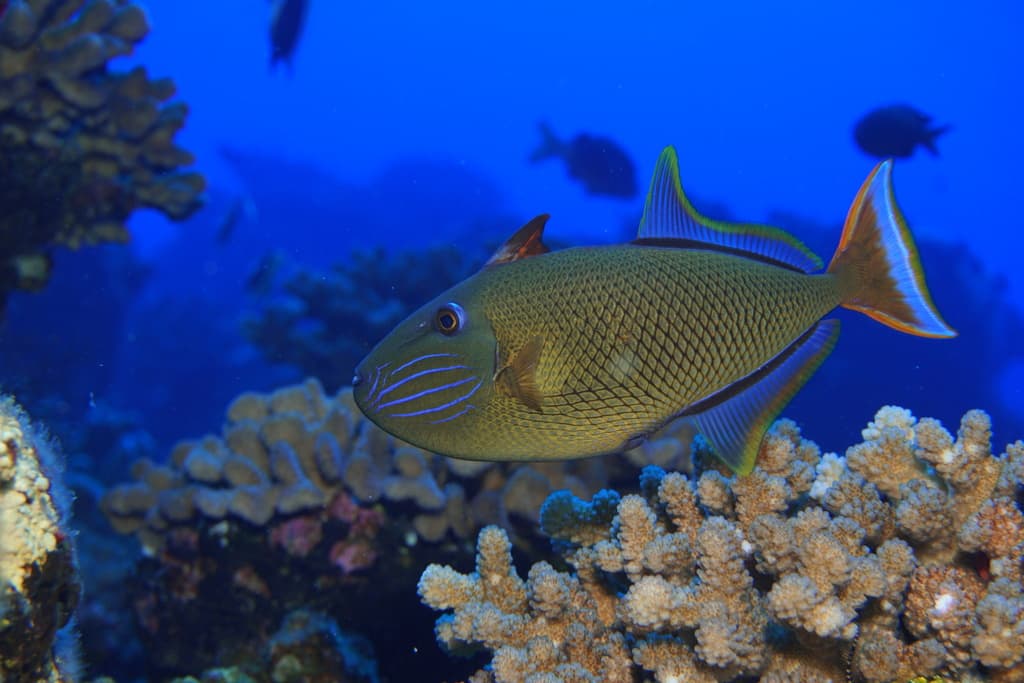
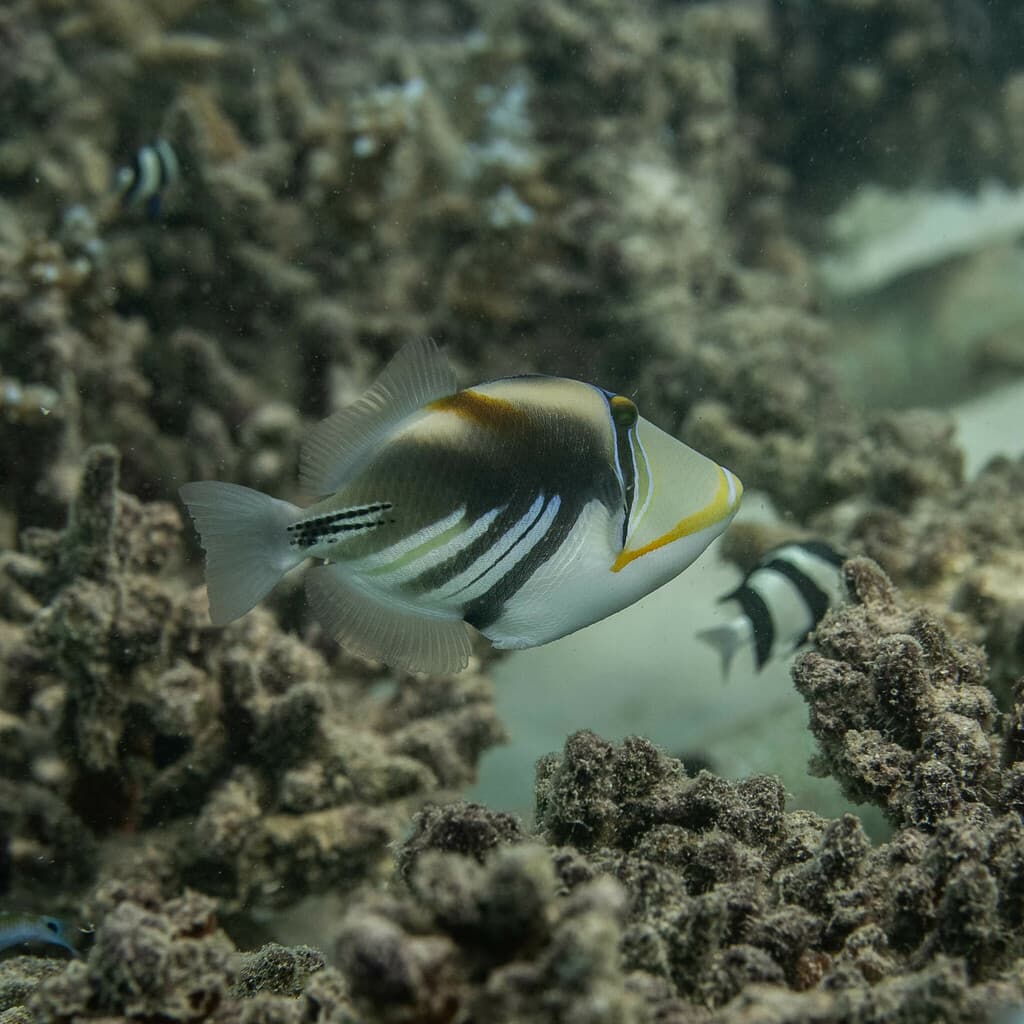
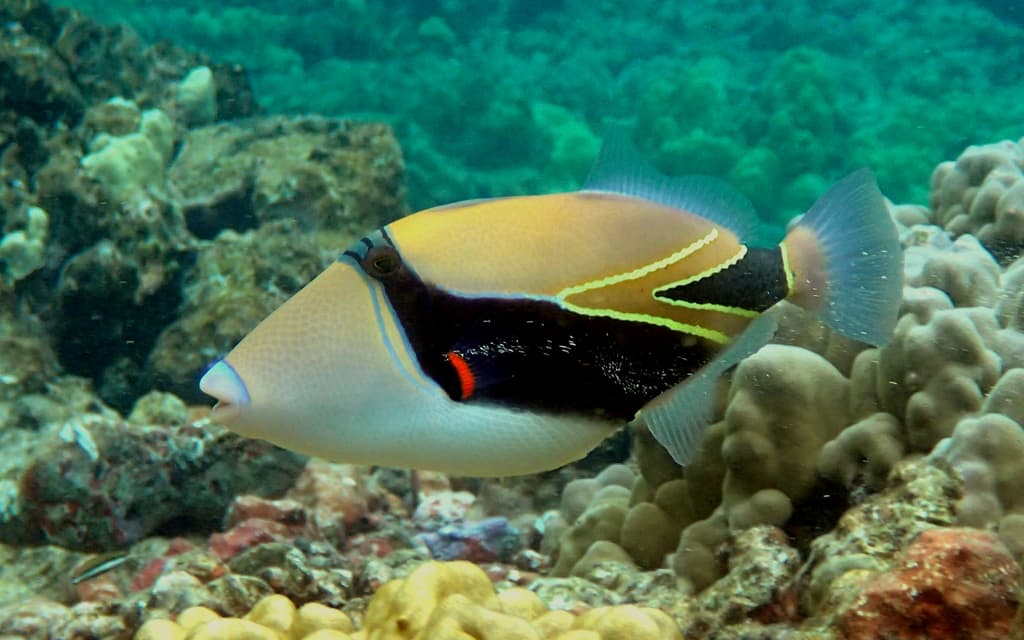
The Wedge Trigger, commonly known by its Hawaiian name Humuhumunukunukuapuaa, is one of the most culturally significant triggerfish species in the world. It serves as the official state fish of Hawaii, a title reflecting its abundance and cultural importance in Hawaiian waters. The species features a distinctive color pattern with a tan to olive body, bold black wedge-shaped markings on the flanks, a yellow stripe running from the mouth to the pectoral fin base, and blue and black striping near the tail.
This species is closely related to the more commonly seen Picasso Triggerfish (Rhinecanthus aculeatus) and shares many behavioral characteristics. It is an active, curious, and intelligent fish that patrols its territory with purpose. In the wild, it inhabits shallow reef flats and lagoons where it feeds on a variety of benthic organisms including algae, detritus, crustaceans, worms, and small invertebrates. It is known to produce audible grunting sounds when threatened or excited.
The Wedge Trigger is aggressive and territorial, particularly as it matures. It will claim a section of the aquarium as its own and vigorously defend it against intruders. Despite this aggression, it is hardy, adaptable, and entertaining to watch. A minimum of 180 gallons is recommended with robust rockwork providing territory boundaries. It is not reef-safe and will consume ornamental invertebrates and potentially damage corals.
Feeding & Diet
Carnivore
Wedge Triggers are opportunistic carnivores that feed on crustaceans, worms, mollusks, algae, and detritus in the wild. In captivity, offer a varied diet of frozen mysis shrimp, krill, chopped squid, clam, and marine pellets. Supplement with algae sheets and hard-shelled foods for tooth maintenance. Feed two to three times daily.
Compatibility
not-reef-safeaggressivefish-onlyterritorialhardy
The Wedge Trigger is aggressive and territorial. It coexists best with large, robust tankmates such as tangs, large wrasses, groupers, and other triggerfish in spacious systems. Will consume shrimp, crabs, snails, and other invertebrates. Not reef-safe. Avoid keeping with smaller or timid species. Do not house with other Rhinecanthus species.
Check CompatibilityBreeding
Not bred in captivity
Wedge Triggers have not been bred in home aquariums. In the wild, males maintain territories containing several females. Eggs are deposited in sand nests and guarded aggressively by the female. The pelagic larval phase has not been successfully replicated in captivity.
Special Requirements
- Tight-fitting lid essential as triggerfish are known jumpers
- Provide robust rockwork for territory establishment
- Not suitable for reef aquariums with invertebrates
- Known to produce audible grunting sounds
- Provide hard-shelled foods for tooth maintenance
Water Parameters
Temperature72–80°F
Specific Gravity1.02–1.026 sg
pH8.1–8.4
Alkalinity8–12 dKH
Coloration
tanblackyellowblueolive
Tags
not-reef-safeaggressivefish-onlyterritorialhardy