IntermediateSemi-AggressiveReef Safe
Unicorn Tang
Naso unicornis
Family: Acanthuridae · Tangs & Surgeonfish
Also known as: Bluespine Unicornfish, Short-nose Unicornfish, Unicorn Surgeonfish
(c) David R, some rights reserved (CC BY-NC)
Max Size
24"
Min Tank
300 gal
Lifespan
20-30 years
Origin
Indo-Pacific, Red Sea
Diet
Herbivore
Swims
All
About
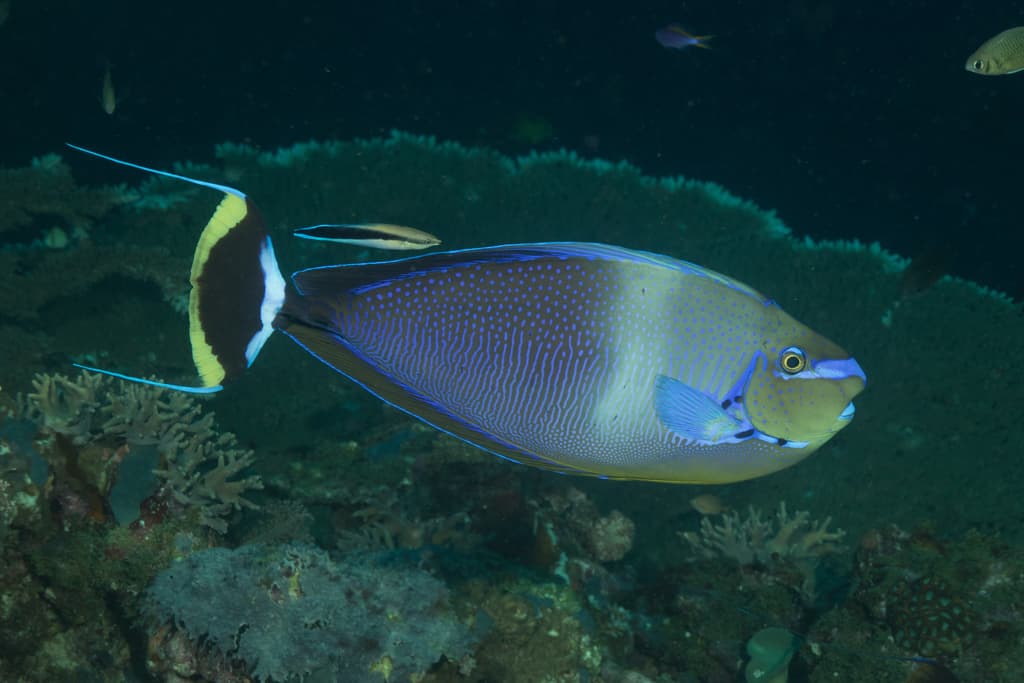
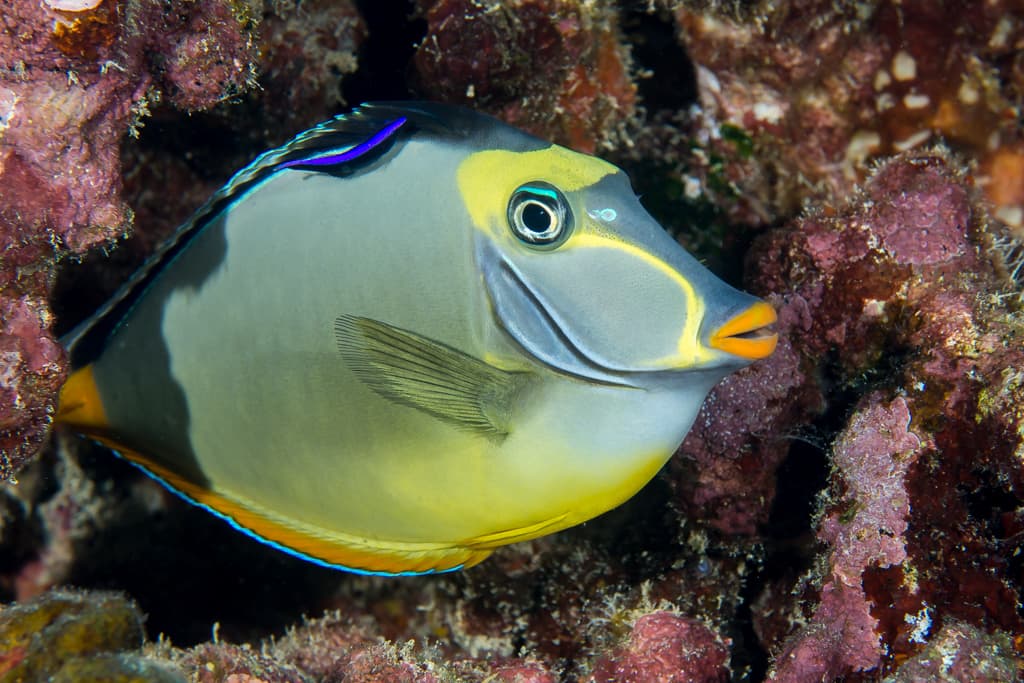
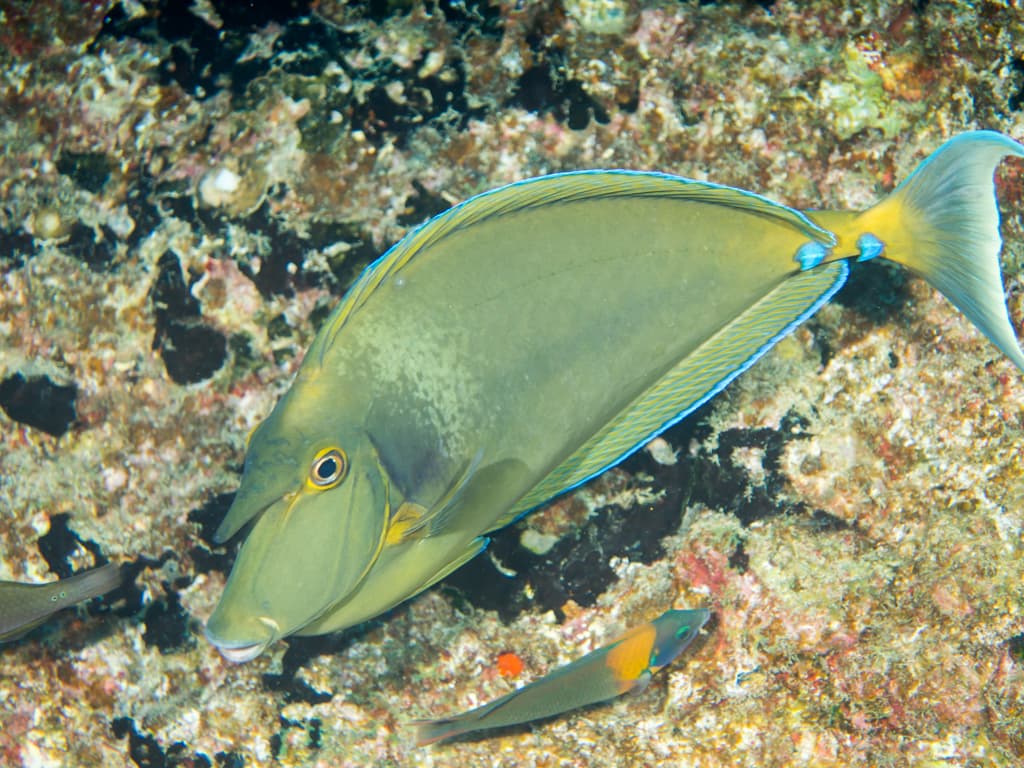
The Unicorn Tang is one of the most distinctive and instantly recognizable fish in the marine aquarium hobby, named for the prominent horn-like projection that develops on the forehead of adults. This bony rostrum grows progressively longer as the fish matures, extending forward from between the eyes in a feature that is unique among commonly kept aquarium fish. The body is olive-gray to brownish-green with fine longitudinal lines, and the tail base features two pairs of fixed, blue-rimmed keeled plates that serve as defensive weapons. Mature males develop long, flowing tail streamers that add to the species' impressive appearance.
In the wild, the Unicorn Tang has an exceptionally broad distribution spanning the entire Indo-Pacific, from the Red Sea and East African coast to Hawaii and French Polynesia. It inhabits outer reef slopes, channels, and lagoons with strong currents, where it feeds primarily on brown leafy macroalgae such as Sargassum. Large adults are powerful, fast swimmers that cover considerable distances, and they can often be seen in small groups patrolling reef walls and surge channels.
With a potential adult size of 24 inches, the Unicorn Tang is one of the largest species kept in home aquariums and requires an enormous system of at least 300 gallons to provide adequate swimming space. This is not a fish for the average home aquarium. However, for aquarists with sufficiently large systems, the Unicorn Tang is a rewarding and impressive specimen. It is a dedicated herbivore, completely reef-safe, and generally peaceful toward dissimilar tankmates despite its imposing size. The development of the horn and tail streamers over time makes it a fascinating long-term project fish.
Feeding & Diet
Herbivore
Unicorn Tangs are dedicated herbivores with a strong preference for brown macroalgae in the wild. In captivity, provide very generous daily portions of dried nori or seaweed on clips - large adults consume enormous amounts of algae. Supplement with Spirulina-enriched pellets and frozen herbivore preparations. Multiple daily feedings are essential for this large, active species.
Compatibility
reef-safealgae-grazeractive-swimmercommunity-compatibleextra-large-tank-requiredtang-aggression
Unicorn Tangs are generally peaceful toward dissimilar species despite their imposing size. They may show aggression toward other Naso species and should be the only unicornfish in the tank. Compatible with large tangs of other genera, large wrasses, angelfish, and other robust reef fish in very large systems. Completely reef-safe and will not harm corals or invertebrates.
Check CompatibilityBreeding
Not bred in captivity
Unicorn Tangs have not been bred in home aquariums. They are pelagic spawners that form spawning groups in the wild, releasing eggs and sperm into open water. The larvae undergo an extended pelagic phase. Males can be distinguished by longer tail streamers and a more prominent horn. All specimens are wild-caught.
Special Requirements
- Requires minimum 300-gallon tank - grows up to 24 inches
- One of the largest commonly kept aquarium fish - not for average tanks
- Consumes enormous amounts of algae - daily nori feedings are essential
- Strong water flow and high oxygenation critical
- Horn develops with maturity and grows throughout the fish's life
- Susceptible to ich - quarantine strongly recommended for this large species
Water Parameters
Temperature72–78°F
Specific Gravity1.02–1.026 sg
pH8.1–8.4
Alkalinity8–12 dKH
Coloration
olivegraygreenbrownblue
Tags
reef-safealgae-grazeractive-swimmercommunity-compatibleextra-large-tank-requiredtang-aggression