IntermediateSemi-AggressiveReef Safe
Spotted Unicornfish
Naso brevirostris
Family: Acanthuridae · Tangs & Surgeonfish
Also known as: Short-Nosed Unicornfish, Paletail Unicornfish, Brown Unicornfish
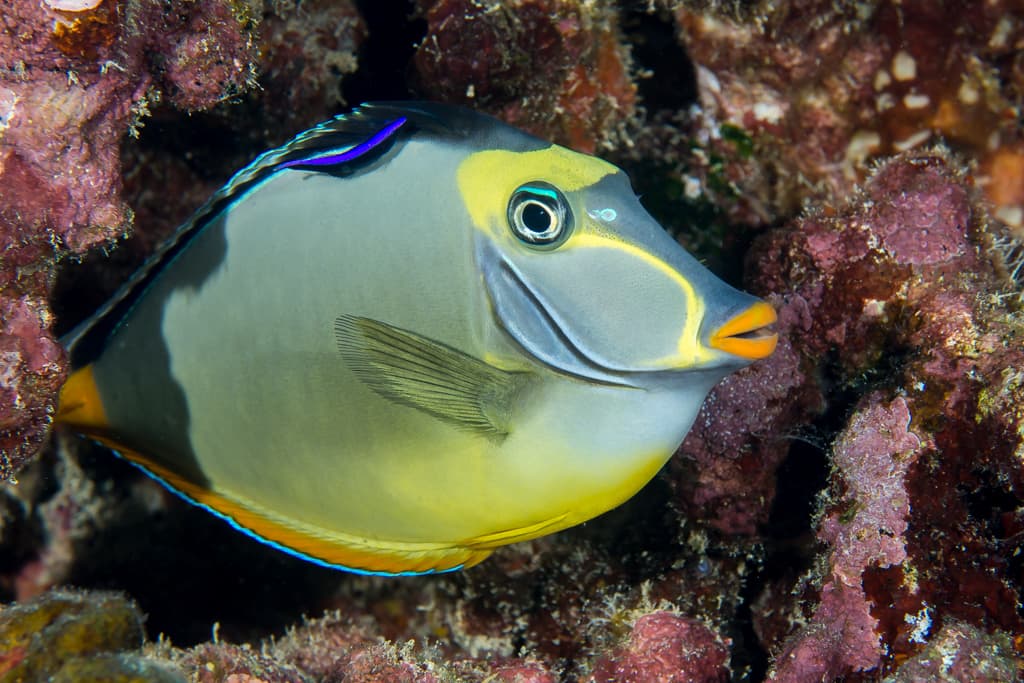
(c) brudermann, some rights reserved (CC BY-NC)
Max Size
24"
Min Tank
300 gal
Lifespan
15-20 years
Origin
Indo-Pacific, Red Sea
Diet
Herbivore
Swims
All
About
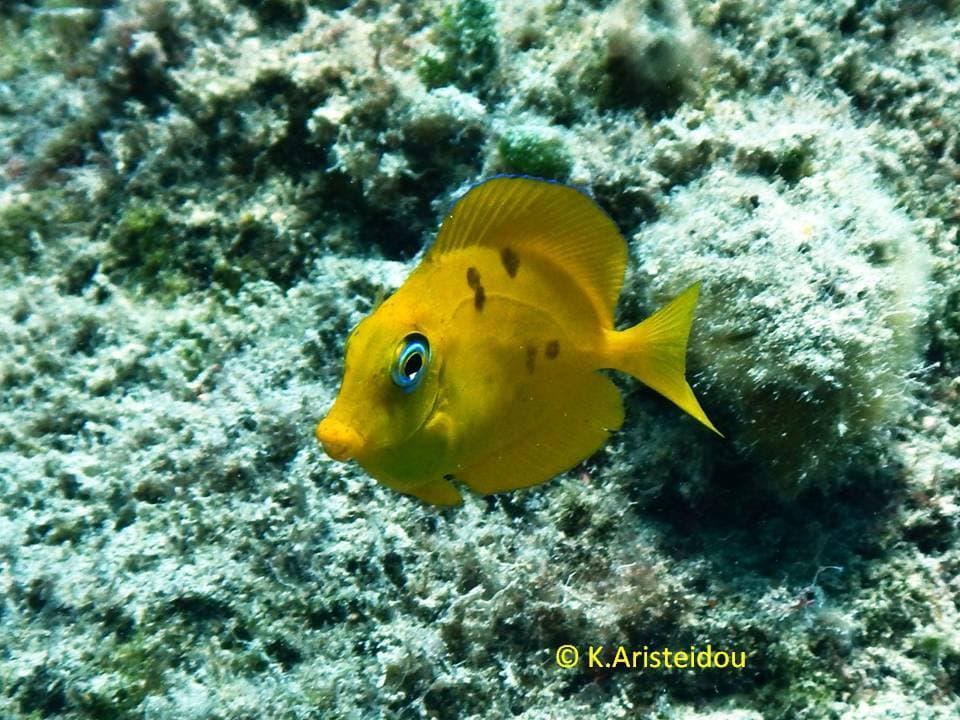
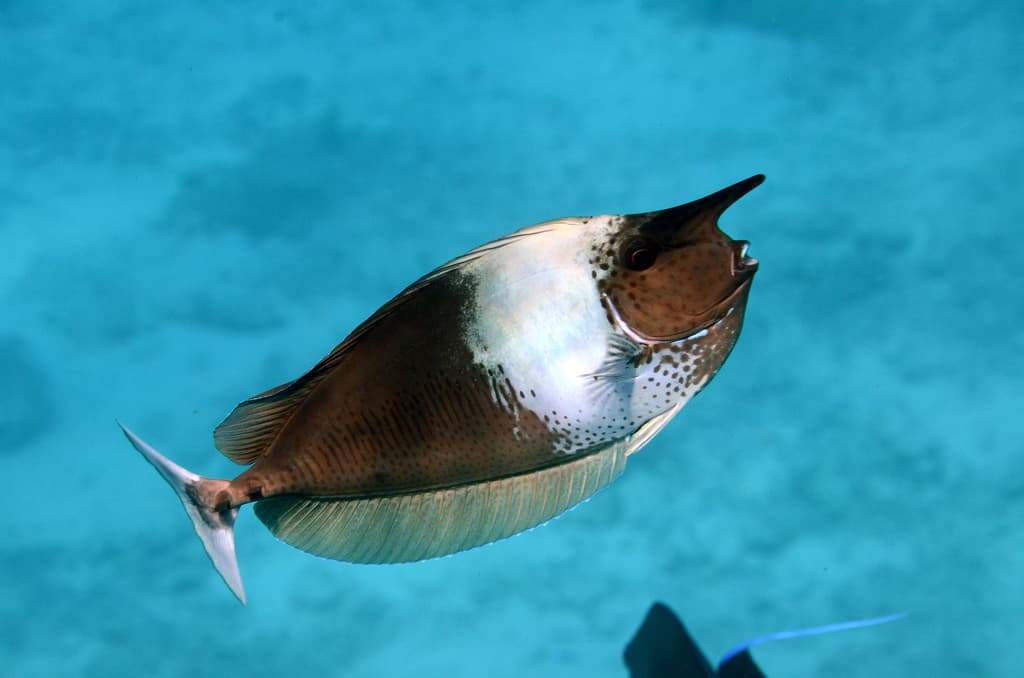
The Spotted Unicornfish is a large and distinctive member of the Naso genus, recognized by its pattern of white spots scattered across a brownish-gray body and the development of a short, blunt horn on the forehead of mature adults. Growing to approximately 24 inches, this is a substantial fish that commands attention in any marine aquarium large enough to house it.
In the wild, Spotted Unicornfish are found on outer reef slopes, in channels, and near drop-offs throughout the Indo-Pacific. They are versatile feeders, primarily grazing on leafy brown algae such as Sargassum and Dictyota, but also supplementing their diet with zooplankton when available. They are strong swimmers often seen in schools or small groups in areas with moderate to strong currents.
In captivity, the Spotted Unicornfish requires a very large aquarium of at least 300 gallons. It is a hardy species once established, readily accepting dried nori seaweed and a variety of prepared foods. Like all large tangs, it is susceptible to ich and HLLE, making excellent water quality and a nutritious diet paramount. Its impressive size and unique horn make it a memorable addition to a suitably large reef or FOWLR system.
Feeding & Diet
Herbivore
Primarily an herbivore that feeds on brown macroalgae in the wild. In captivity, offer generous sheets of dried nori seaweed daily, Spirulina-enriched pellets, and frozen herbivore preparations. Supplement with occasional mysis shrimp. A diet rich in marine algae is essential to prevent HLLE.
Compatibility
reef-safealgae-grazeractive-swimmerlarge-tank-requiredtang-aggression
The Spotted Unicornfish is semi-aggressive and may clash with other Naso species. Compatible with tangs of other genera, clownfish, wrasses, and angelfish in a sufficiently large tank. Reef-safe and an excellent algae consumer that will not damage corals.
Check CompatibilityBreeding
Not bred in captivity
Spotted Unicornfish are pelagic spawners that have not been bred in captivity. Their extended larval phase makes propagation in home aquariums extremely challenging. All specimens are wild-caught.
Special Requirements
- Requires a very large aquarium of at least 300 gallons
- Daily offering of dried nori seaweed or marine algae is essential
- Strong water flow and high oxygenation are important
- Prone to ich — quarantine strongly recommended
- Adults develop a distinctive short forehead horn
Water Parameters
Temperature72–80°F
Specific Gravity1.02–1.026 sg
pH8.1–8.4
Alkalinity8–12 dKH
Coloration
brownish-graywhite spotsbrownolive
Tags
reef-safealgae-grazeractive-swimmerlarge-tank-requiredtang-aggression