ExpertSemi-AggressiveReef Safe
Sleek Unicornfish
Naso hexacanthus
Family: Acanthuridae · Tangs & Surgeonfish
Also known as: Sleek Unicorn Tang, Blacktongue Unicornfish, Spotted Unicornfish
(c) Francois Libert, some rights reserved (CC BY-NC)
Max Size
30"
Min Tank
300 gal
Lifespan
15-20 years
Origin
Indo-Pacific, Red Sea
Diet
Herbivore
Swims
All
About
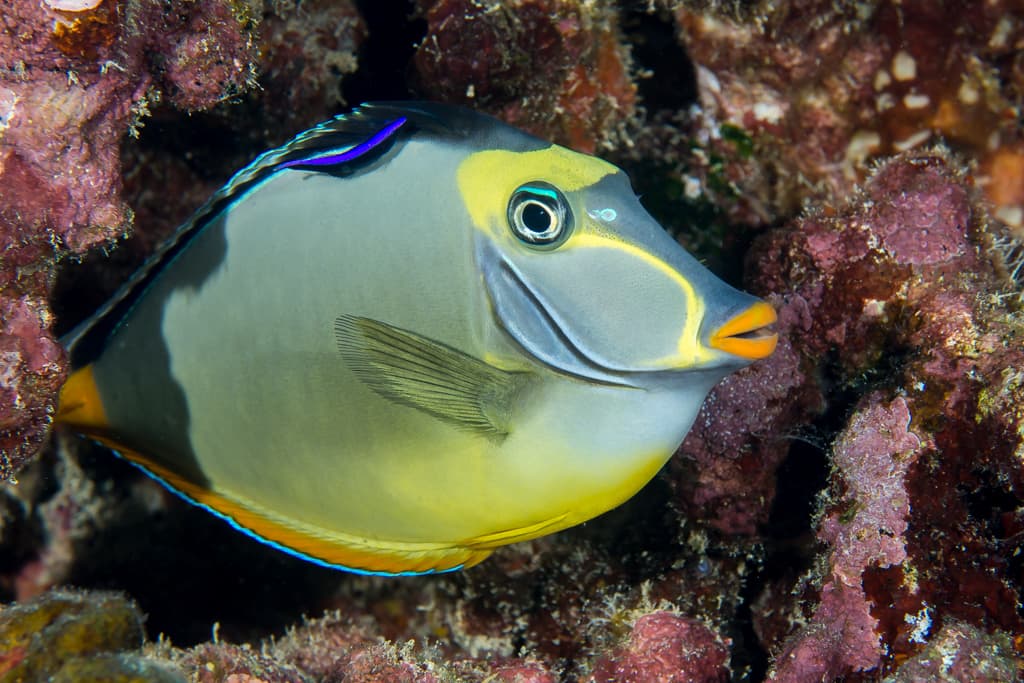
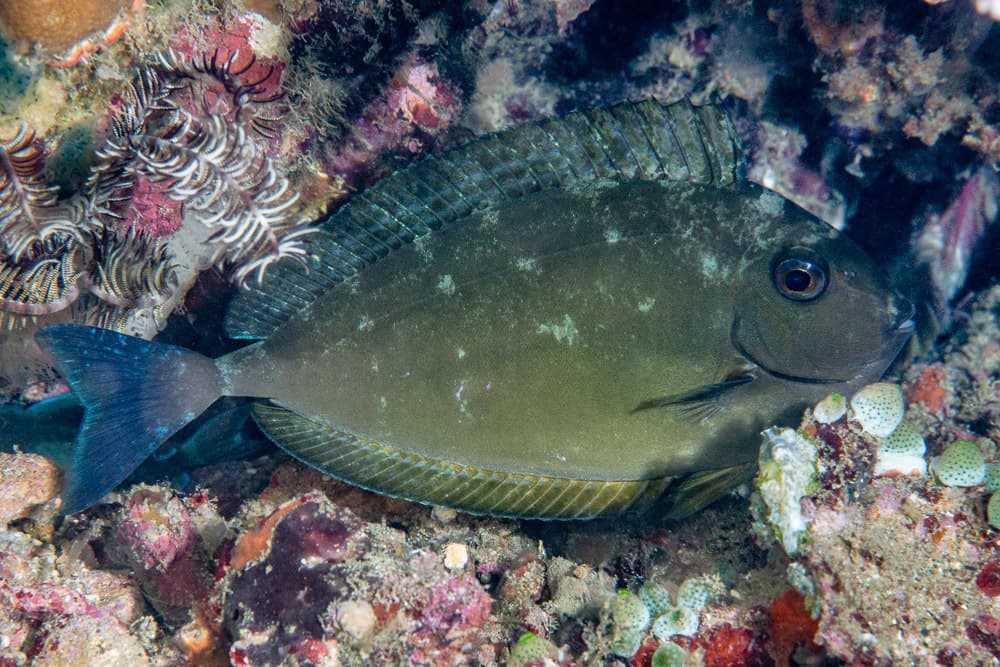
The Sleek Unicornfish is one of the largest and most streamlined members of the Naso genus, reaching an impressive 30 inches in the wild. Unlike some of its unicornfish relatives, this species does not develop the prominent forehead horn, instead maintaining a sleek, torpedo-shaped profile that reflects its adaptation for fast swimming in open water. Adults display a blue-gray body with subtle spotting and a distinctive dark tongue.
In the wild, Sleek Unicornfish inhabit outer reef slopes, drop-offs, and current-swept channels throughout the Indo-Pacific. They are strong, fast swimmers that often form large schools in midwater, where they feed primarily on zooplankton. This planktivorous diet sets them apart from many other surgeonfish that are dedicated herbivores, and it influences their care requirements in captivity.
Due to its very large adult size and active swimming habits, the Sleek Unicornfish requires an enormous aquarium of at least 300 gallons, with even larger systems being preferable. This is a species for expert aquarists with the resources to provide adequate space and water quality. Despite its demanding space requirements, it is a stunning display fish that brings open-ocean energy to a large reef or FOWLR system.
Feeding & Diet
Herbivore
In the wild, primarily a planktivore that also grazes on algae. In captivity, offer dried nori seaweed sheets daily, supplemented with Spirulina pellets, frozen mysis shrimp, and enriched brine shrimp. The inclusion of meaty foods reflects its natural planktivorous tendencies. A varied diet is essential.
Compatibility
reef-safeactive-swimmerlarge-tank-requiredtang-aggressionplanktivore
The Sleek Unicornfish is semi-aggressive and may show territorial behavior toward other Naso species. Compatible with most other community reef fish when given adequate space. Its large size means it is generally left alone by most tankmates. Reef-safe and will not damage corals.
Check CompatibilityBreeding
Not bred in captivity
Sleek Unicornfish are pelagic spawners with an extended larval phase. No captive breeding has been achieved due to the species' enormous size and open-water spawning behavior. All specimens are wild-caught.
Special Requirements
- Requires an extremely large aquarium of at least 300 gallons
- Strong water flow and high oxygenation are critical for this open-water species
- Daily offering of dried nori and supplemental meaty foods
- Prone to ich — thorough quarantine is essential
- Needs extensive open swimming space
Water Parameters
Temperature72–80°F
Specific Gravity1.02–1.026 sg
pH8.1–8.4
Alkalinity8–12 dKH
Coloration
blue-graysilverspotteddark accents
Tags
reef-safeactive-swimmerlarge-tank-requiredtang-aggressionplanktivore