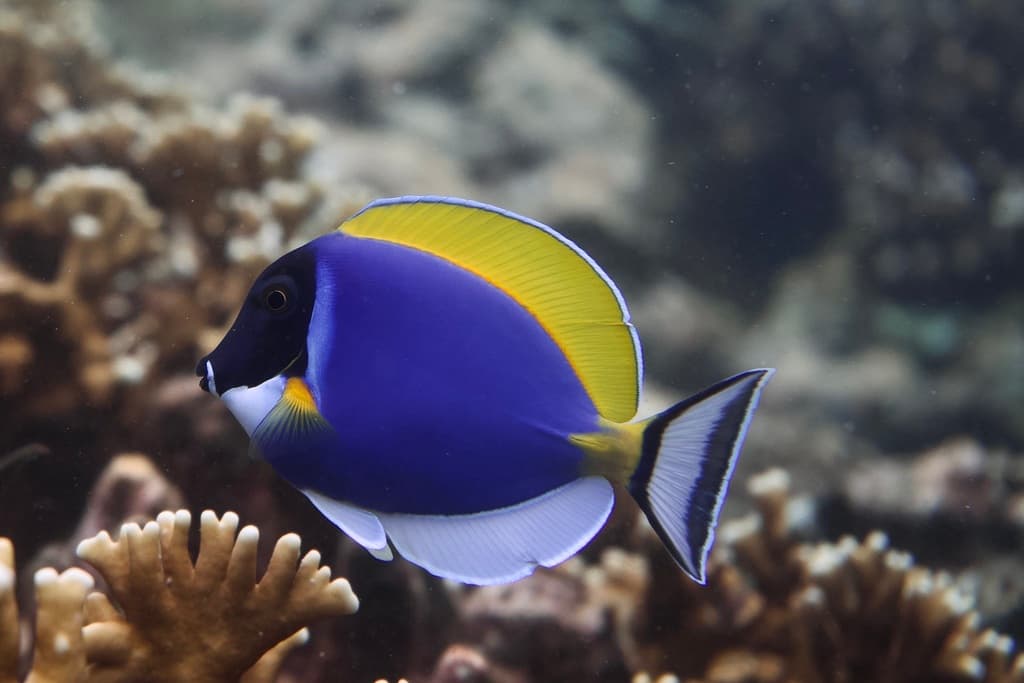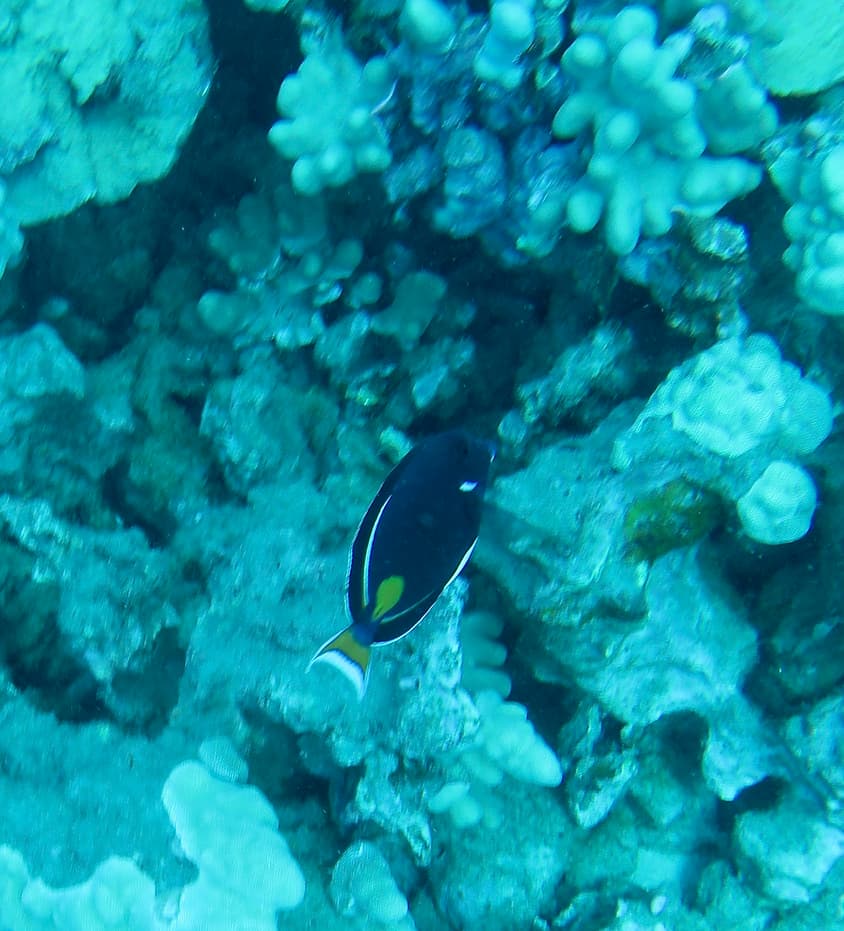
ExpertSemi-AggressiveReef SafeIUCN: Least Concern
Achilles Tang
Acanthurus achilles
Family: Acanthuridae · Tangs & Surgeonfish
Also known as: Achilles Surgeonfish, Red-tailed Surgeon, Red-spot Surgeonfish
(c) brock, some rights reserved (CC BY-NC)
Max Size
10"
Min Tank
180 gal
Lifespan
10-15 years
Origin
Pacific Ocean, Hawaii
Diet
Herbivore
Swims
All
Did You Know?
- The Achilles Tang is named after the Greek hero Achilles, referencing the sharp caudal spine near the tail, its point of vulnerability, much like Achilles' legendary weak heel
- In the wild, Achilles Tangs are found exclusively in the most turbulent, wave-battered areas of the reef, where few other fish species can survive the constant surge
- The brilliant orange caudal spot of the Achilles Tang serves as a warning signal to other fish, drawing attention to the razor-sharp defensive spine hidden at the base of the tail
About
The Achilles Tang is widely regarded as one of the most strikingly beautiful surgeonfish in the world and one of the most challenging to maintain in captivity. Its velvety, jet-black body serves as a dramatic canvas for a brilliant teardrop-shaped orange patch on the caudal peduncle that extends into the tail, along with orange and white trim on the dorsal, anal, and caudal fins. The overall effect is breathtaking and unmistakable, making the Achilles Tang one of the most coveted species among serious marine aquarists. This species is named after the Greek hero Achilles, referencing the prominent caudal spine near the tail, its most vulnerable point of defense, much like Achilles' legendary heel.
In the wild, the Achilles Tang inhabits shallow, turbulent reef crests and surge zones throughout the tropical Pacific Ocean, from Hawaii and the Line Islands to Oceania and the Western Pacific. It is found exclusively in areas of extreme water movement, where powerful waves crash over shallow reef platforms. This habitat preference is the key to understanding its demanding care requirements. The Achilles Tang has evolved to thrive in highly oxygenated, pristine, fast-moving water and does not tolerate still, warm, or degraded water conditions. In captivity, this translates to an absolute need for powerful water circulation, excellent protein skimming, and meticulous water quality maintenance.
The Achilles Tang is notoriously susceptible to Cryptocaryon irritans (marine ich) and Amyloodinium ocellatum (velvet), and new specimens must undergo a rigorous quarantine and treatment protocol before introduction to a display tank. Even established specimens may relapse if water quality falters or stressful conditions arise. This species requires a minimum of 180 gallons with abundant open swimming space and vigorous water flow. It can be aggressive toward other tangs, particularly those with similar body shapes. Despite its demanding nature, a healthy, well-established Achilles Tang is one of the most rewarding fish a skilled aquarist can keep, displaying bold personality, stunning beauty, and impressive longevity when its exacting requirements are met.
Feeding & Diet
Herbivore
Achilles Tangs are herbivores that require a diet dominated by marine algae. Offer generous sheets of dried nori or seaweed on a clip multiple times daily, along with high-quality Spirulina-enriched pellets and frozen herbivore preparations. A constant supply of natural algae on live rock is highly beneficial. Supplement with vitamin-enriched foods, particularly those containing Vitamin C, to support the immune system and help prevent HLLE. Occasional meaty foods such as mysis shrimp can be offered sparingly.
Compatibility
reef-safealgae-grazeractive-swimmertang-aggressionexpert-levellarge-tank-required
The Achilles Tang can be aggressive toward other tangs, particularly those of the Acanthurus genus or with similar body shapes. It is best kept as the only Acanthurus species in the tank. In very large systems (300+ gallons), it may coexist with tangs of different genera such as Zebrasoma or Ctenochaetus if introduced simultaneously. Generally peaceful toward dissimilar species such as clownfish, wrasses, and gobies. Completely reef-safe and an excellent algae grazer, but its demanding care requirements and potential aggression limit suitable tankmate options.
Check CompatibilityBreeding
Not bred in captivity
The Achilles Tang has not been bred in home aquariums or commercial facilities. Like other Acanthurus species, it is a pelagic spawner with an extended larval phase that has not been replicated in captivity. All specimens in the aquarium trade are wild-caught, primarily from Hawaii, the Marshall Islands, and other Pacific Island locations.
Special Requirements
- Expert-level care required - not recommended for beginners
- Extremely susceptible to ich and velvet - strict quarantine with treatment is mandatory
- Requires powerful water circulation to mimic surge-zone habitat
- Pristine water quality with very low nitrates is essential
- Lower temperature range (72-76F) preferred to increase dissolved oxygen
- UV sterilizer and ozone strongly recommended
- Large, unobstructed swimming space required
- Multiple daily feedings of marine algae are necessary
Water Parameters
Temperature72–76°F
Specific Gravity1.02–1.026 sg
pH8.1–8.4
Alkalinity8–12 dKH
Coloration
blackorangewhite
Tags
reef-safealgae-grazeractive-swimmertang-aggressionexpert-levellarge-tank-required