IntermediateSemi-AggressiveReef SafeIUCN: Least Concern
Purple Tang
Zebrasoma xanthurum
Family: Acanthuridae · Tangs & Surgeonfish
Also known as: Yellowtail Tang, Purple Sailfin Tang, Red Sea Purple Tang
(c) Mark Rosenstein, some rights reserved (CC BY-NC)
Max Size
10"
Min Tank
100 gal
Lifespan
10-15 years
Origin
Red Sea, Arabian Sea
Diet
Herbivore
Swims
All
Did You Know?
- The Purple Tang is one of the most expensive commonly available tang species, with prices often exceeding several hundred dollars due to its limited Red Sea collection range
- Purple Tangs are closely related to the Yellow Tang and can occasionally hybridize with other Zebrasoma species in captivity
About
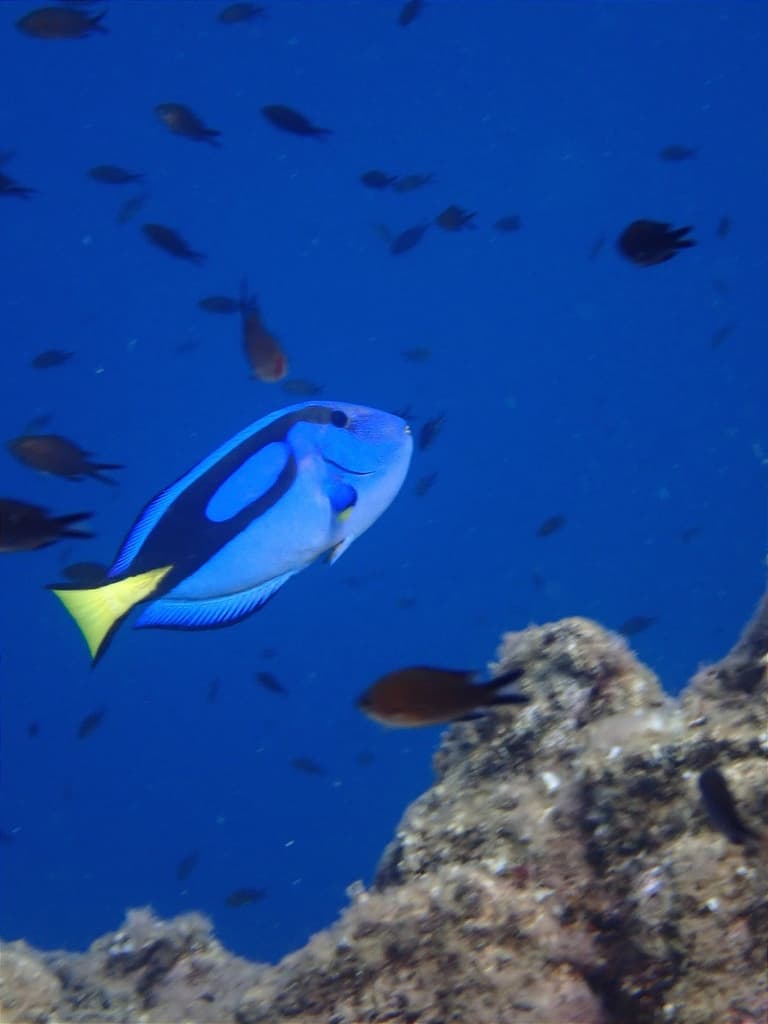
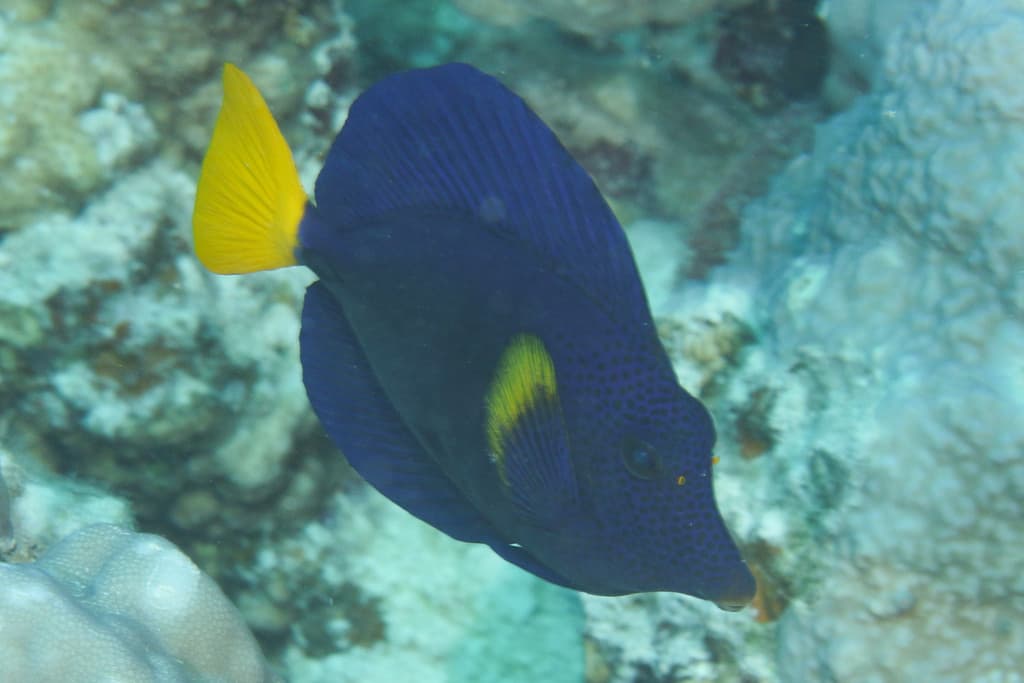
The Purple Tang is one of the most coveted and visually striking tangs in the marine aquarium hobby, featuring a rich, deep purple body that contrasts dramatically with its bright yellow tail and yellow accents on the pectoral fins. Fine dark spots and lines are scattered across the head and anterior body, adding subtle texture to its appearance. A member of the Zebrasoma genus alongside the popular Yellow Tang, it shares the same laterally compressed, disc-shaped body with a tall dorsal and anal fin profile that gives it a bold, sail-like silhouette. Native primarily to the coral reefs of the Red Sea and western Indian Ocean, the Purple Tang commands premium prices in the aquarium trade due to its limited collection range and high demand.
In the aquarium, the Purple Tang is an active, bold swimmer that readily becomes the dominant presence in the tank. It is an excellent algae grazer that will tirelessly pick at surfaces throughout the day, helping to control nuisance algae growth on live rock and glass. Like its close relative the Yellow Tang, it can be territorial toward other tangs and similarly shaped fish, particularly in smaller aquariums. Its semi-aggressive temperament is typically directed at conspecifics and congeners rather than at dissimilar species. The Purple Tang does best when it is the last fish added to the aquarium, as established specimens may harass new arrivals.
Despite its higher price point and semi-aggressive nature, the Purple Tang is a reasonably hardy species once acclimated to captivity. It is less prone to ich than some other tang species, though quarantine is still strongly recommended. A minimum tank size of 100 gallons with abundant live rock for grazing and open swimming areas is essential. The Purple Tang is completely reef-safe and will not disturb corals or invertebrates. A diet rich in marine algae, supplemented with nori, Spirulina preparations, and occasional meaty foods, will maintain its vibrant purple coloration and overall health for many years.
Feeding & Diet
Herbivore
Purple Tangs are herbivores that require a diet dominated by marine algae. Provide daily offerings of dried nori or seaweed sheets on a clip, supplemented with Spirulina-based flakes and pellets. They will also accept frozen herbivore preparations and occasional meaty foods such as mysis shrimp and enriched brine shrimp. A varied, algae-rich diet is essential to maintain their vivid purple coloration and prevent nutritional deficiencies such as HLLE.
Compatibility
reef-safealgae-grazertang-aggressionactive-swimmerpremium-species
Purple Tangs can be territorial toward other tangs, especially those of the Zebrasoma genus, and should ideally be the only Zebrasoma species in tanks under 180 gallons. They are generally peaceful toward dissimilar species such as clownfish, wrasses, gobies, blennies, and angels. In very large systems (240+ gallons), they may coexist with other tang genera if introduced simultaneously. Add the Purple Tang last to minimize territorial issues with existing inhabitants.
Check CompatibilityBreeding
Not bred in captivity
The Purple Tang has not been commercially bred in captivity. Like other Zebrasoma species, they are pelagic spawners with an extended larval phase that is extremely difficult to replicate. All specimens in the aquarium trade are wild-caught, primarily from the Red Sea. Given the success achieved with captive-bred Yellow Tangs, future breeding efforts may eventually include this species.
Special Requirements
- Requires large tank with ample swimming space and abundant live rock
- Daily offering of nori or seaweed sheets is essential
- Best added as the last fish to the aquarium to reduce territorial aggression
- Quarantine recommended despite relative hardiness
- Strong water flow and excellent filtration preferred
- Premium-priced species due to limited Red Sea collection
Water Parameters
Temperature72–78°F
Specific Gravity1.02–1.026 sg
pH8.1–8.4
Alkalinity8–12 dKH
Coloration
purpleyellow
Tags
reef-safealgae-grazertang-aggressionactive-swimmerpremium-species