IntermediateSemi-AggressiveReef Safe
Orange Shoulder Tang
Acanthurus olivaceus
Family: Acanthuridae · Tangs & Surgeonfish
Also known as: Orangespot Surgeonfish, Orange-epaulette Surgeonfish, Olive Surgeonfish
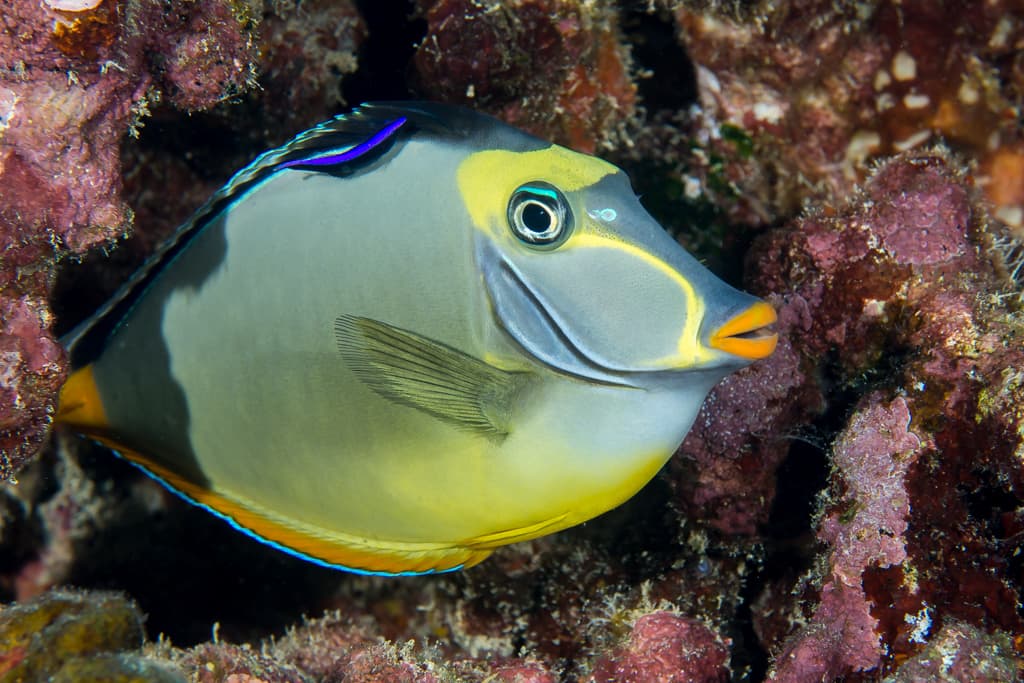
(c) desertnaturalist, some rights reserved (CC BY)
Max Size
14"
Min Tank
180 gal
Lifespan
15-20 years
Origin
Indo-Pacific, Hawaii
Diet
Herbivore
Swims
All
About
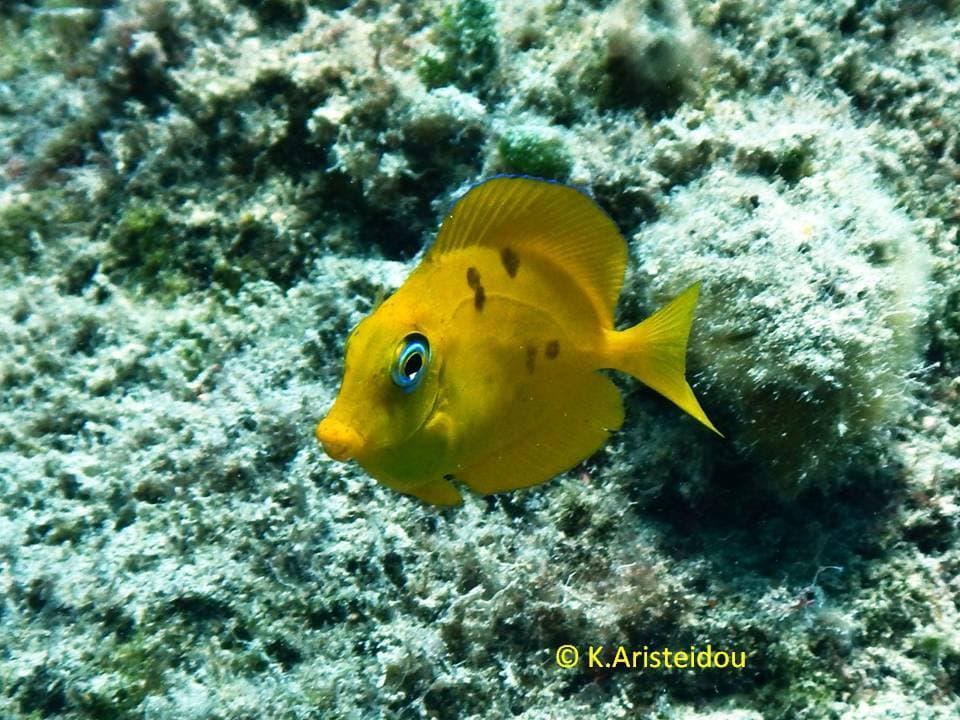
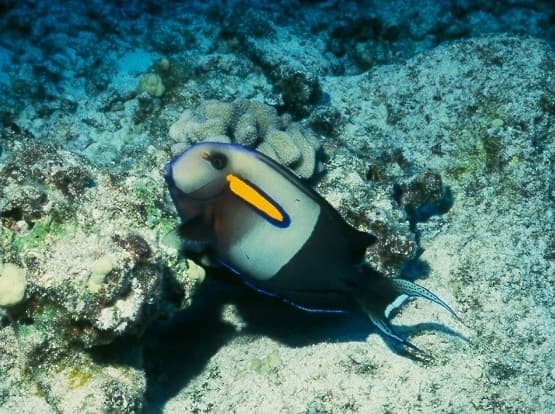
The Orange Shoulder Tang is a large, robust surgeonfish recognized by the distinctive bright orange patch or 'epaulette' on the shoulder area behind the gill cover, which contrasts sharply against its otherwise olive-gray to brown body. This species undergoes a dramatic color transformation during its life: juveniles are a uniform bright yellow, nearly indistinguishable from young Yellow Tangs, before gradually transitioning to the muted olive-gray adult coloration with the signature orange shoulder mark developing during the transition.
In the wild, the Orange Shoulder Tang is widely distributed across the Indo-Pacific, from Hawaii and Japan through the Philippines and Indonesia to the Great Barrier Reef. It is found on reef slopes and in lagoons, typically at moderate depths, where it roams sandy rubble zones and reef flats grazing on filamentous algae, detritus, and diatoms. Unlike many tangs that prefer densely structured reef environments, the Orange Shoulder Tang is comfortable in more open areas with mixed substrate, making it adaptable to various aquarium setups.
With a potential adult size of 14 inches, the Orange Shoulder Tang requires a spacious aquarium of at least 180 gallons. It is moderately hardy and generally adapts well to captive conditions, making it a good choice for intermediate aquarists with large enough systems. While semi-aggressive toward other tangs, it is relatively mild-mannered compared to species like the Clown Tang or Sohal Tang. It is completely reef-safe and an effective algae grazer that contributes meaningfully to a reef system's cleanup efforts.
Feeding & Diet
Herbivore
Orange Shoulder Tangs are herbivores that graze on filamentous algae, diatoms, and detritus in the wild. In captivity, offer daily sheets of dried nori or seaweed, supplemented with Spirulina-enriched pellets and frozen herbivore preparations. They will also readily consume natural algae growth in the aquarium. Provide multiple feedings daily for best health.
Compatibility
reef-safealgae-grazeractive-swimmertang-aggressionlarge-tank-required
Orange Shoulder Tangs are semi-aggressive toward other tangs but relatively mild compared to more aggressive Acanthurus species. They coexist well with dissimilar tankmates in large systems including clownfish, wrasses, angelfish, and other community reef fish. Avoid keeping with other similar-looking Acanthurus species. Completely reef-safe.
Check CompatibilityBreeding
Not bred in captivity
Orange Shoulder Tangs have not been bred in home aquariums. They are pelagic spawners with an extended larval phase typical of the Acanthurus genus. All specimens in the aquarium trade are wild-caught. The dramatic color change from juvenile to adult occurs gradually over several months to a year.
Special Requirements
- Requires minimum 180-gallon tank due to adult size of 14 inches
- Juveniles are bright yellow and transition to olive-gray over time
- Daily seaweed offerings essential for long-term health
- Quarantine recommended as tangs are susceptible to ich
- Moderate to strong water flow preferred
- Provide open swimming space alongside rockwork
Water Parameters
Temperature72–80°F
Specific Gravity1.02–1.026 sg
pH8.1–8.4
Alkalinity8–12 dKH
Coloration
olivegraybrownorangeyellow
Tags
reef-safealgae-grazeractive-swimmertang-aggressionlarge-tank-required