IntermediateSemi-AggressiveReef Safe
Elongate Surgeonfish
Acanthurus mata
Family: Acanthuridae · Tangs & Surgeonfish
Also known as: Mata Surgeonfish, Pale-Lined Surgeonfish, Yellowmask Surgeonfish
(c) Aditya Haridas Kamath, all rights reserved
Max Size
20"
Min Tank
250 gal
Lifespan
10-15 years
Origin
Indo-Pacific, Red Sea
Diet
Herbivore
Swims
All
About
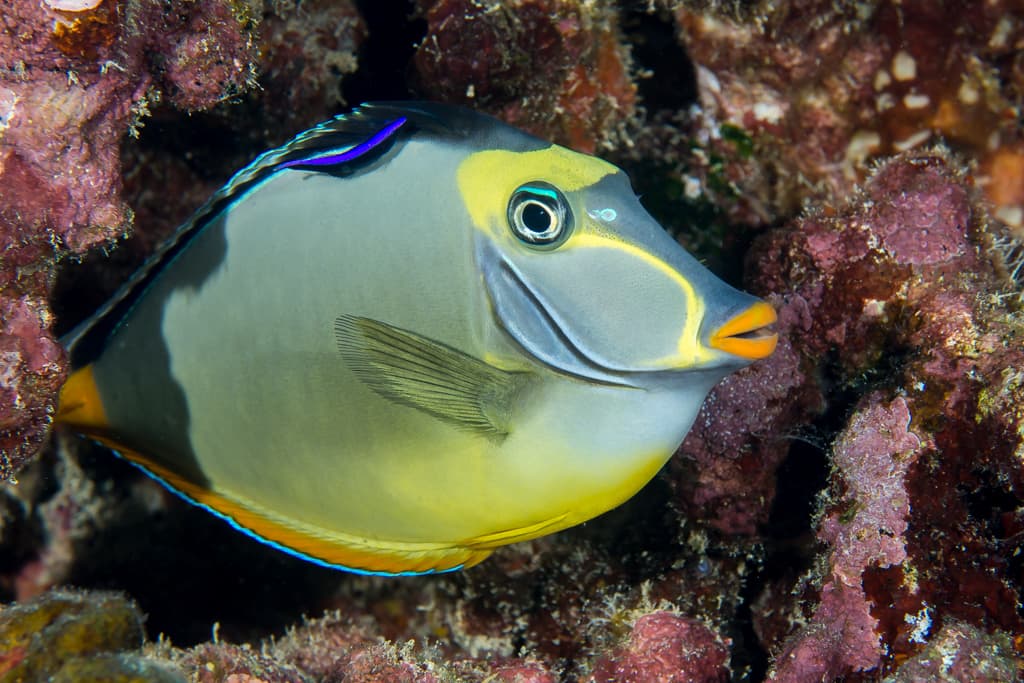
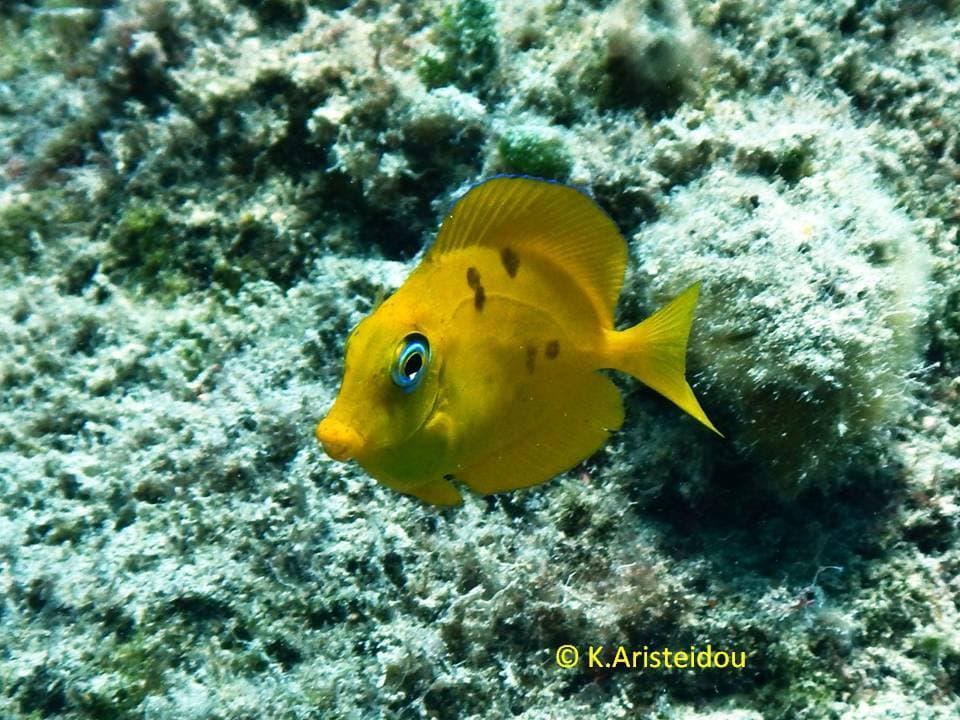
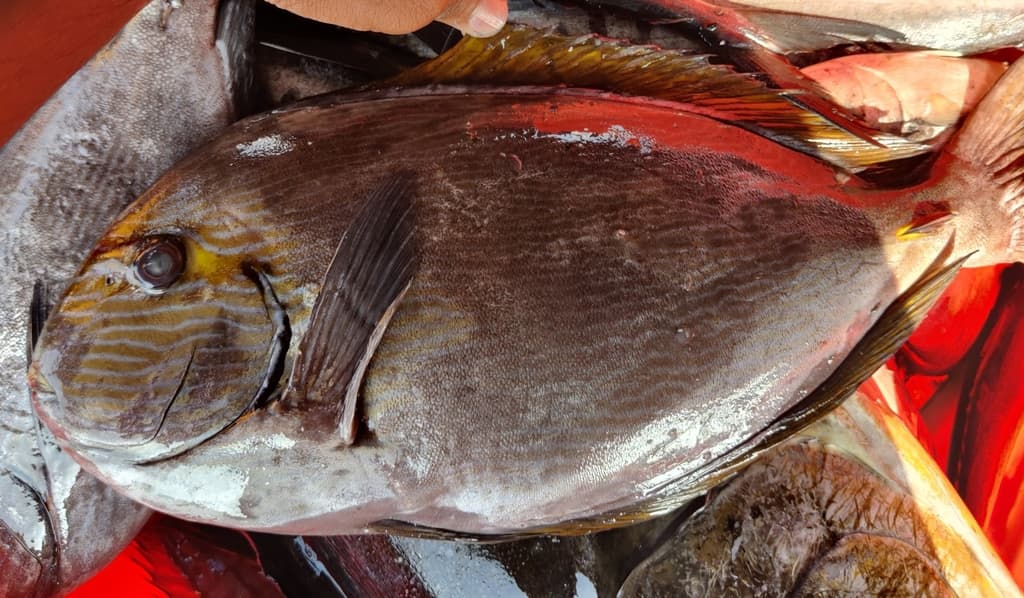
The Elongate Surgeonfish is a large and distinctively shaped tang characterized by its elongated, streamlined body and subtle blue-gray coloration with fine horizontal lines. A distinctive yellow band runs across the face near the eyes, providing a flash of color against its otherwise understated palette. This species is one of the larger tangs in the hobby, reaching up to 20 inches in length.
In the wild, Elongate Surgeonfish are found in large schools along steep outer reef slopes, channels, and current-swept areas throughout the Indo-Pacific. They are strong swimmers that feed on zooplankton in the water column as well as benthic algae — a somewhat unusual dietary flexibility for a surgeonfish. Their schooling behavior and active swimming make them impressive to observe in their natural habitat.
In captivity, the Elongate Surgeonfish requires a spacious aquarium of at least 250 gallons to accommodate its size and active swimming behavior. While hardy once acclimated, this species can be sensitive during the initial adjustment period and is prone to ich like most tangs. Its semi-aggressive temperament means it may clash with other tangs, particularly those of similar body shape.
Feeding & Diet
Herbivore
Primarily an herbivore that also feeds on zooplankton. In captivity, offer dried nori seaweed sheets daily, supplemented with Spirulina-enriched pellets, frozen herbivore preparations, and occasional mysis shrimp. A diet rich in marine algae is essential to prevent HLLE and maintain health.
Compatibility
reef-safealgae-grazeractive-swimmerlarge-tank-requiredtang-aggression
The Elongate Surgeonfish is semi-aggressive and may show territorial behavior toward other tangs, particularly those of similar body shape. Compatible with clownfish, wrasses, angelfish, and other community species in a large tank. Best as the only Acanthurus species unless the tank is exceptionally large.
Check CompatibilityBreeding
Not bred in captivity
Elongate Surgeonfish are pelagic spawners that have not been bred in home aquariums. Their extended larval phase makes captive propagation extremely challenging. All specimens are wild-caught.
Special Requirements
- Requires a large aquarium of at least 250 gallons for adequate swimming space
- Daily offering of dried nori seaweed is essential for health
- Strong water flow and high oxygenation are important
- Prone to ich — quarantine strongly recommended before introduction
- Susceptible to HLLE without proper nutrition and water quality
Water Parameters
Temperature72–80°F
Specific Gravity1.02–1.026 sg
pH8.1–8.4
Alkalinity8–12 dKH
Coloration
blue-grayyellow maskhorizontal linespale blue
Tags
reef-safealgae-grazeractive-swimmerlarge-tank-requiredtang-aggression