ExpertPeacefulNot Reef Safe
Paddle-flap Scorpionfish
Rhinopias eschmeyeri
Family: Scorpaenidae · Scorpionfish
Also known as: Eschmeyer's Scorpionfish, Paddle-flap Rhinopias, Eschmeyer's Rhinopias
(c) Ryan E. Gray, some rights reserved (CC BY-NC)
Max Size
9"
Min Tank
75 gal
Lifespan
8-15 years
Origin
Western Pacific, Indonesia
Diet
Carnivore
Swims
Bottom
About
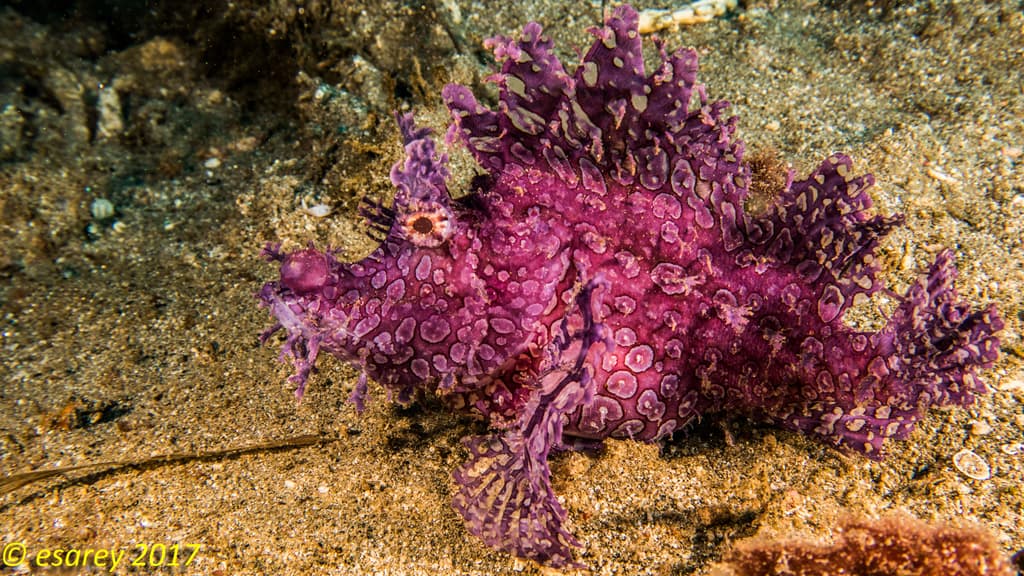
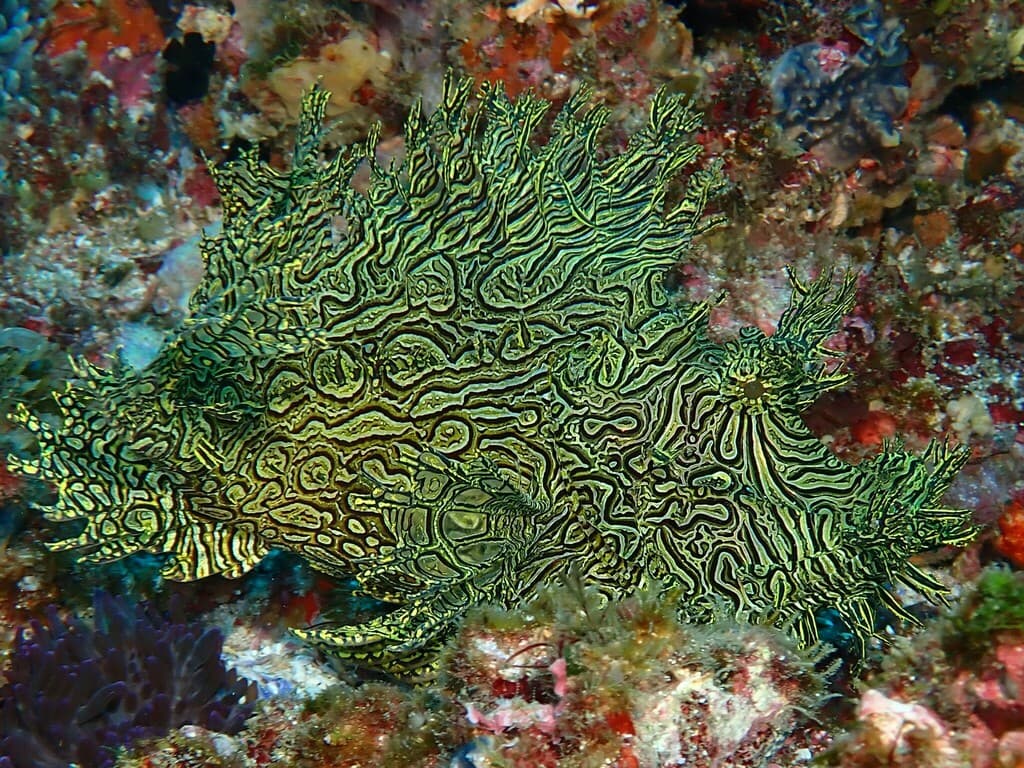
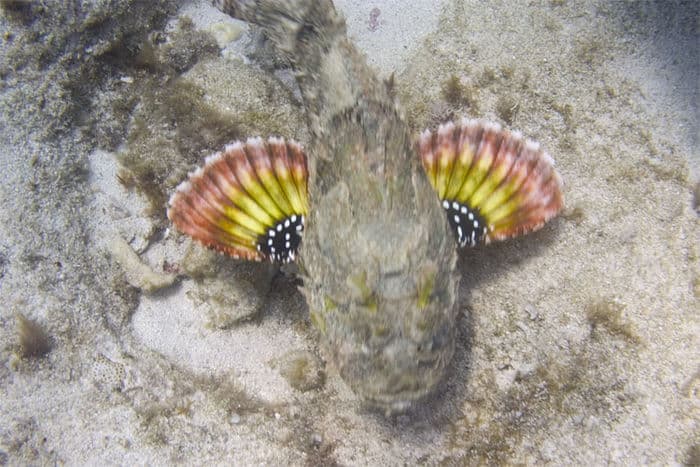
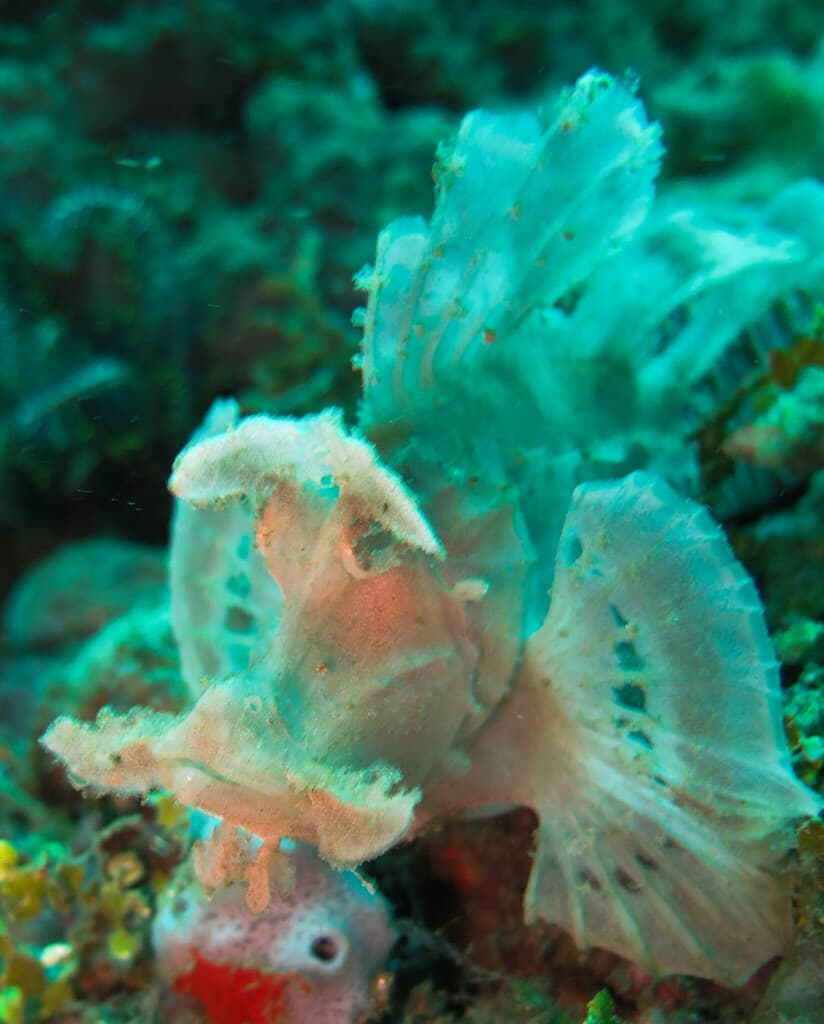
The Paddle-flap Scorpionfish is a breathtaking member of the Rhinopias genus, widely regarded as one of the most desirable and visually extraordinary fish in the marine aquarium hobby. Unlike the lacy appendages of its cousin R. aphanes, this species features broad, paddle-shaped skin flaps along its body and head that give it an otherworldly, almost alien appearance. The coloration is stunningly variable, with individuals displaying solid or mottled patterns in shades of bright red, orange, purple, pink, lavender, yellow, or white, each specimen being essentially unique.
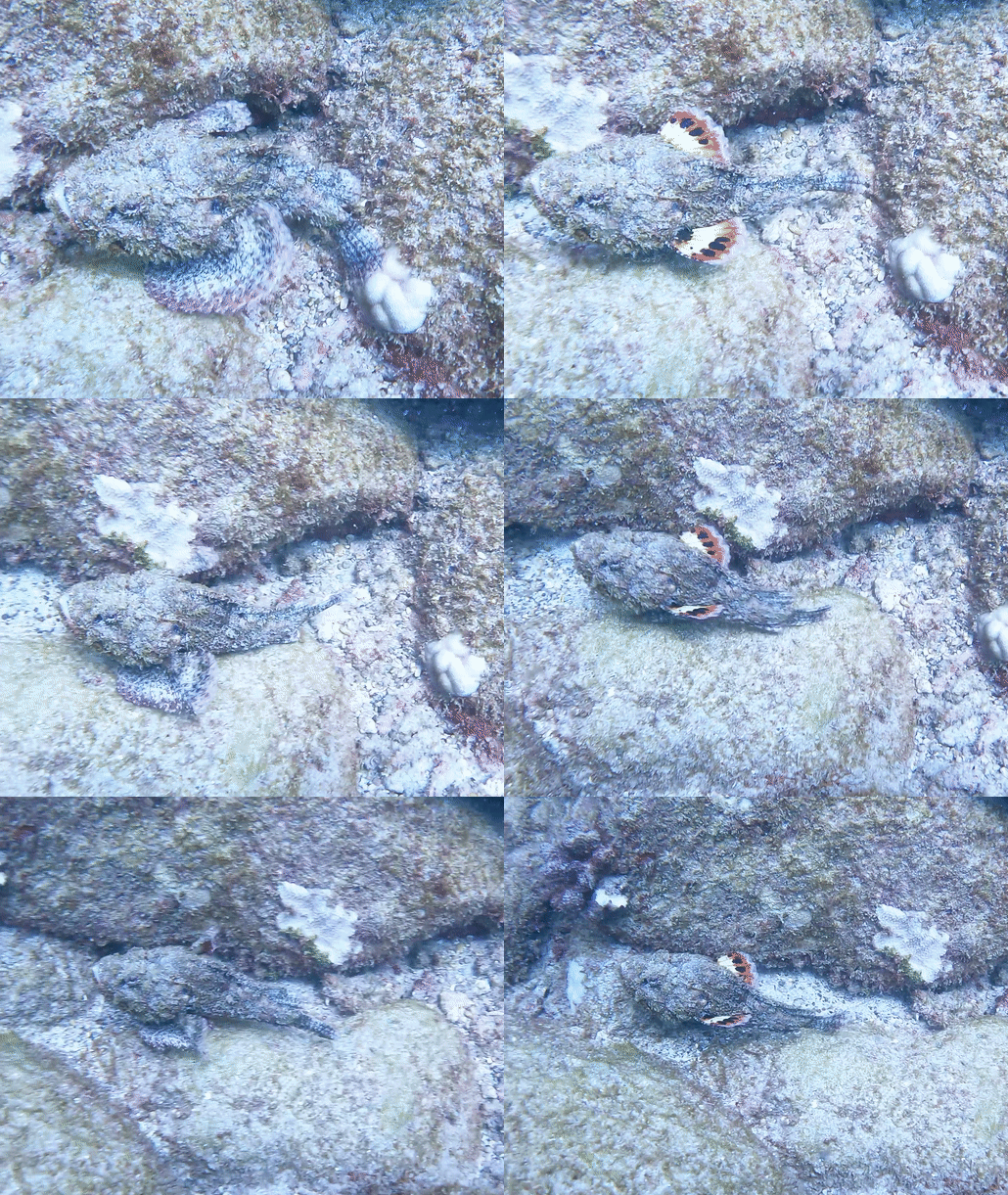
In the wild, Rhinopias eschmeyeri is found in the Western Pacific, from Indonesia and the Philippines to Japan and Papua New Guinea. It inhabits rubble slopes, sandy bottoms, and areas near soft corals at depths of 15 to 45 meters. Like all Rhinopias, it is an ambush predator that relies on its extraordinary camouflage to remain invisible to both prey and predators, sitting motionless for extended periods before striking at passing small fish and shrimp with lightning speed. It is known to periodically shed its outer skin layer to remove algae growth and parasites.
In the aquarium, the Paddle-flap Scorpionfish is the crown jewel of any predator collection. Specimens are extremely rare and can command prices well in excess of a thousand dollars, with especially vivid color morphs fetching considerably more. Despite their exotic appearance, they are surprisingly hardy in captivity and most specimens will accept frozen foods after acclimation. They are venomous and require careful handling. A dedicated tank of 75 gallons or more with appropriate substrate and low lighting suits this species well.
Feeding & Diet
Carnivore
Paddle-flap Scorpionfish are ambush predators that consume small fish and crustaceans. In captivity, offer frozen silversides, krill, ghost shrimp, and chopped seafood using feeding tongs to trigger a strike response. Most specimens transition to frozen foods within a few weeks. Feed every two to three days due to their low metabolic rate from sedentary behavior.
Compatibility
predatorambush-huntervenomousrare-speciesexpert-only
The Paddle-flap Scorpionfish is peaceful toward any fish too large to eat but will consume anything that fits in its surprisingly large mouth. Compatible with other scorpionfish, lionfish, and large non-aggressive species. Its sedentary nature means aggressive tankmates may bully or stress it. A species-specific or dedicated predator tank is ideal to protect this valuable specimen.
Check CompatibilityBreeding
Not bred in captivity
Paddle-flap Scorpionfish have not been bred in captivity. They produce buoyant gelatinous egg masses in the wild. The extreme rarity and cost of specimens, combined with the difficulty of sexing individuals and the pelagic larval phase, makes captive breeding essentially impossible for hobbyists at present.
Special Requirements
- Extremely rare and expensive — premium color morphs command very high prices
- Venomous dorsal spines — extreme caution during all tank maintenance
- Periodically sheds skin — a normal process, not a sign of disease
- Low lighting preferred to mimic natural deeper-water habitat
- Expert-level species requiring dedicated, careful husbandry
Water Parameters
Temperature72–80°F
Specific Gravity1.02–1.026 sg
pH8.1–8.4
Alkalinity8–12 dKH
Coloration
redorangepurplepinklavenderyellowwhite
Tags
predatorambush-huntervenomousrare-speciesexpert-only