IntermediateAggressiveNot Reef Safe
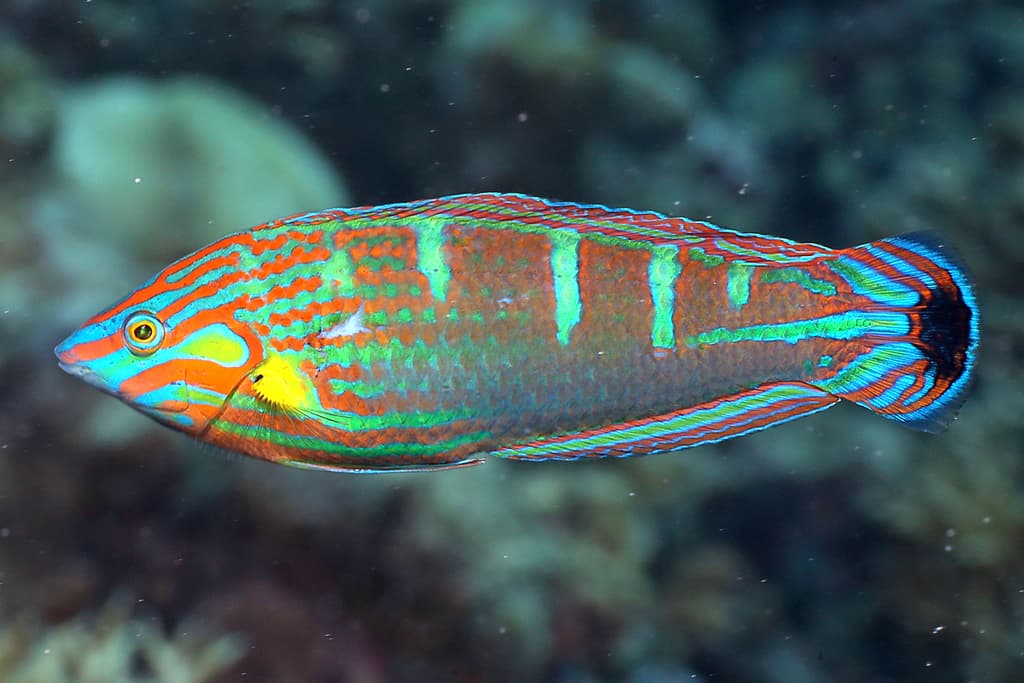
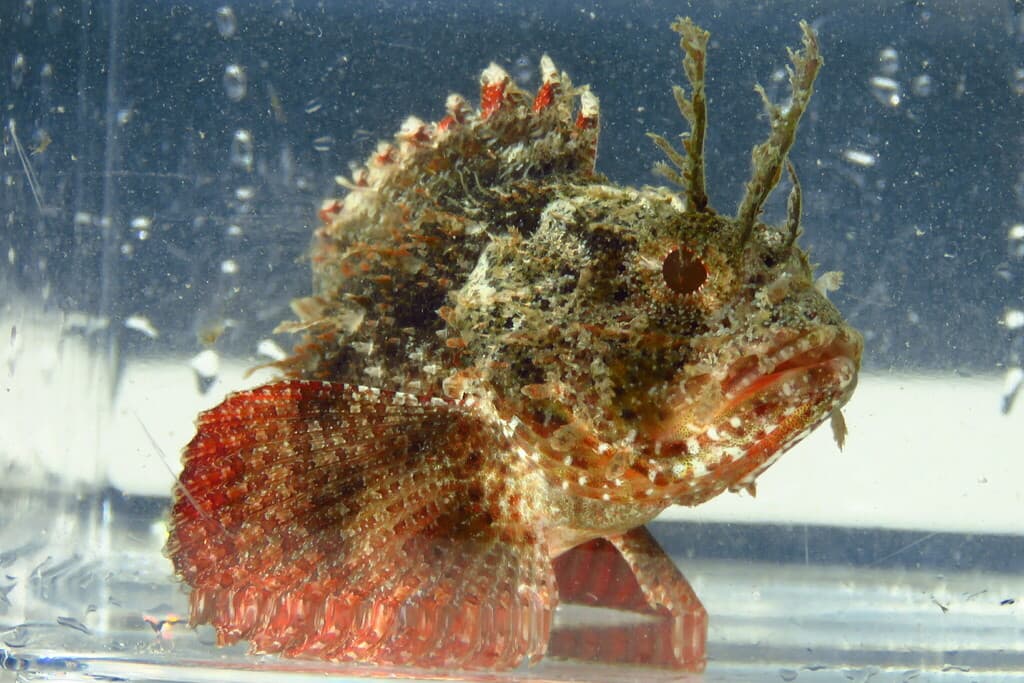
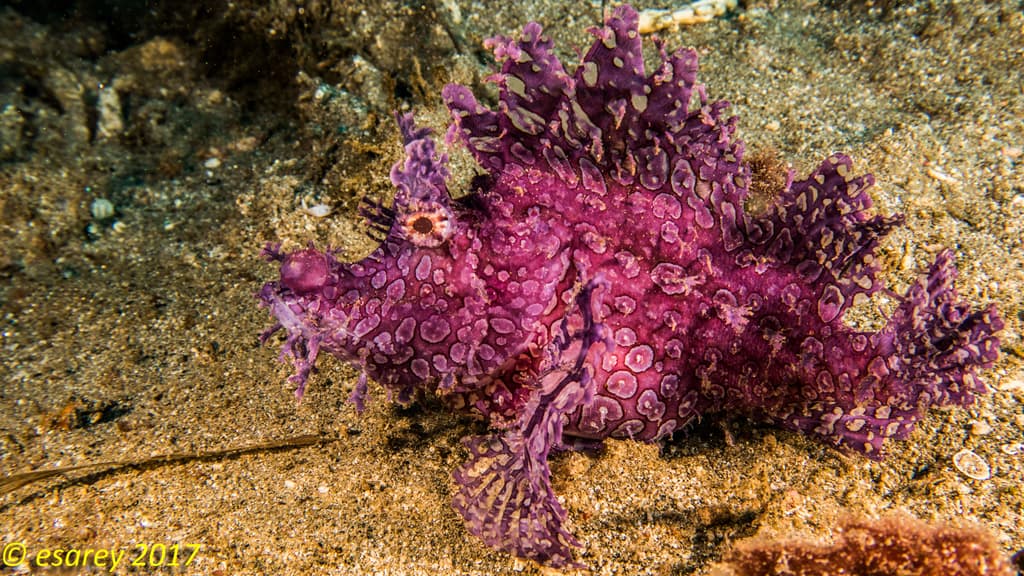
Devil Scorpionfish
Scorpaenopsis diabolus
Family: Scorpaenidae · Scorpionfish
Also known as: False Stonefish, Devil Stinger, Demon Scorpionfish
(c) Chalon Boesel, some rights reserved (CC BY-NC)
Max Size
12"
Min Tank
125 gal
Lifespan
8-15 years
Origin
Indo-Pacific, Red Sea
Diet
Carnivore
Swims
Bottom
About
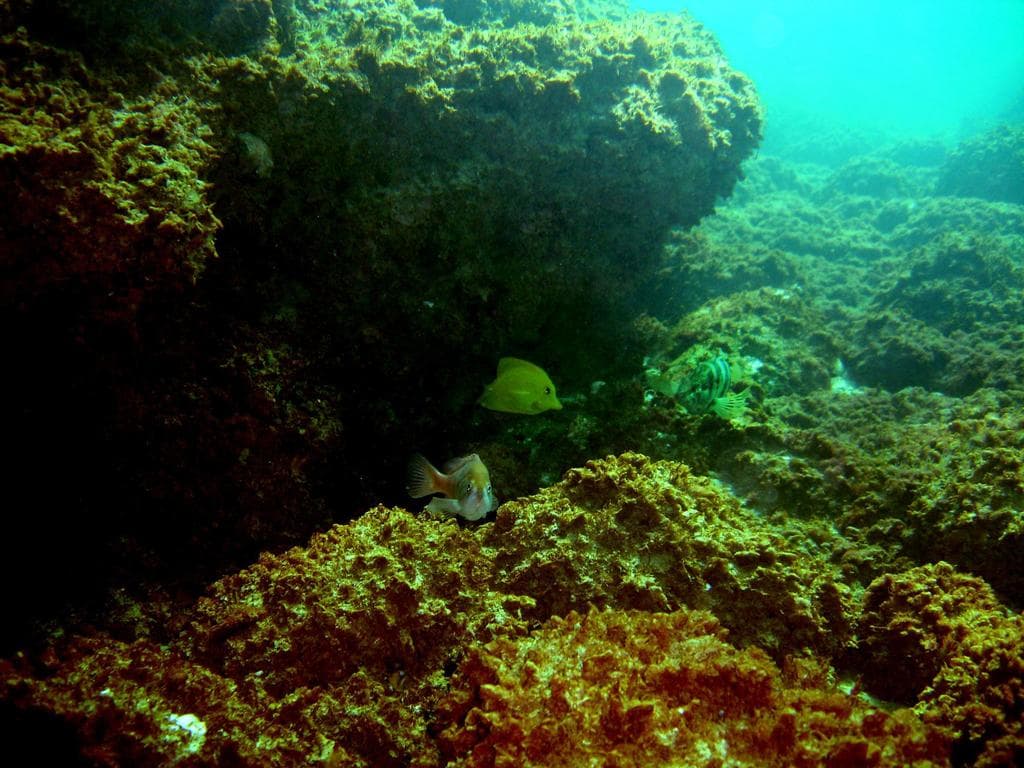
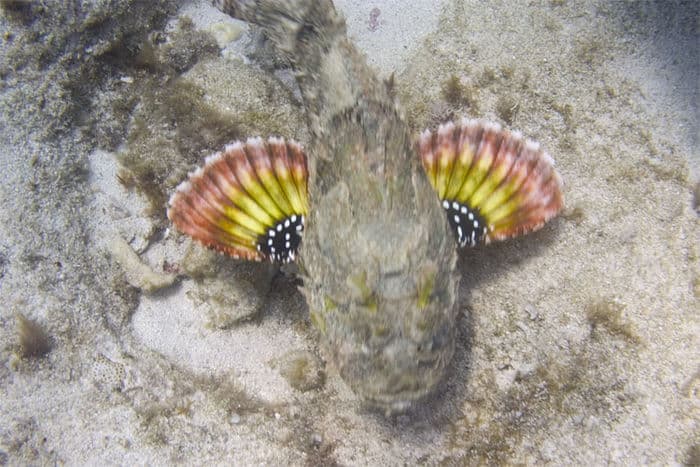
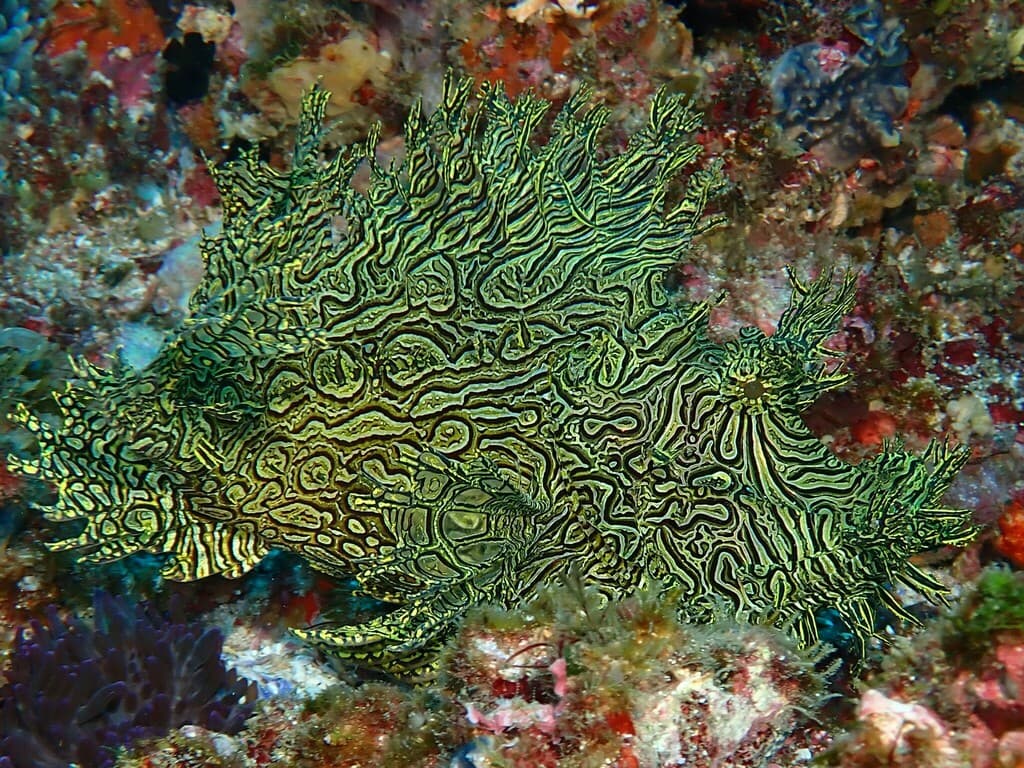
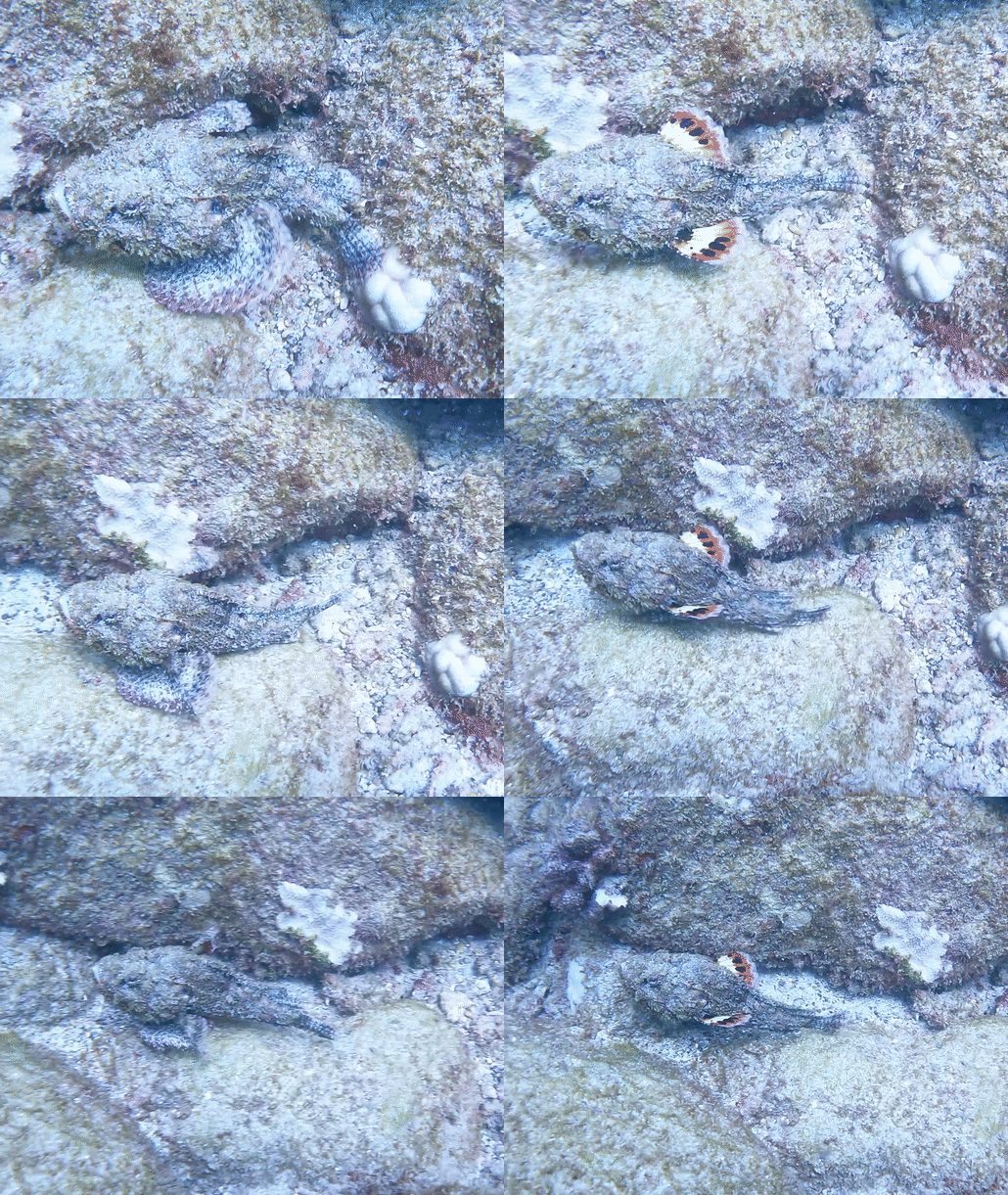
The Devil Scorpionfish is one of the most cryptically camouflaged fish in the Indo-Pacific, capable of blending so perfectly with its surroundings that even experienced divers often swim directly over it without noticing. Its body is flattened and covered in numerous fleshy tabs, ridges, and irregular projections that mimic algae-covered rocks and coral rubble. The coloration is highly variable, incorporating mottled patterns of red, brown, grey, pink, and white that match the specific substrate the fish inhabits. When disturbed, it may flash the brightly colored inner surfaces of its pectoral fins as a warning display.
In the wild, Scorpaenopsis diabolus is widely distributed from the Red Sea across the Indian Ocean to the Western Pacific and Hawaii. It is found on coral reefs, rubble zones, and sandy bottoms from shallow water to depths of about 70 meters. As a textbook ambush predator, it lies motionless for hours or even days, waiting for small fish, shrimp, or crabs to wander within striking range. The strike is one of the fastest in the animal kingdom, with the prey being engulfed in milliseconds.
In the aquarium, the Devil Scorpionfish is a hardy and low-maintenance species once the keeper understands its specialized needs. It is venomous, with potent spines that can deliver an extremely painful sting, so great care must be taken during any tank maintenance. It spends the vast majority of its time sitting motionless on the bottom, requiring minimal swimming space but needing appropriate rock and rubble substrate to satisfy its camouflage instincts.
Feeding & Diet
Carnivore
Devil Scorpionfish are ambush predators that consume small fish, shrimp, and crabs in the wild. In captivity, offer frozen silversides, whole krill, ghost shrimp, and chopped seafood. Wiggling the food with feeding tongs near the fish can trigger a strike response. Feed every two to three days, as their sedentary lifestyle means they have low metabolic needs.
Compatibility
predatorambush-huntervenomousFOWLRcryptic
The Devil Scorpionfish will eat any fish or crustacean that fits in its large mouth. Only house with fish too large to be consumed. Despite being labeled aggressive, it is actually docile toward non-prey-sized tankmates, sitting motionless most of the time. Ideal companions include other scorpionfish, lionfish, large moray eels, and other predatory species in a dedicated predator tank.
Check CompatibilityBreeding
Not bred in captivity
Devil Scorpionfish have not been bred in home aquariums. Like other scorpionfish, they produce a gelatinous egg mass that floats at the surface. The planktonic larval phase makes captive rearing extremely difficult. No documented successful captive breeding exists for this species.
Special Requirements
- Highly venomous dorsal spines — extreme caution required during maintenance
- Will consume any fish or invertebrate small enough to swallow
- Provide rock and rubble substrate for natural camouflage behavior
- Sedentary — does not require large swimming space but needs floor area
- Use rigid container for transfers — never net this fish
Water Parameters
Temperature72–80°F
Specific Gravity1.02–1.026 sg
pH8.1–8.4
Alkalinity8–12 dKH
Coloration
redbrowngreypinkwhitemottled
Tags
predatorambush-huntervenomousFOWLRcryptic