IntermediateAggressiveNot Reef Safe
Barbfish
Scorpaena brasiliensis
Family: Scorpaenidae · Scorpionfish
Also known as: Brazilian Scorpionfish, Barb Scorpionfish, Caribbean Scorpionfish
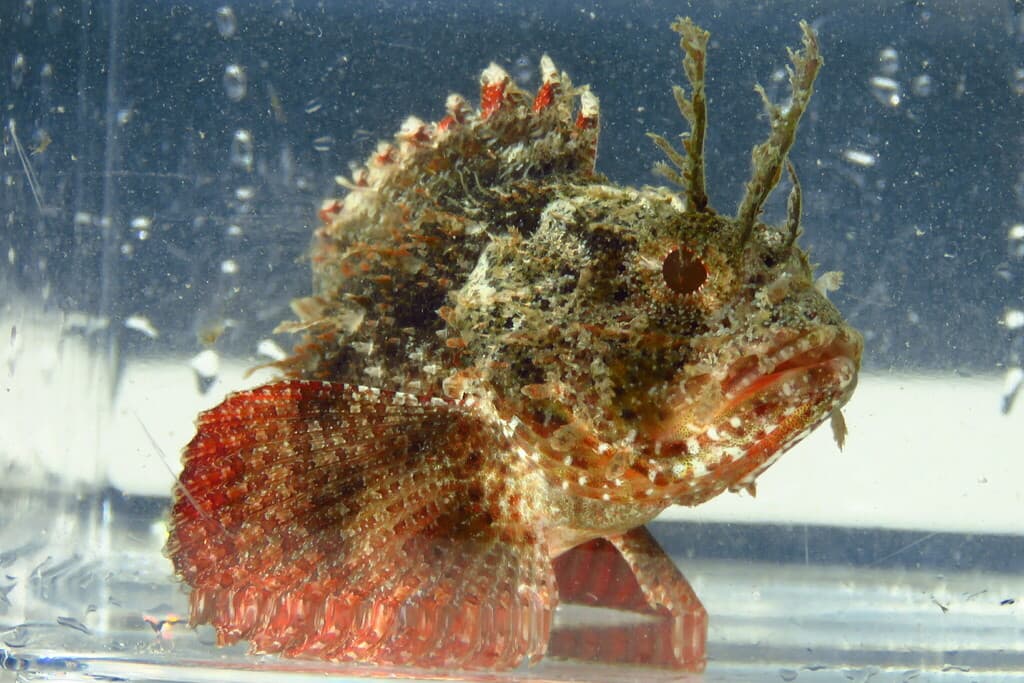
(c) Squidpastry, some rights reserved (CC BY-NC)
Max Size
14"
Min Tank
125 gal
Lifespan
8-15 years
Origin
Caribbean, Western Atlantic
Diet
Carnivore
Swims
Bottom
About
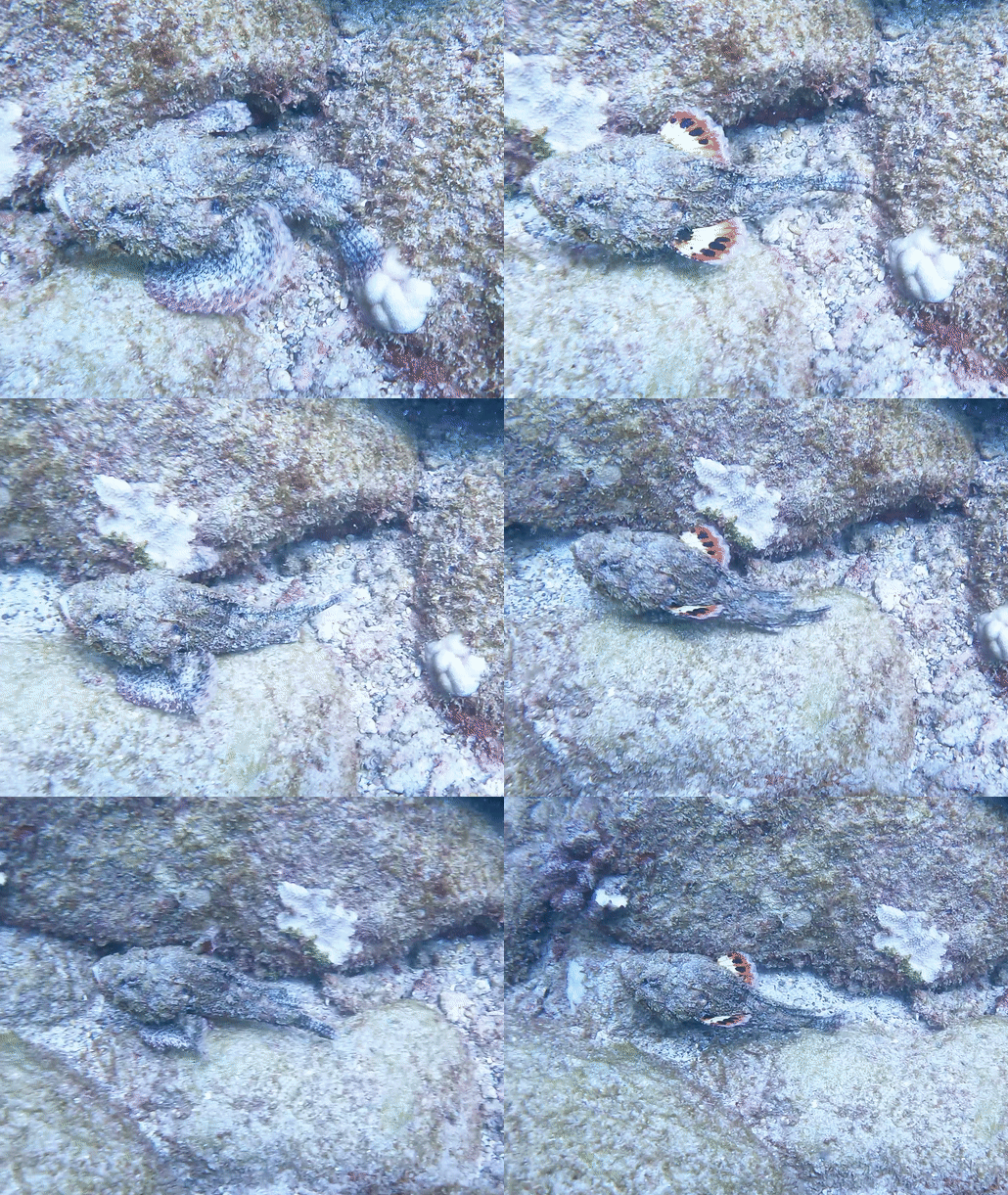
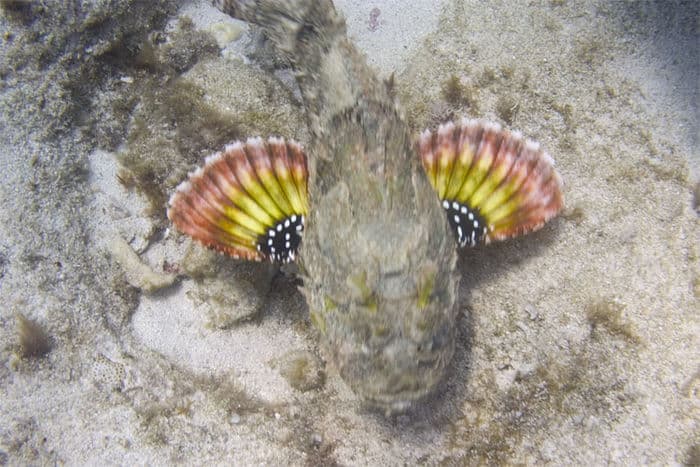
The Barbfish is a robust and well-camouflaged member of the Scorpaenidae family found throughout the Caribbean and Western Atlantic, from Virginia and Florida through the Gulf of Mexico to Brazil. It takes its common name from the prominent fleshy barbels or tabs located above its eyes and along its jaw, which help break up its outline and enhance its camouflage against rocky and coral substrates. The body coloration is highly variable, ranging from mottled reds and browns to greys and tans, allowing the fish to blend seamlessly with its surroundings.
In the wild, Scorpaena brasiliensis is a classic ambush predator, spending most of its time lying motionless on the substrate waiting for unsuspecting prey to wander within striking distance. When a small fish or crustacean comes close enough, the Barbfish strikes with explosive speed, engulfing the prey in its large, upturned mouth in a fraction of a second. It is found on coral reefs, rocky outcroppings, and rubble zones at depths from shallow tide pools to 100 meters.
In the aquarium, the Barbfish is a fascinating but specialized species. It is venomous, with sharp dorsal spines capable of delivering a painful sting, so care must be taken during tank maintenance. Despite its aggressive predatory nature, it is actually quite sedentary and peaceful toward fish too large to eat. It adapts well to captivity, readily accepting frozen silversides and other meaty foods after an acclimation period, and its elaborate camouflage makes it a conversation piece in any fish-only setup.
Feeding & Diet
Carnivore
Barbfish are ambush predators that consume small fish, shrimp, and crabs in the wild. In captivity, offer frozen silversides, whole krill, large mysis shrimp, and chopped seafood. Some specimens may initially require live ghost shrimp or feeder fish to trigger a feeding response but most transition to frozen foods readily. Feed every two to three days, as they have slow metabolisms.
Compatibility
predatorambush-huntervenomousFOWLRCaribbean
The Barbfish will eat any fish or crustacean small enough to swallow, which means tankmates must be too large to be consumed. It is actually peaceful toward fish of similar or larger size, spending most of its time sitting motionless. Best housed with other large, robust species in a predator or FOWLR setup. Avoid all small fish, shrimp, and crabs as they will be eaten.
Check CompatibilityBreeding
Not bred in captivity
Barbfish have not been bred in home aquariums. In the wild, scorpionfish produce a gelatinous egg mass that floats in the water column. The larvae are planktonic and undergo a significant transformation before settling to the bottom. Captive breeding would be extremely challenging due to the pelagic larval stage.
Special Requirements
- Venomous dorsal spines — exercise extreme caution during tank maintenance
- Will consume any fish or invertebrate small enough to fit in its mouth
- Sedentary ambush predator — does not need large swimming space
- Provide rocky ledges and hiding spots to mimic natural habitat
- Do not net this fish — use a rigid container to avoid spine injuries
Water Parameters
Temperature72–80°F
Specific Gravity1.02–1.026 sg
pH8.1–8.4
Alkalinity8–12 dKH
Coloration
redbrowngreytanmottled
Tags
predatorambush-huntervenomousFOWLRCaribbean