IntermediatePeacefulNot Reef Safe
Striped Burrfish
Chilomycterus schoepfii
Family: Diodontidae · Pufferfish
Also known as: Striped Burr Fish, Spiny Box Puffer, Web Burrfish
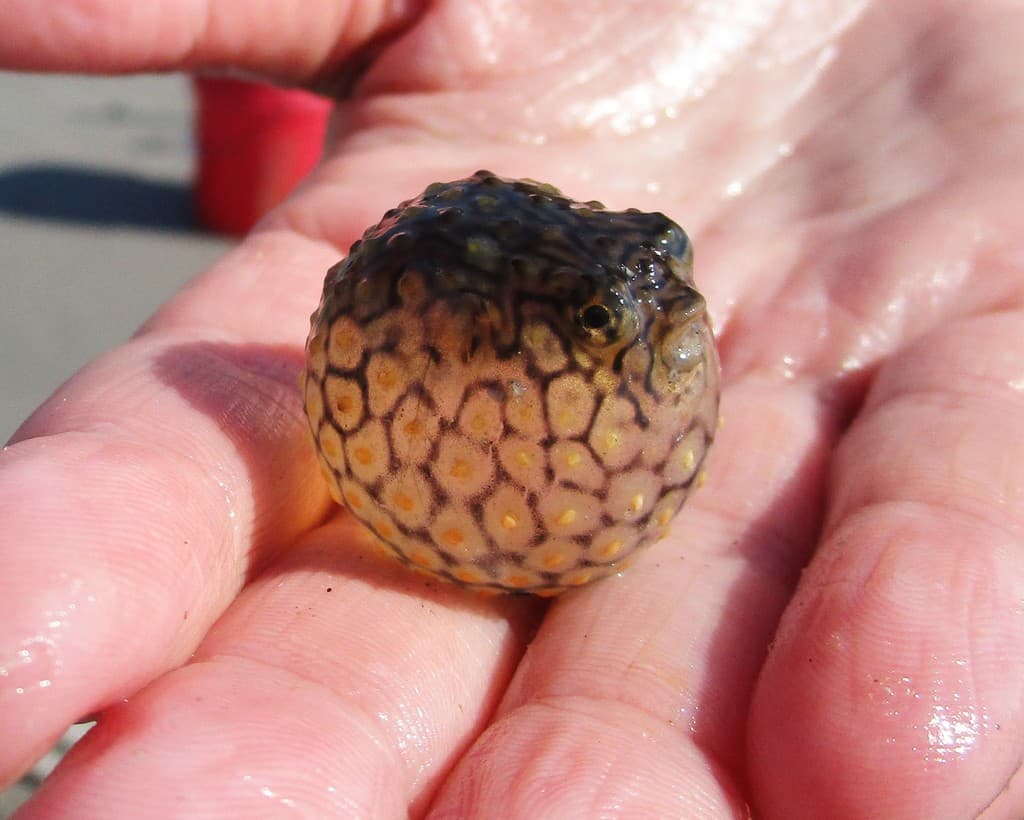
(c) Sharleen, some rights reserved (CC BY-NC)
Max Size
10"
Min Tank
100 gal
Lifespan
8-12 years
Origin
Western Atlantic, Caribbean
Diet
Carnivore
Swims
Bottom
About
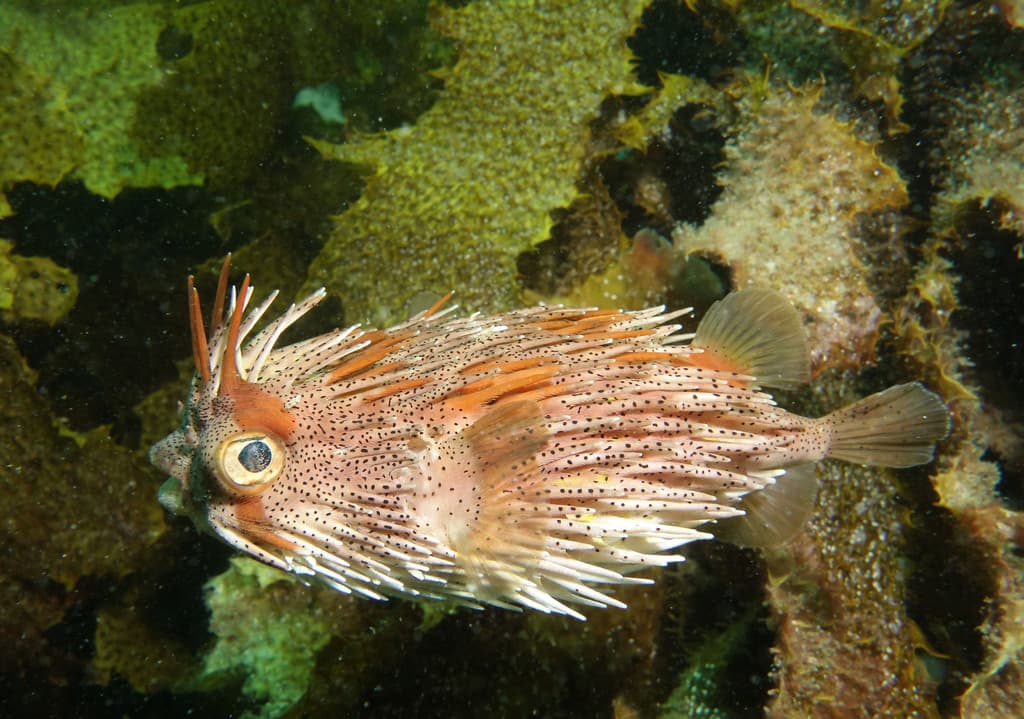
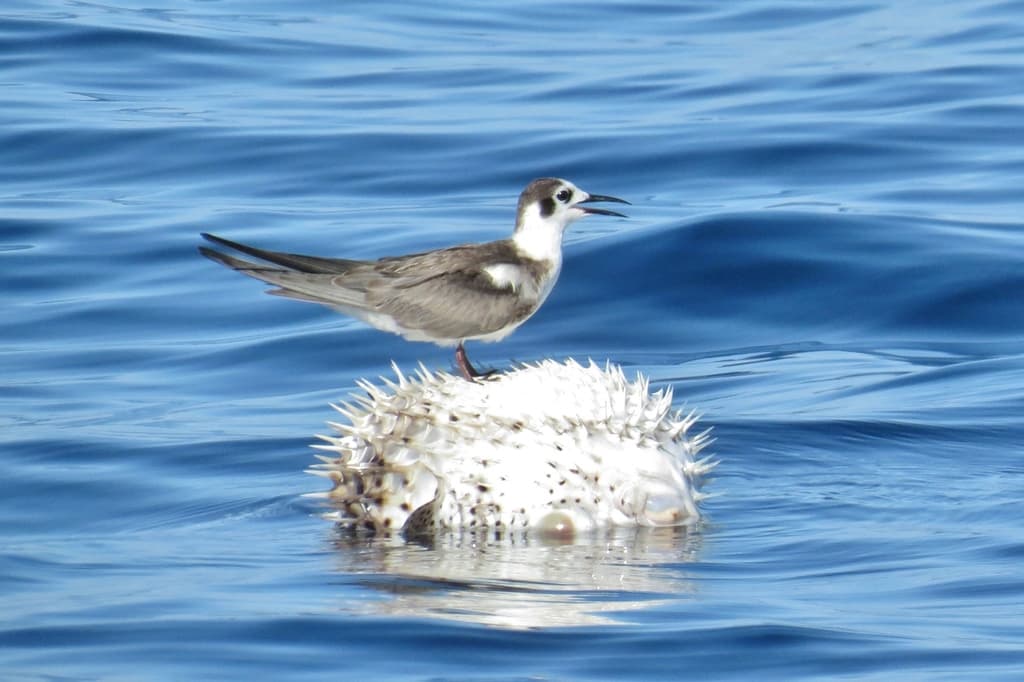
The Striped Burrfish is a member of the Diodontidae family found throughout the Western Atlantic, from Nova Scotia to Brazil, though it is most commonly encountered in the warmer waters of Florida, the Caribbean, and the Gulf of Mexico. This species is distinguished from other burrfish by the pattern of dark brown to black parallel stripes and irregular blotches on its yellowish-tan body, combined with the short, permanently erect spines that are characteristic of all burrfish. Its round body shape, large expressive eyes, and armored appearance make it one of the more visually distinctive fish available to marine aquarists.
In the wild, Chilomycterus schoepfii favors seagrass beds, sandy bottoms, and sheltered reef environments where it forages for its primary prey of hard-shelled invertebrates. It uses jets of water to uncover buried prey and its powerful fused jaw plates to crush the shells of crabs, clams, sea urchins, and snails. This species is primarily nocturnal, becoming more active at dusk and throughout the night.
In the aquarium, the Striped Burrfish is a hardy and endearing species that adapts well to captive conditions. It is relatively peaceful for a puffer-type fish and quickly becomes tame, developing a recognizable personality. At a maximum size of 10 inches, it requires a minimum of 100 gallons. It is not reef-safe due to its invertebrate-crushing diet, but it thrives in fish-only and FOWLR setups where it can be one of the most engaging and interactive residents.
Feeding & Diet
Carnivore
Striped Burrfish are specialized carnivores that crush hard-shelled prey in the wild. In captivity, offer frozen krill, mysis shrimp, chopped clam, mussel, squid, silversides, and marine pellets. Hard-shelled foods such as small crabs, snails, and clams should be provided regularly to wear down the continuously growing teeth. Feed once or twice daily.
Compatibility
not-reef-safepeacefulpersonality-fishFOWLRnocturnal
The Striped Burrfish is relatively peaceful for a puffer-type fish but will consume any invertebrate it can fit in its mouth. Keep in fish-only or FOWLR setups with moderately active, non-aggressive tankmates. Its slow swimming speed means it can be outcompeted for food, so target feeding may be necessary. Generally tolerant of other fish species when given adequate space.
Check CompatibilityBreeding
Not bred in captivity
Striped Burrfish have not been bred in home aquariums. Their reproductive biology in the wild is not well documented. Like other burrfish, they likely deposit eggs on substrate. The difficulty of maintaining pairs and the lack of established breeding protocols make captive reproduction unlikely for hobbyists.
Special Requirements
- Hard-shelled foods essential for tooth maintenance — provide crabs, snails, or clams regularly
- Not reef-safe — will consume all crustaceans, mollusks, and urchins
- Fixed spines can injure handlers — use a container rather than a net for transfers
- Sandy substrate preferred for natural foraging behavior
- Primarily nocturnal — may be more active under dim lighting
Water Parameters
Temperature72–80°F
Specific Gravity1.02–1.026 sg
pH8.1–8.4
Alkalinity8–12 dKH
Coloration
yellow-tandark brown stripesolivedark blotchestan
Tags
not-reef-safepeacefulpersonality-fishFOWLRnocturnal