IntermediatePeacefulNot Reef Safe
Porcupinefish
Diodon hystrix
Family: Diodontidae · Pufferfish
Also known as: Spot-Fin Porcupinefish, Spotted Porcupinefish, Giant Porcupinefish, Hystrix Porcupinefish
(c) Eric van den Berghe, some rights reserved (CC BY-NC)
Max Size
36"
Min Tank
300 gal
Lifespan
10-20 years
Origin
Circumtropical, Atlantic
Diet
Carnivore
Swims
Middle
About
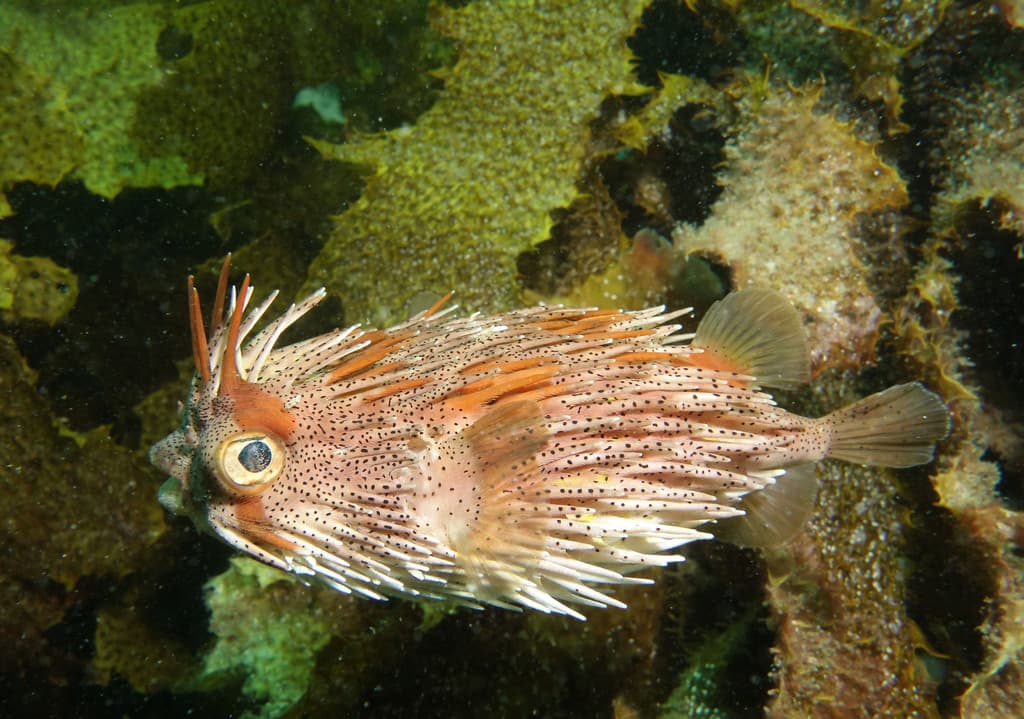
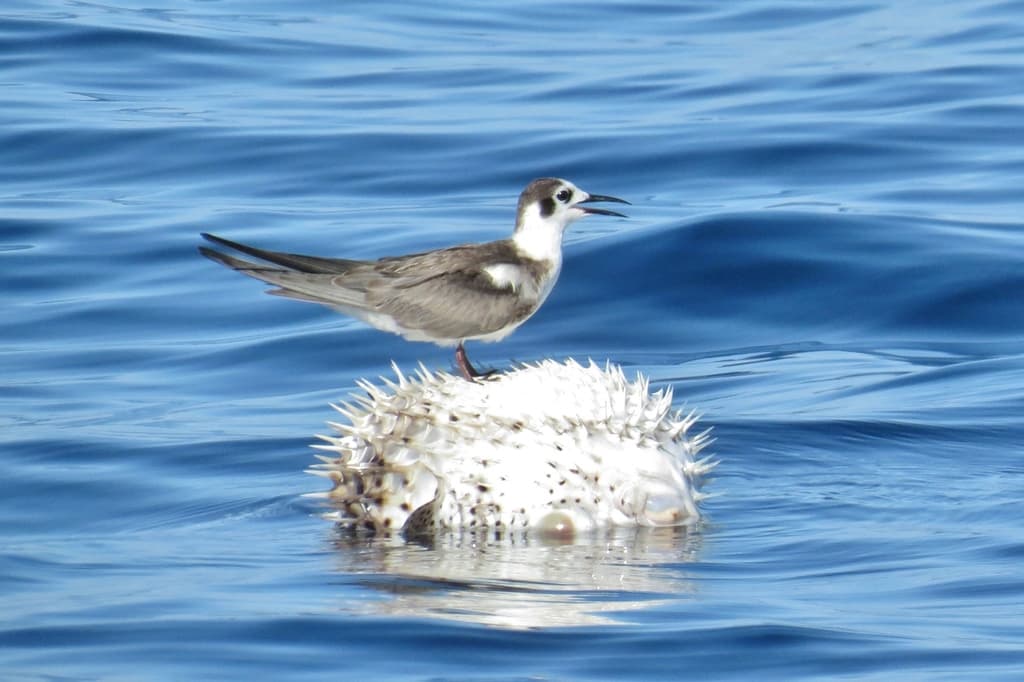
The Porcupinefish (Diodon hystrix) is the largest species in the family Diodontidae, capable of reaching an impressive 36 inches in the wild. This massive, globally distributed species is found in tropical and subtropical waters worldwide, making it one of the most widespread porcupinefish. Its body is covered in long, prominent spines that lie flat under normal conditions but erect dramatically when the fish inflates itself as a defense mechanism, creating a nearly impenetrable ball of spikes.
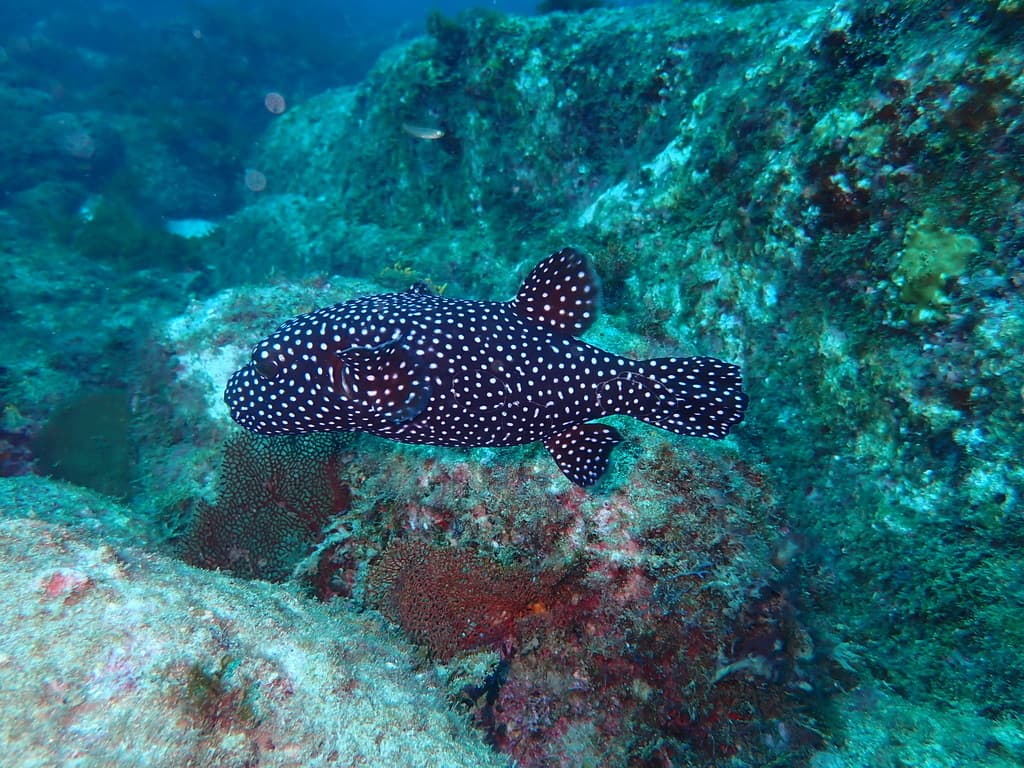
The body coloration consists of a light tan to grayish base covered with small dark spots, with the spots extending onto the fins. Its large, expressive eyes and broad face give it the endearing, almost puppy-like appearance shared by all porcupinefish. The long spines of D. hystrix distinguish it from the shorter-spined Diodon holocanthus, which is more commonly seen in the aquarium trade.
Due to its enormous potential adult size, the Porcupinefish requires an exceptionally large aquarium of at least 300 gallons, making it suitable only for the most dedicated aquarists with the space and resources for such a system. Despite its intimidating size and armament, it is surprisingly peaceful toward fish tankmates. It develops a remarkably interactive personality, recognizing its keeper, begging for food, and even accepting gentle touch. However, it will consume any invertebrate it encounters and produces a massive bioload requiring industrial-strength filtration. This species is strictly for large fish-only systems.
Feeding & Diet
Carnivore
Porcupinefish are carnivores that feed primarily on hard-shelled invertebrates including sea urchins, crabs, gastropods, and bivalves in the wild. In captivity, offer a varied diet of frozen krill, large shrimp, squid, clam, mussel, and crab. Whole hard-shelled foods such as crabs, crayfish, snails, and clam halves are essential and must be provided regularly to wear down their powerful, continuously growing fused beak. Feed once to twice daily with appropriately large portions.
Compatibility
not-reef-safepeacefulintelligentpersonality-fishfish-onlyheavy-bioloadlarge-species
Despite its enormous size and fearsome appearance, the Porcupinefish is remarkably peaceful toward other fish. It coexists well with large tangs, angelfish, triggerfish, groupers, and other robust species. Will consume all invertebrates including shrimp, crabs, snails, urchins, and starfish. Not safe for reef aquariums. Avoid housing with small fish that could be accidentally consumed. Its massive adult size means tankmates must also be appropriate for very large systems.
Check CompatibilityBreeding
Not bred in captivity
Porcupinefish have not been bred in home aquariums. In the wild, spawning occurs in open water with pelagic eggs. The enormous adult size, extended oceanic larval phase, and massive space requirements make captive breeding entirely impractical for hobbyists.
Special Requirements
- Exceptionally large tank required - minimum 300 gallons
- Industrial-strength filtration for massive bioload
- Hard-shelled foods critical for dental maintenance
- Not suitable for reef aquariums
- Long spines can become entangled in nets - use containers for transfer
- Avoid forcing inflation - extremely stressful and potentially fatal
- Heavy protein skimmer essential
- Secure all equipment and plumbing from investigation
Water Parameters
Temperature72–80°F
Specific Gravity1.02–1.026 sg
pH8.1–8.4
Alkalinity8–12 dKH
Coloration
tangraybrownblackwhite
Tags
not-reef-safepeacefulintelligentpersonality-fishfish-onlyheavy-bioloadlarge-species