BeginnerPeacefulReef Safe
Two Spot Hawkfish
Amblycirrhitus bimacula
Family: Cirrhitidae · Hawkfish
Also known as: Twospot Hawkfish, Two-Spotted Hawkfish
(c) Josh Hughes, all rights reserved
Max Size
3.5"
Min Tank
30 gal
Lifespan
5-7 years
Origin
Western Pacific, Japan
Diet
Carnivore
Swims
Bottom
About
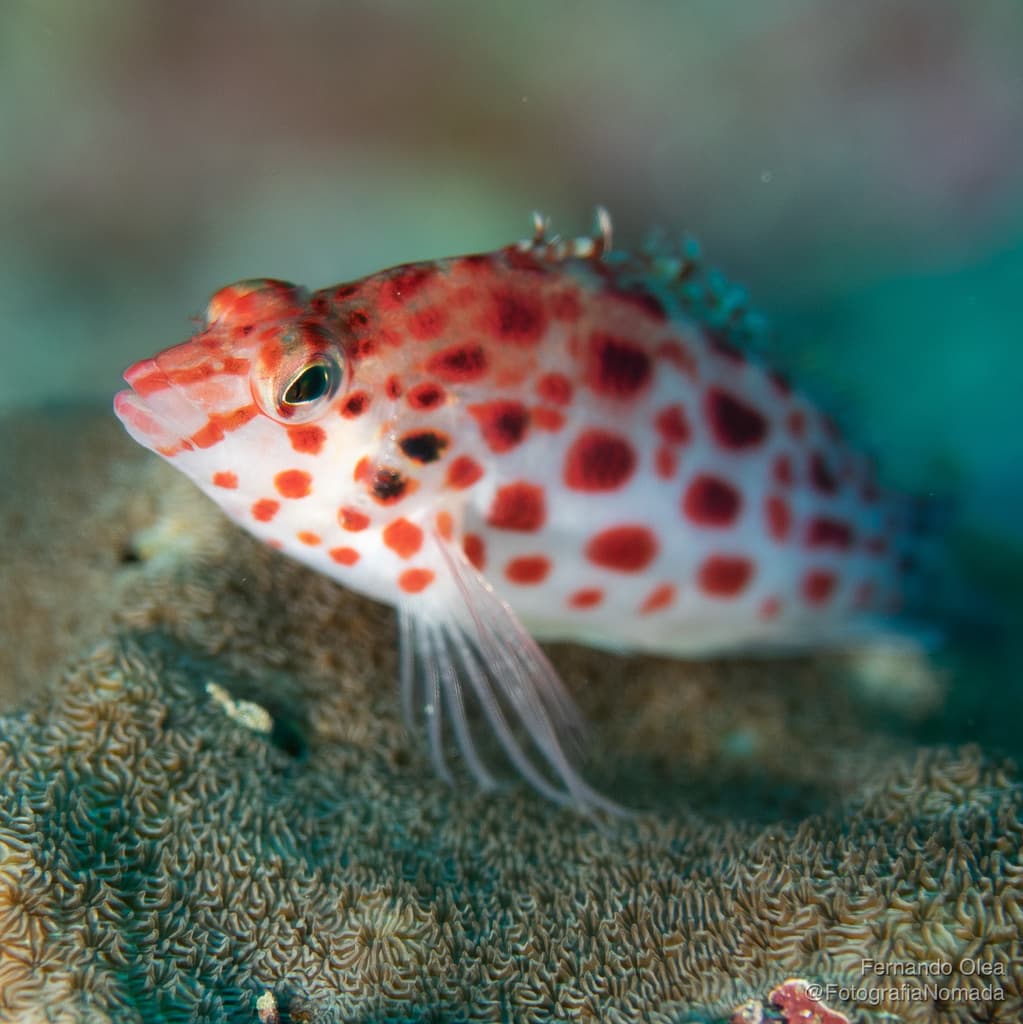
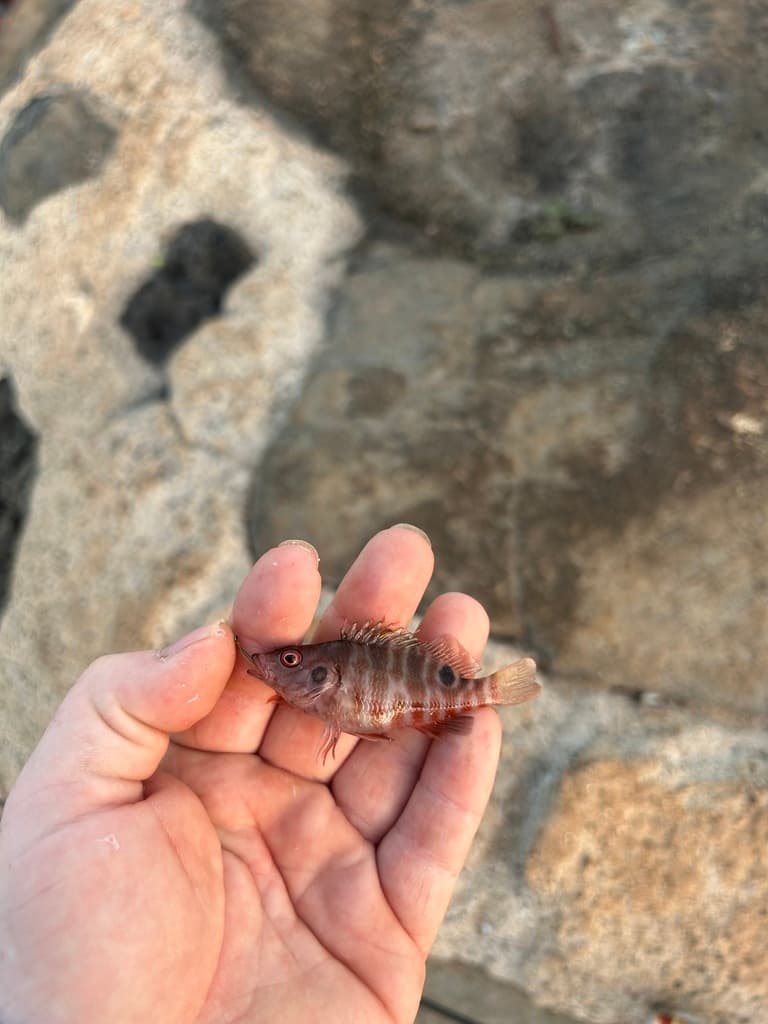
The Two Spot Hawkfish is a small and endearing hawkfish species named for the two distinctive dark spots located on its body, one near the rear of the dorsal fin and another on the caudal peduncle. Its compact body is pale white to pinkish with subtle red or brown mottling and fine spotting, giving it a delicate and attractive appearance. This diminutive species rarely exceeds three and a half inches, making it an ideal candidate for nano and smaller reef aquariums.
Unlike many hawkfish that can be pushy and territorial, the Two Spot Hawkfish is notably peaceful and makes an excellent community fish. It perches quietly on rock surfaces and coral branches, observing its surroundings with typical hawkfish curiosity without displaying the aggressive posturing seen in larger species. This gentle disposition makes it compatible with a wider range of tankmates than most other hawkfish.
The Two Spot Hawkfish is hardy and adapts well to captive conditions, accepting frozen and prepared foods readily. It is reef-safe with corals and, due to its small size, poses less of a threat to ornamental shrimp than its larger relatives, though very tiny shrimp species should still be housed with caution. Its peaceful nature, compact size, and charming perching behavior make it one of the most community-friendly hawkfish available in the hobby.
Feeding & Diet
Carnivore
Two Spot Hawkfish are carnivores that feed on tiny crustaceans and zooplankton in the wild. In captivity, they accept frozen mysis shrimp, enriched brine shrimp, cyclops, and fine marine pellets. Feed two to three times daily with appropriately sized foods.
Compatibility
reef-safepeacefulperchernano-suitablecommunity-safe
The Two Spot Hawkfish is one of the most peaceful hawkfish species and is compatible with a wide range of community reef fish. It poses minimal threat to ornamental shrimp compared to larger hawkfish. Safe with all coral types. An excellent choice for peaceful community reef tanks.
Check CompatibilityBreeding
Difficult
Two Spot Hawkfish are protogynous hermaphrodites. Spawning involves pelagic egg release at dusk. Captive breeding has not been commonly documented. Their small size and peaceful nature make them potential candidates for future breeding programs.
Special Requirements
- Provide elevated perching spots on rock or coral
- One of the most peaceful hawkfish species available
- Suitable for nano reef aquariums 30 gallons and up
- Tight-fitting lid recommended to prevent jumping
Water Parameters
Temperature72–80°F
Specific Gravity1.02–1.026 sg
pH8.1–8.4
Alkalinity8–12 dKH
Coloration
whitepinkredbrown
Tags
reef-safepeacefulperchernano-suitablecommunity-safe