BeginnerSemi-AggressiveReef Safe
Pixy Hawkfish
Cirrhitichthys oxycephalus
Family: Cirrhitidae · Hawkfish
Also known as: Coral Hawkfish, Sharp-Headed Hawkfish
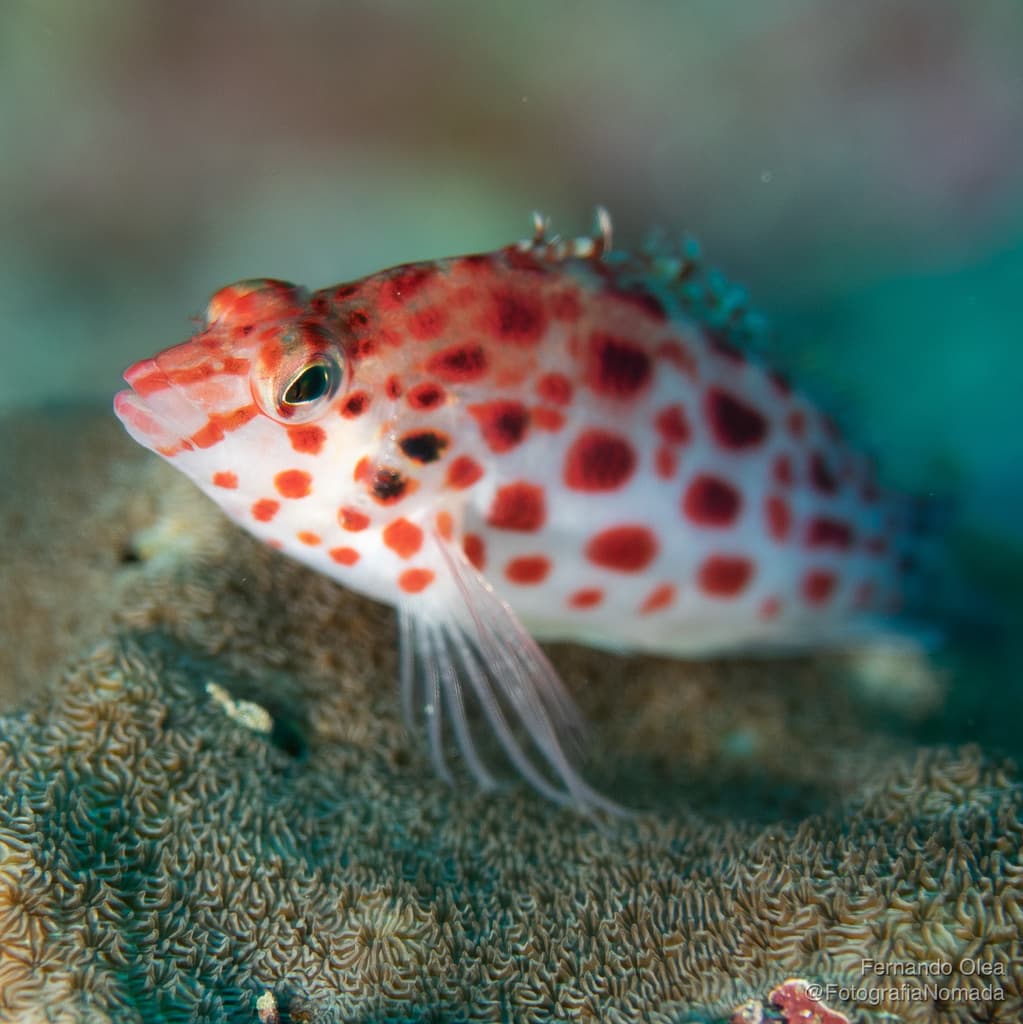
(c) Fernando Olea, some rights reserved (CC BY-NC)
Max Size
3.5"
Min Tank
30 gal
Lifespan
5-7 years
Origin
Indo-Pacific, Red Sea
Diet
Carnivore
Swims
Bottom
About
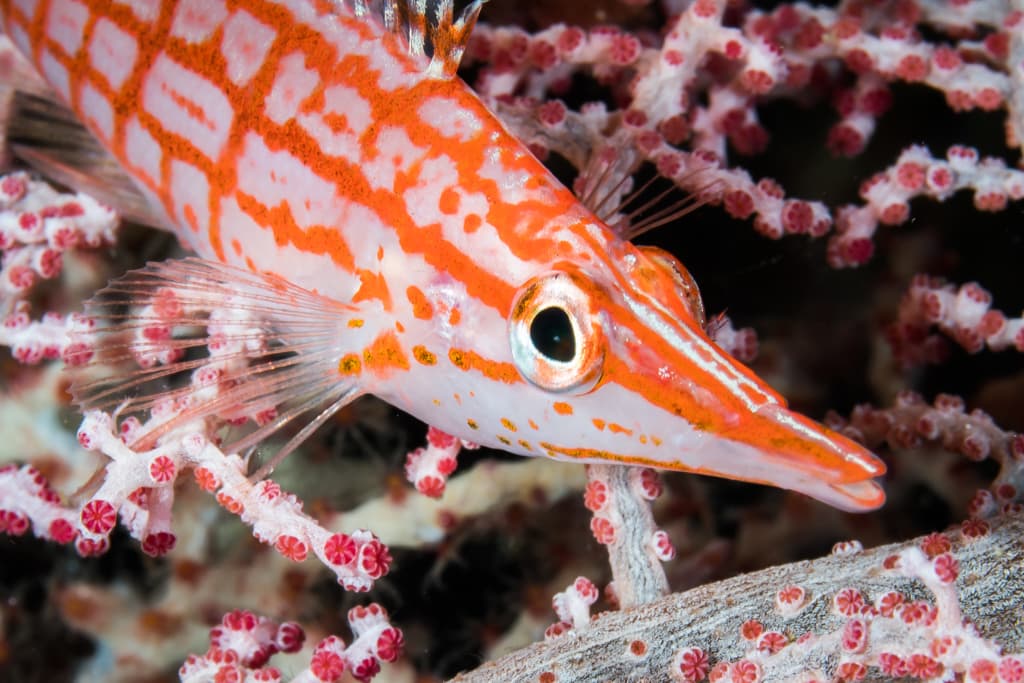
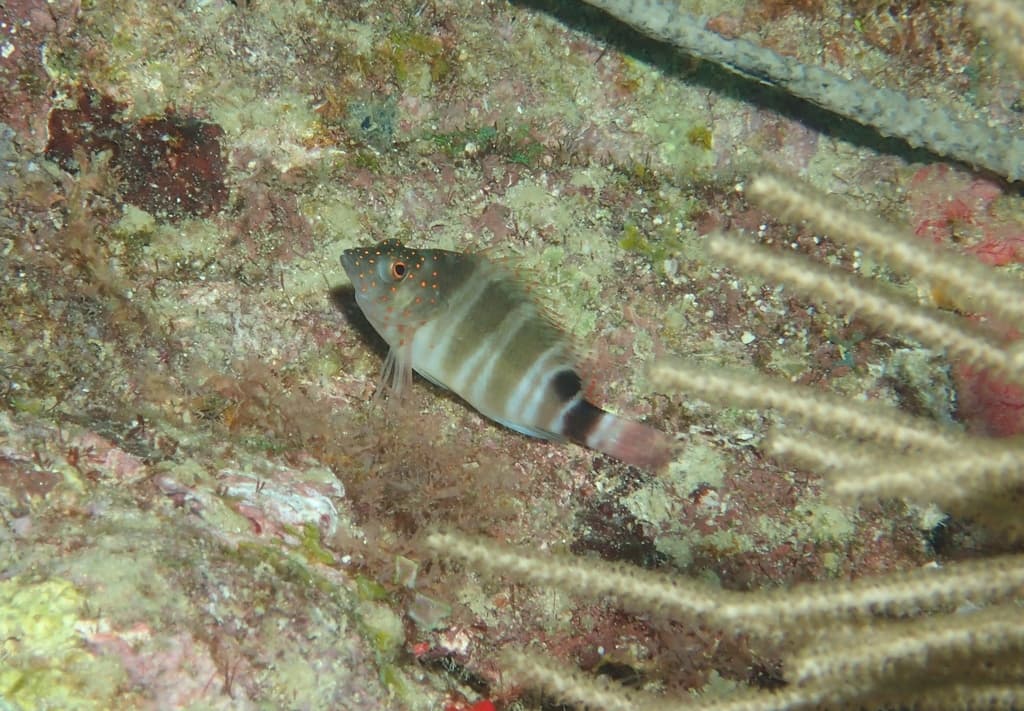
The Pixy Hawkfish is a small, vibrantly patterned hawkfish species featuring a white to pinkish body densely covered with bright red to orange-red spots. Its compact, stocky build and oversized pectoral fins give it the characteristic hawkfish appearance, while its pointed head and large eyes lend it an alert, inquisitive expression. This eye-catching coloration and diminutive size make it one of the most popular hawkfish for smaller marine aquariums.
In the aquarium, the Pixy Hawkfish is a bold and entertaining fish that quickly becomes a favorite due to its animated behavior. It will establish a favorite perching spot atop a coral head or rock ledge and dart out to investigate passing food or curious tankmates. This species is remarkably hardy and adapts to captive life with ease, readily accepting a wide range of frozen and prepared foods from the first day.
Despite its small size, the Pixy Hawkfish is a capable micro-predator that will consume ornamental shrimp and very small fish. It is generally considered reef-safe with corals, though its habit of perching directly on coral colonies can occasionally irritate sensitive species. Its hardiness, manageable size, and bold personality make it an excellent choice for beginner marine aquarists looking for a charismatic addition to a nano or standard reef tank.
Feeding & Diet
Carnivore
Pixy Hawkfish are carnivores that feed on small crustaceans, zooplankton, and invertebrates in the wild. In captivity, they readily accept frozen mysis shrimp, brine shrimp, chopped seafood, and marine pellets. Feed two to three times daily with protein-rich foods.
Compatibility
reef-safesemi-aggressiveperchermay-eat-shrimpnano-suitable
The Pixy Hawkfish is compatible with most community reef fish of similar size but will prey on tiny shrimp and very small fish like small gobies. Safe with most corals, though it may perch on and irritate sensitive coral colonies. Best kept singly.
Check CompatibilityBreeding
Difficult
Pixy Hawkfish are protogynous hermaphrodites that spawn at dusk with pelagic egg release. Captive breeding is uncommon in the home aquarium. Females can change sex to male when no dominant male is present.
Special Requirements
- Provide elevated perching spots on rock or coral
- Will eat ornamental shrimp and very small fish
- Keep singly to avoid conspecific aggression
- Suitable for nano reef aquariums 30 gallons and up
Water Parameters
Temperature72–80°F
Specific Gravity1.02–1.026 sg
pH8.1–8.4
Alkalinity8–12 dKH
Coloration
whiteredpinkorange
Tags
reef-safesemi-aggressiveperchermay-eat-shrimpnano-suitable