BeginnerSemi-AggressiveReef Safe
Longnose Hawkfish
Oxycirrhites typus
Family: Cirrhitidae · Hawkfish
Also known as: Long-Nosed Hawkfish
(c) David R, some rights reserved (CC BY-NC)
Max Size
5"
Min Tank
30 gal
Lifespan
5-7 years
Origin
Indo-Pacific, Eastern Pacific
Diet
Carnivore
Swims
Middle
About
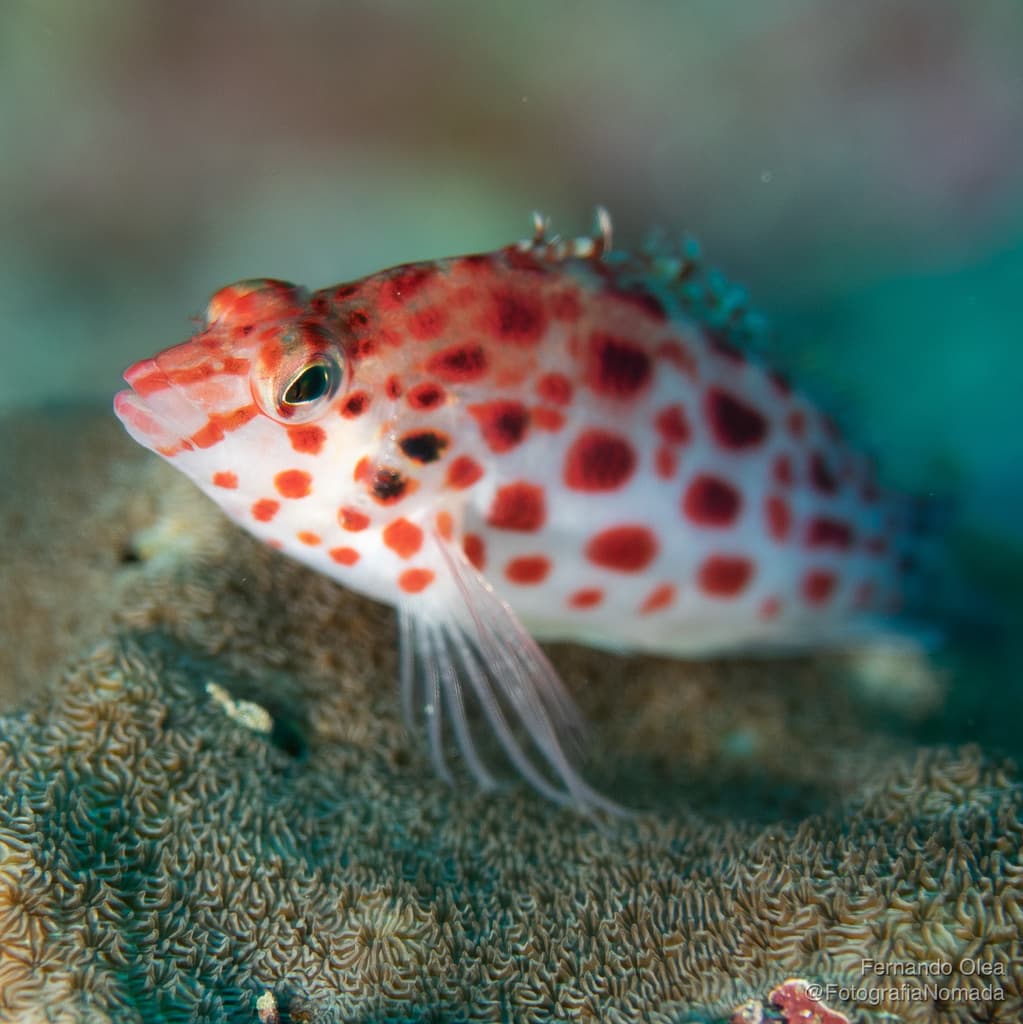
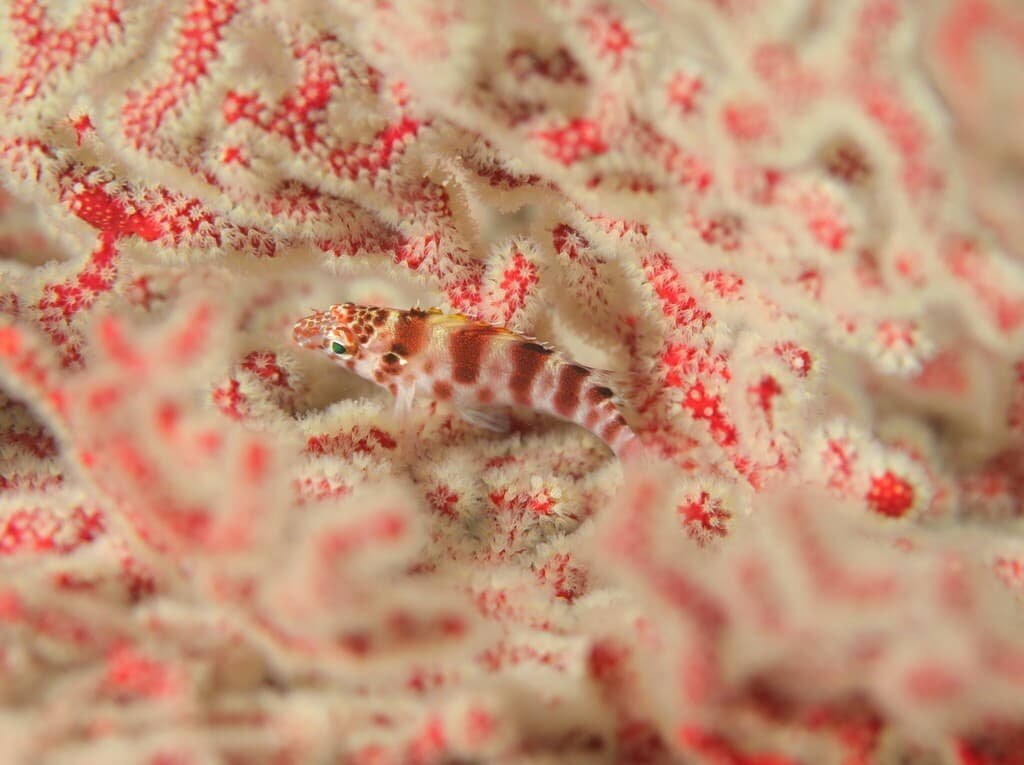
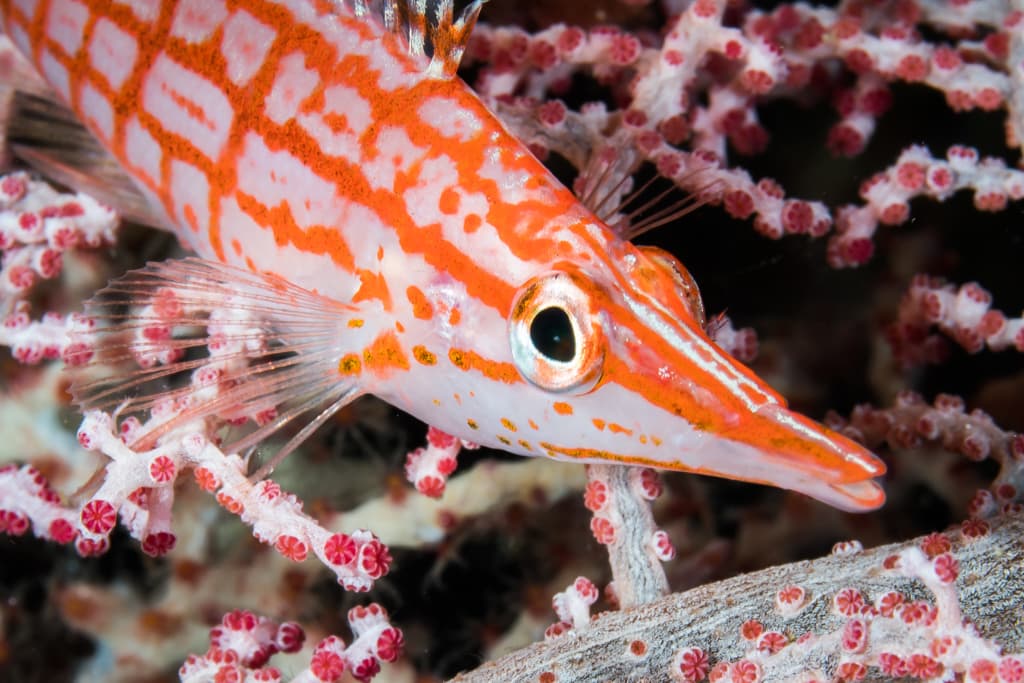
The Longnose Hawkfish is a uniquely attractive species instantly recognizable by its elongated snout and bold red crosshatch pattern over a white body. This distinctive appearance, combined with its comical perching behavior and alert, watchful demeanor, has made it a longtime favorite among marine aquarists. Like all hawkfish, it lacks a functional swim bladder and spends most of its time perched on coral branches, gorgonians, and rock outcroppings.
This species is remarkably hardy and adapts quickly to aquarium life, making it suitable for beginners. It will accept virtually any meaty food offered and rarely succumbs to common marine diseases. The Longnose Hawkfish is a natural deep reef inhabitant, often found perching on black coral and gorgonian sea fans at considerable depths in the wild, but it thrives under standard aquarium conditions.
While generally reef-safe with corals, the Longnose Hawkfish is a predator of small crustaceans and should not be trusted with ornamental shrimp or very small fish. It tends to be semi-aggressive, establishing a preferred perching territory and chasing away intruders. It is best kept singly in most aquariums. Its personality, hardiness, and distinctive appearance make it a highly rewarding addition to both reef and fish-only systems.
Feeding & Diet
Carnivore
Longnose Hawkfish are carnivores that feed on small crustaceans, zooplankton, and tiny fish in the wild. In captivity, they readily accept frozen mysis shrimp, brine shrimp, chopped shrimp, and high-quality marine pellets. Feed two to three times daily.
Compatibility
reef-safesemi-aggressiveperchermay-eat-shrimphardybeginner-friendly
The Longnose Hawkfish is compatible with most medium-sized community fish but will prey on small ornamental shrimp and may harass very small fish. It is safe with all corals. Can be territorial toward similar-shaped perching fish. Best kept singly in tanks under 100 gallons.
Check CompatibilityBreeding
Difficult
Longnose Hawkfish are protogynous hermaphrodites with haremic social structures in the wild. Spawning occurs at dusk and eggs are pelagic. Captive breeding has been achieved rarely. Larvae are extremely small and require specialized live foods during early development.
Special Requirements
- Provide elevated perching spots such as gorgonians or branching corals
- Will eat ornamental shrimp and very small fish
- Secure lid recommended as they can jump
- Keep singly to prevent territorial aggression
Water Parameters
Temperature74–80°F
Specific Gravity1.02–1.026 sg
pH8.1–8.4
Alkalinity8–12 dKH
Coloration
redwhite
Tags
reef-safesemi-aggressiveperchermay-eat-shrimphardybeginner-friendly