AdvancedPeacefulNot Reef Safe
Oriental Sweetlips
Plectorhinchus vittatus
Family: Haemulidae · Grunts & Sweetlips
Also known as: Indian Ocean Oriental Sweetlips, Oriental Sweetlip
(c) Francois Libert, some rights reserved (CC BY-NC)
Max Size
28"
Min Tank
300 gal
Lifespan
10-20 years
Origin
Indo-Pacific, Indian Ocean
Diet
Carnivore
Swims
Middle
About
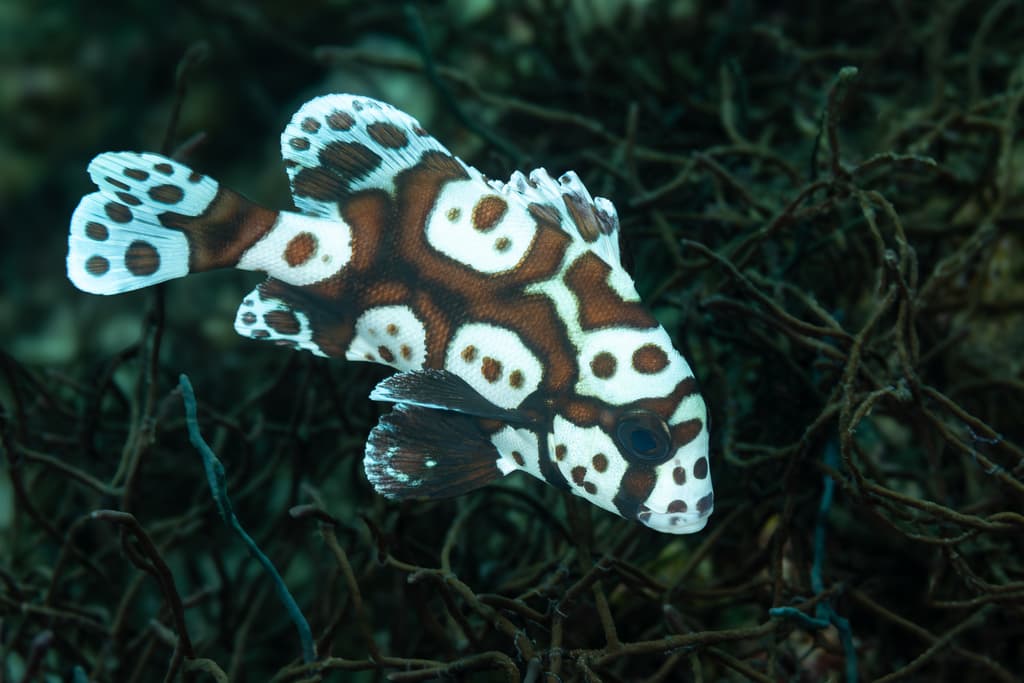
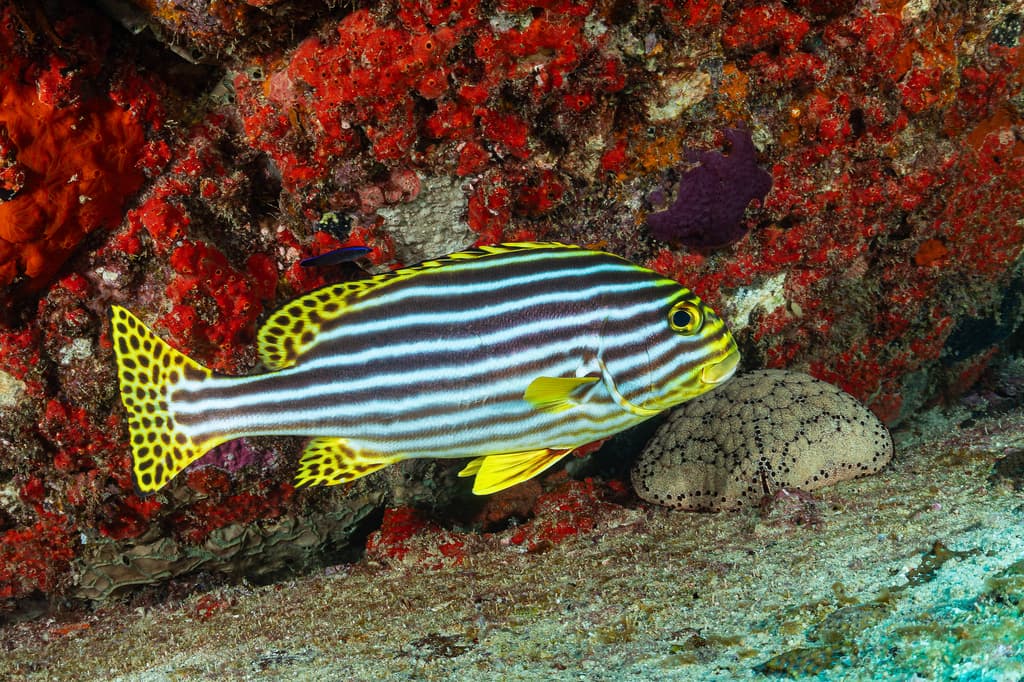
The Oriental Sweetlips is one of the most dramatically transformed fish in the marine aquarium hobby, with juveniles and adults looking so different they could be mistaken for entirely separate species. Juvenile Oriental Sweetlips are stunning little fish with a dark brown to chocolate body covered in large, bold cream or white spots, and they swim with an exaggerated, undulating motion that is thought to mimic the movement of toxic flatworms or nudibranchs. As the fish grows, this spotted juvenile pattern gradually transforms into the adult livery of horizontal black and white stripes alternating across the body, with distinctive large, fleshy lips characteristic of the sweetlips group.
In the wild, Plectorhinchus vittatus is found throughout the Indo-Pacific, from the Indian Ocean and Maldives to Indonesia and the Western Pacific. Adults are typically found on coral reefs at depths of 2 to 25 meters, where they shelter in caves and under ledges during the day, emerging at night to feed on crustaceans, worms, and small invertebrates. Juveniles are encountered in more sheltered inshore areas, often near seagrass beds and rubble zones where their spotted pattern provides effective camouflage.
The Oriental Sweetlips is classified as an advanced-level species due to the significant challenges involved in keeping it successfully. Many specimens, particularly wild-caught juveniles, are notoriously difficult to wean onto prepared foods and may starve in captivity despite appearing healthy initially. They are also highly sensitive to water quality and prone to stress-related diseases during acclimation. Those that do successfully acclimate become hardy, impressive fish, but their eventual adult size of up to 28 inches demands a very large aquarium of at least 300 gallons. This species is best attempted only by experienced aquarists with large, well-established systems.
Feeding & Diet
Carnivore
Oriental Sweetlips are carnivores that feed on crustaceans, worms, and small invertebrates. In captivity, getting newly acquired specimens to eat is the primary challenge. Start with live foods such as live brine shrimp, ghost shrimp, or blackworms, then gradually wean onto frozen mysis shrimp, chopped silversides, krill, and eventually pellets. Feed two to three times daily for juveniles and once daily for adults. Patience during the weaning process is critical.
Compatibility
peacefulgentle-giantFOWLRlarge-tank
Despite its large adult size, the Oriental Sweetlips is a peaceful species that can be bullied by more aggressive tankmates. It does best with other large, peaceful to moderately aggressive fish such as tangs, large angelfish, and groupers. Avoid housing with highly aggressive species. It will consume ornamental shrimp, crabs, and worms, making it unsuitable for reef tanks. Its shy nature means it may be outcompeted for food by aggressive feeders.
Check CompatibilityBreeding
Not bred in captivity
Oriental Sweetlips have not been bred in home aquariums. They are pelagic spawners in the wild, releasing eggs into the water column. The dramatic transformation from the spotted juvenile pattern to the striped adult pattern occurs gradually over the first few years of life. Juveniles are often collected for the aquarium trade due to their attractive spotted appearance and appealing swimming motion.
Special Requirements
- Extremely difficult to wean onto prepared foods — may require live food initially
- Very large tank required (300+ gallons) for adult size of 28 inches
- Sensitive to water quality — pristine conditions essential
- Undergoes dramatic color transformation from juvenile to adult
- Prone to stress and disease during acclimation — quarantine essential
- Best attempted only by experienced aquarists with large systems
Water Parameters
Temperature74–80°F
Specific Gravity1.02–1.025 sg
pH8.1–8.4
Alkalinity8–12 dKH
Coloration
brown (juvenile)white spots (juvenile)black stripes (adult)white (adult)
Tags
peacefulgentle-giantFOWLRlarge-tank