IntermediateAggressiveNot Reef Safe
Yellow-Fin Grouper
Mycteroperca venenosa
Family: Serranidae · Groupers & Basslets
Also known as: Yellowfin Grouper, Rockfish, Princess Rockfish
(c) Enzo Muller, all rights reserved
Max Size
36"
Min Tank
400 gal
Lifespan
15-25 years
Origin
Caribbean, Western Atlantic
Diet
Carnivore
Swims
Middle
About
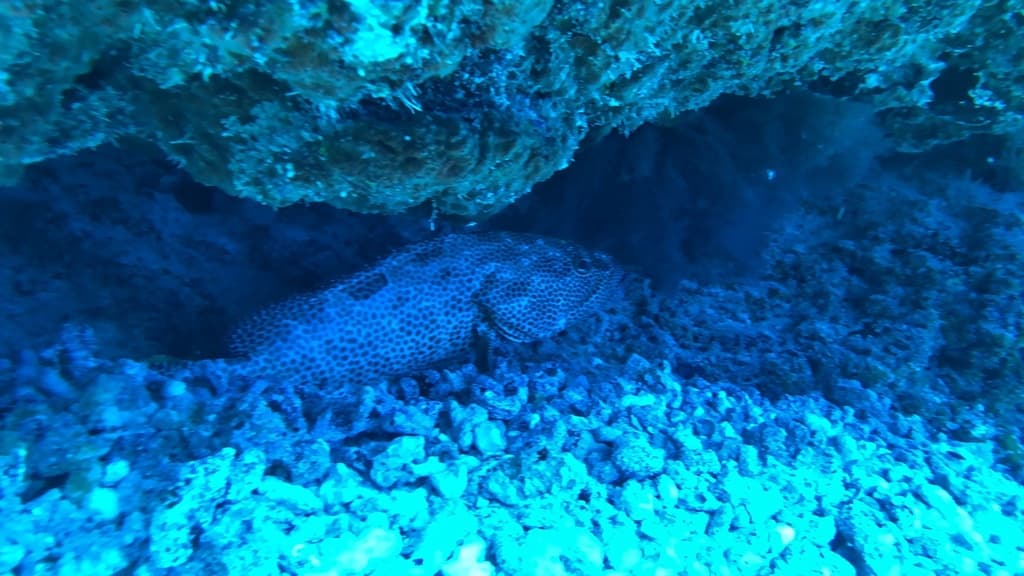
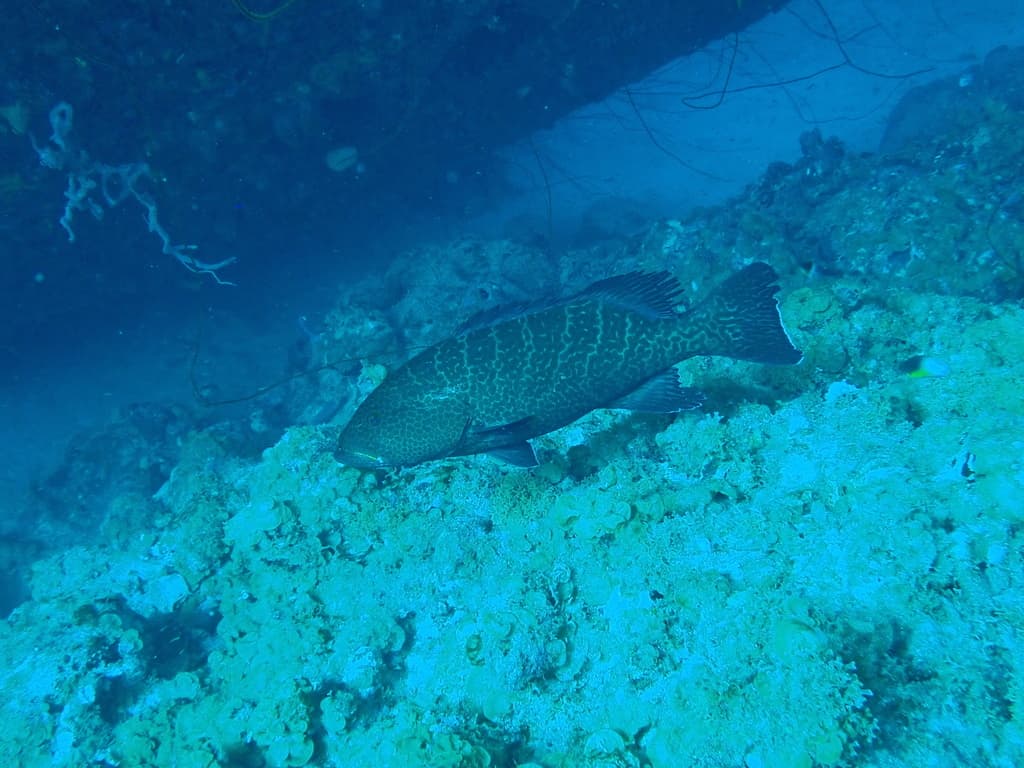
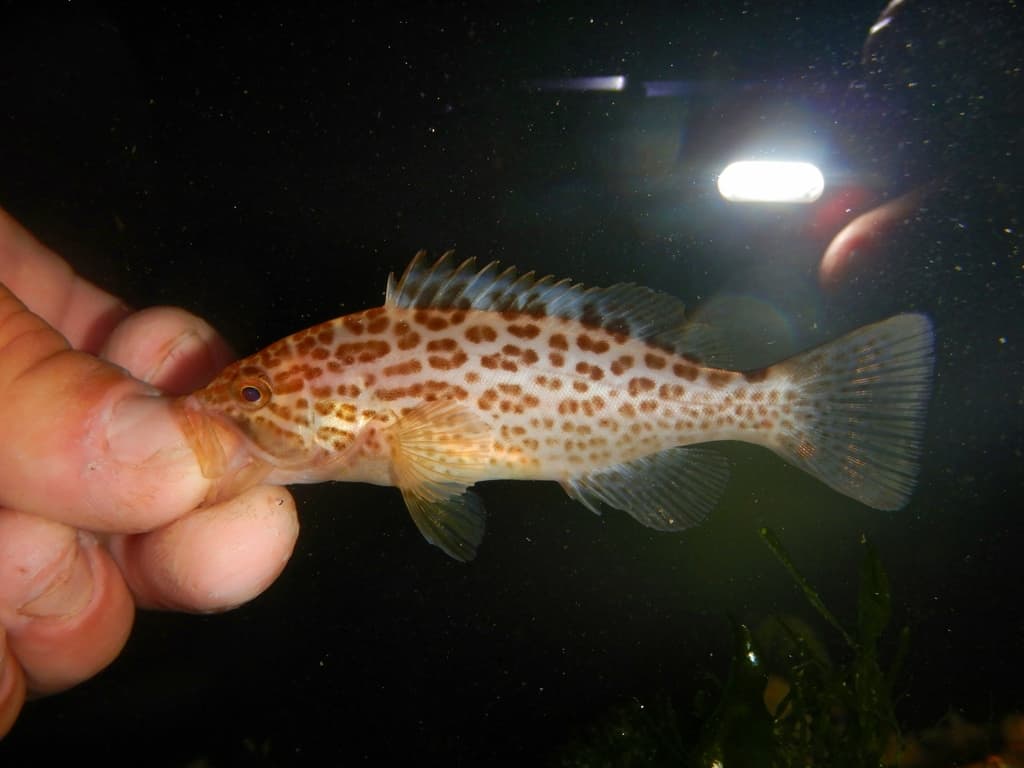
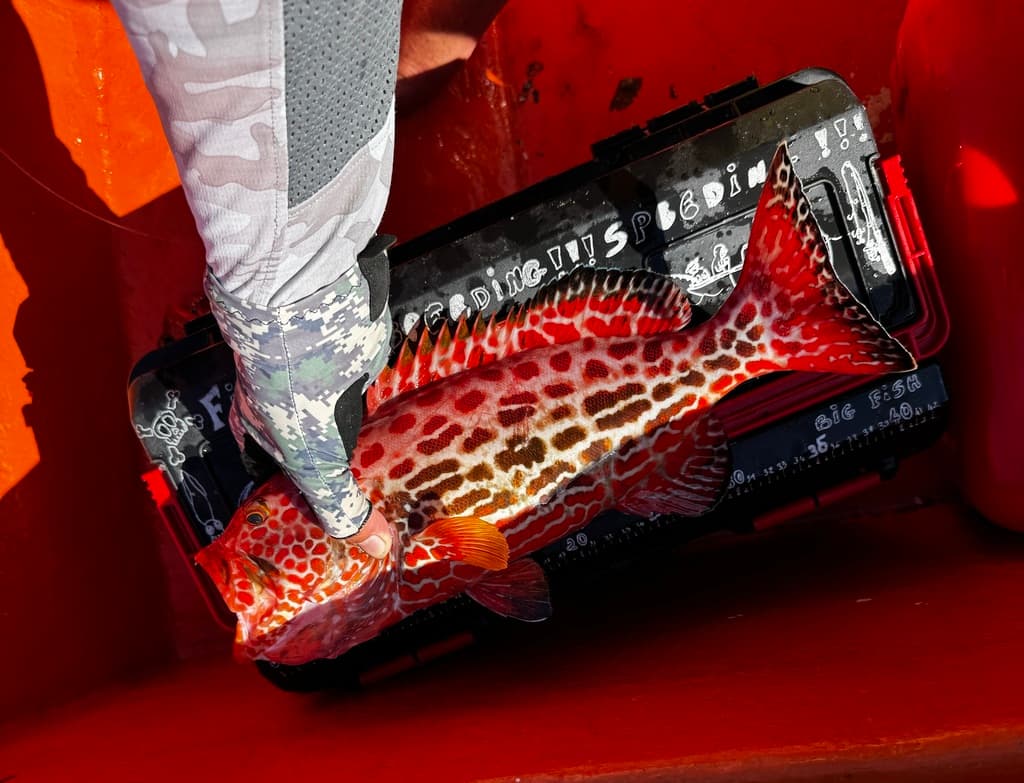
The Yellow-Fin Grouper is a large and strikingly patterned Caribbean grouper recognized by its distinctive yellow-tipped pectoral fins and a body covered in dark oval spots and blotches set against a variable background that ranges from olive-green to bright red. This color variability between individuals and even within the same fish over time makes it one of the more visually dynamic grouper species.
In the wild, Yellow-Fin Groupers are common inhabitants of coral reefs throughout the Caribbean and Western Atlantic, typically found at depths of 2 to 45 meters. They are powerful ambush predators that feed primarily on fish, particularly reef species like parrotfish and wrasses. This species is notable for being one of several Caribbean groupers associated with ciguatera toxin, which accumulates through the food chain.
With an adult size approaching 36 inches, the Yellow-Fin Grouper requires a very large aquarium of at least 400 gallons. While hardy in captivity and willing to accept a wide range of frozen foods, this species is only practical for aquarists with the facilities to handle a large predatory fish. Its impressive coloration and bold personality make it a worthwhile addition to appropriately sized FOWLR systems.
Feeding & Diet
Carnivore
A powerful carnivore that feeds primarily on reef fish in the wild. In captivity, provide a varied diet of silversides, shrimp, squid, and quality carnivore pellets. Feed adults every other day. Ensure dietary variety to maintain health and prevent fatty liver disease.
Compatibility
predatorlarge-fish-onlyFOWLRhigh-bioloadCaribbean-species
The Yellow-Fin Grouper is an aggressive predator that will eat any fish it can overpower. Best housed with other very large, robust species such as moray eels, large tangs, triggerfish, and similarly sized groupers. Completely incompatible with invertebrates and small fish.
Check CompatibilityBreeding
Not bred in captivity
Yellow-Fin Groupers are protogynous hermaphrodites that form large spawning aggregations. Captive breeding has not been achieved due to the species' large size and pelagic spawning behavior.
Special Requirements
- Requires a very large tank of at least 400 gallons
- Will consume any tankmate small enough to fit in its mouth
- Heavy-duty filtration required due to significant bioload
- Provide large rock structures with caves for shelter
- Color varies dramatically between individuals and over time
Water Parameters
Temperature72–80°F
Specific Gravity1.02–1.026 sg
pH8.1–8.4
Alkalinity8–12 dKH
Coloration
olive-greenreddark spotsyellow fins
Tags
predatorlarge-fish-onlyFOWLRhigh-bioloadCaribbean-species