IntermediateAggressiveNot Reef Safe
Greasy Grouper
Epinephelus tauvina
Family: Serranidae · Groupers & Basslets
Also known as: Greasy Rockcod, Arabian Grouper, Estuary Grouper
(c) Sarichia Cacciatore, all rights reserved
Max Size
30"
Min Tank
300 gal
Lifespan
20-25 years
Origin
Indo-Pacific, Red Sea
Diet
Carnivore
Swims
Bottom
About
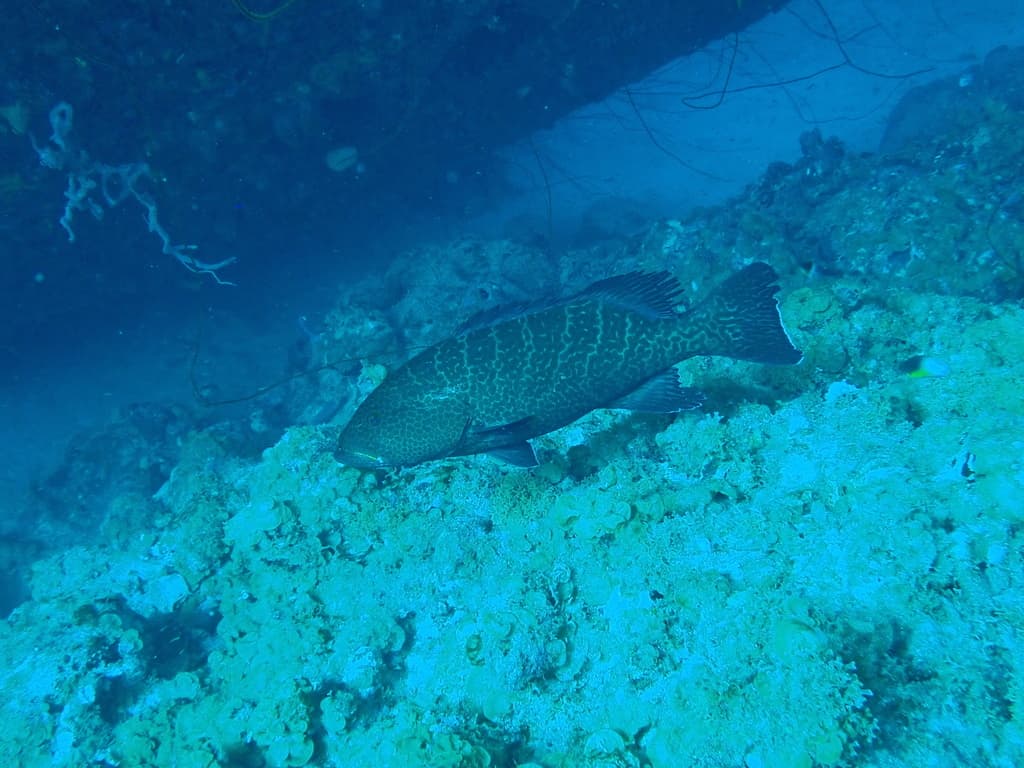
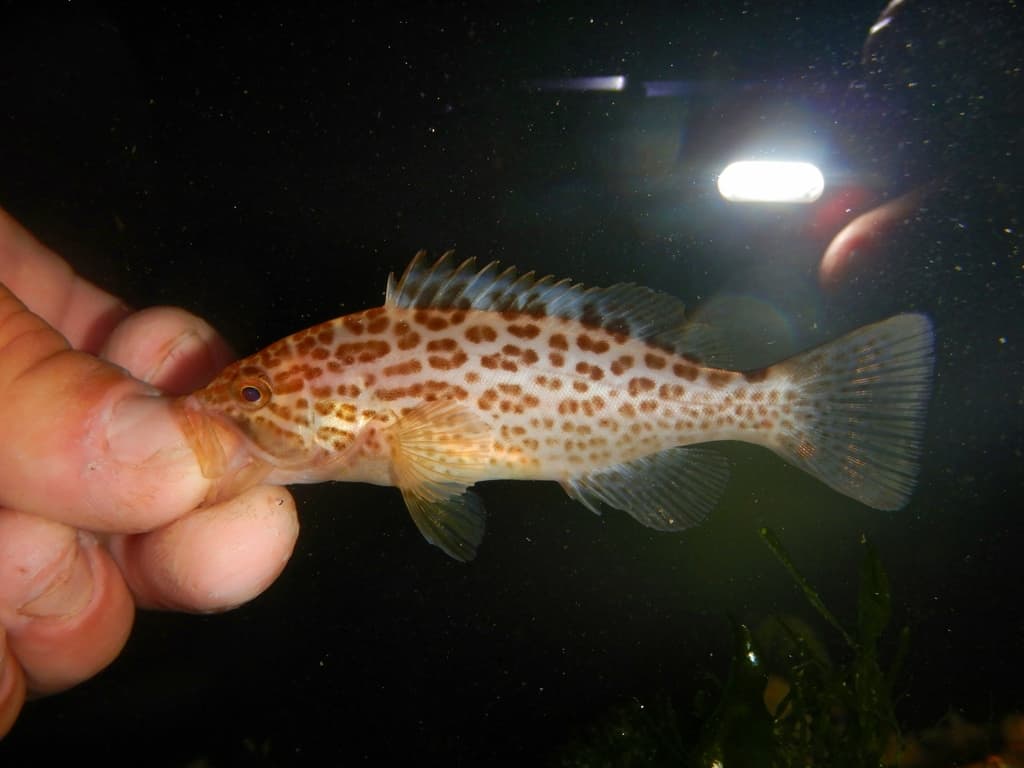
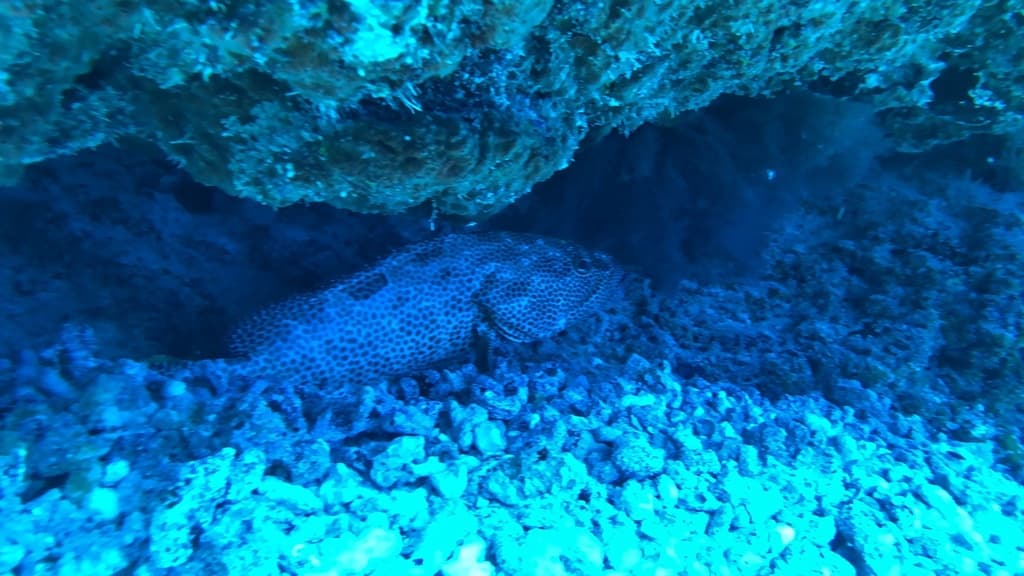
The Greasy Grouper is a large and robust predator named for the distinctively slimy, mucus-rich texture of its skin. It reaches up to 30 inches in captivity and features a brownish body covered in small dark spots, with a notably heavy and powerful build that reflects its position as an apex reef predator.
In the wild, Greasy Groupers are found throughout the Indo-Pacific, from the Red Sea and Persian Gulf to the Western Pacific. They inhabit coral reefs, rocky areas, and estuarine environments at depths of 1 to 60 meters. They are solitary ambush predators with a diet consisting of fish, crustaceans, and cephalopods.
In captivity, the Greasy Grouper requires a substantial aquarium of at least 300 gallons due to its large adult size and heavy bioload. It is a hardy species that adapts well to captive conditions but demands experienced care. The copious mucus production that gives this species its common name means strong filtration and regular water changes are essential.
Feeding & Diet
Carnivore
A powerful carnivore that feeds on fish, crustaceans, and cephalopods. Offer a varied diet of whole silversides, krill, shrimp, squid, and quality carnivore pellets. Feed every 2-3 days for adults. Due to its large size and heavy feeding, strong filtration is essential to maintain water quality.
Compatibility
predatorlarge-fish-onlyFOWLRhigh-bioload
The Greasy Grouper is aggressive and will consume any tankmate it can overpower. House only with similarly sized or larger robust species such as large tangs, triggerfish, large moray eels, and other groupers. Completely unsuitable for reef tanks or community setups with smaller fish.
Check CompatibilityBreeding
Not bred in captivity
Greasy Groupers are protogynous hermaphrodites that form spawning aggregations in the wild. Females transition to males as they mature and grow larger. Captive breeding has not been achieved due to the species' large size and complex reproductive requirements.
Special Requirements
- Requires a very large tank with heavy-duty filtration
- Produces excessive mucus that increases bioload
- Will eat any fish or invertebrate small enough to swallow
- Needs regular water changes due to high waste production
- Provide robust rockwork with caves large enough for the fish to hide
Water Parameters
Temperature72–78°F
Specific Gravity1.02–1.025 sg
pH8.1–8.4
Alkalinity8–12 dKH
Coloration
brownolivedark spotspale underside
Tags
predatorlarge-fish-onlyFOWLRhigh-bioload