ExpertAggressiveNot Reef Safe
Nassau Grouper
Epinephelus striatus
Family: Serranidae · Groupers & Basslets
Also known as: Hamlet, White Grouper, Bahamas Grouper
(c) gecco2001, some rights reserved (CC BY-NC)
Max Size
47"
Min Tank
500 gal
Lifespan
25-30 years
Origin
Caribbean, Western Atlantic
Diet
Carnivore
Swims
Bottom
About
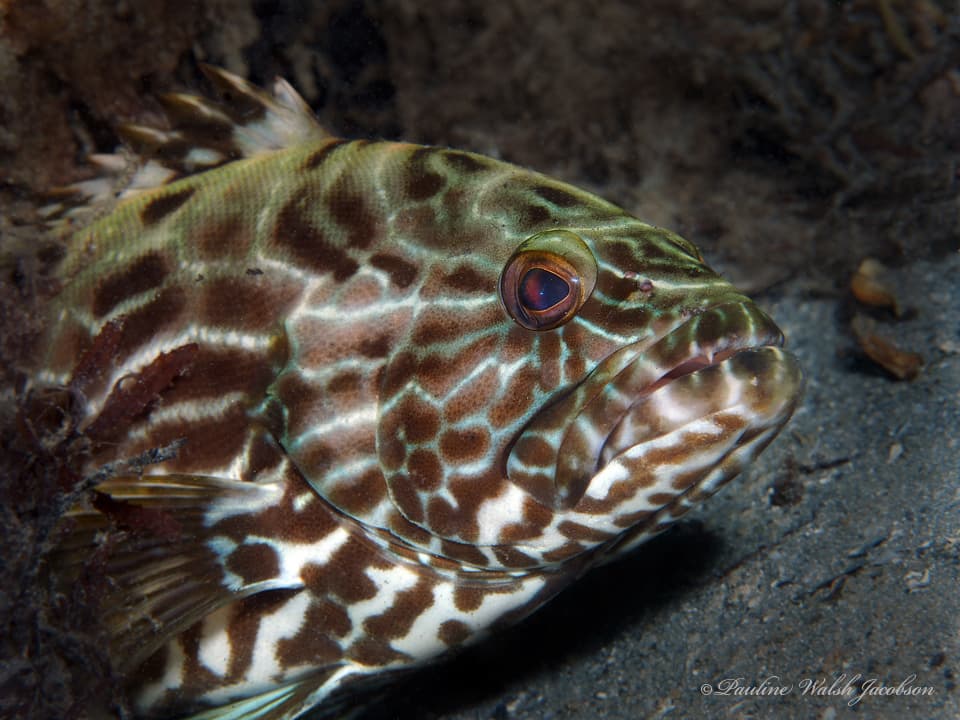
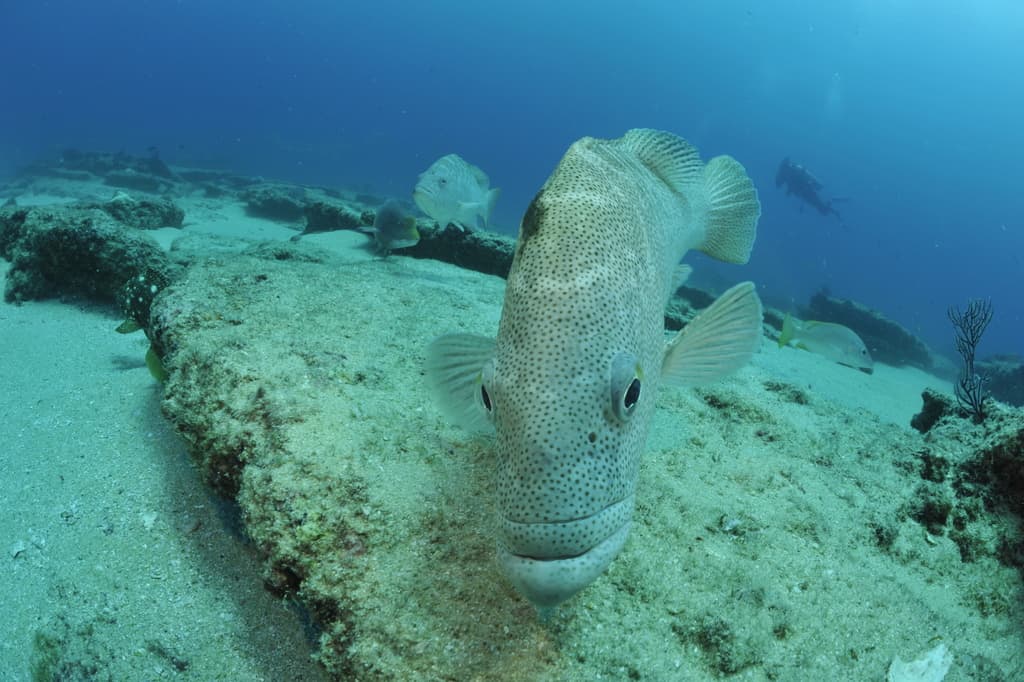
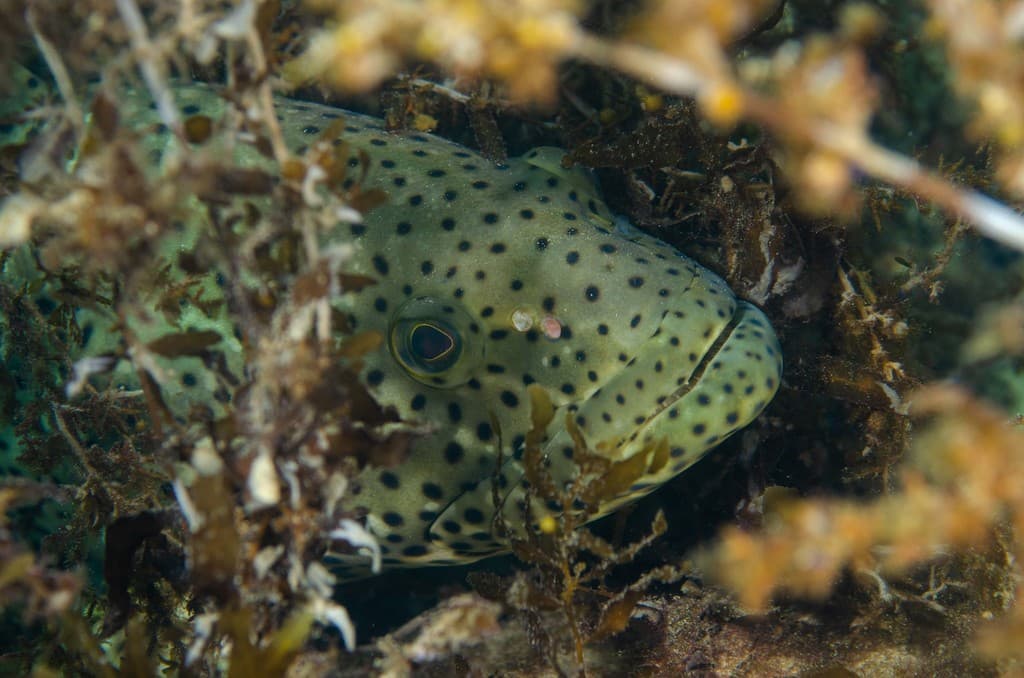
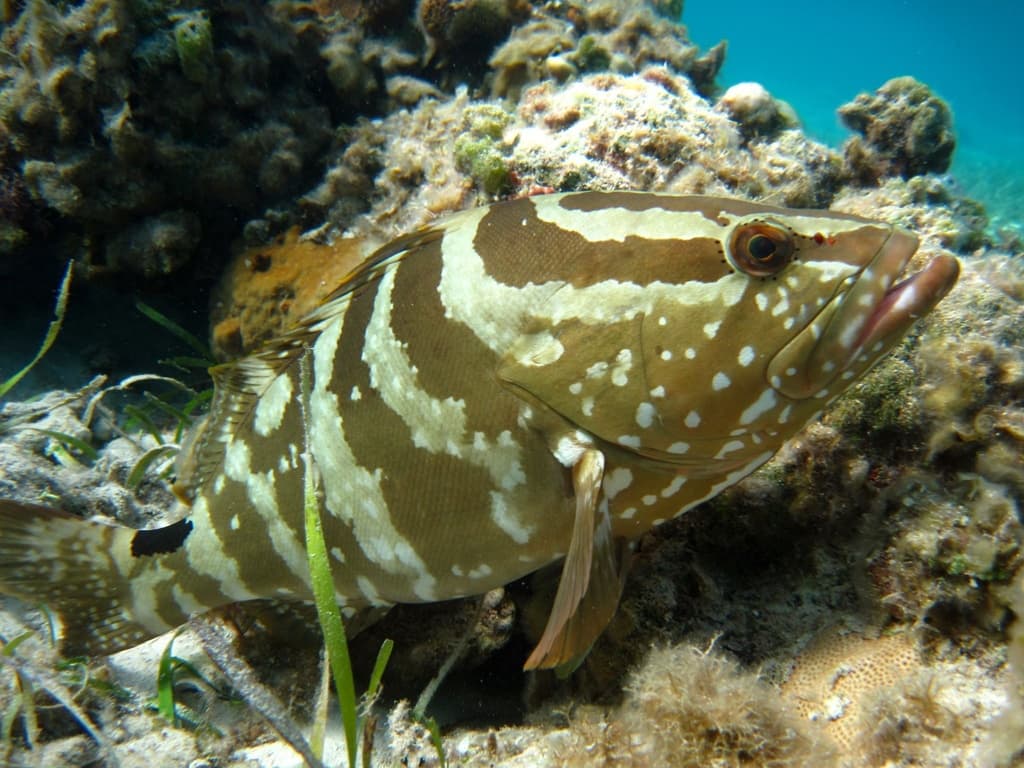
The Nassau Grouper is one of the most iconic and culturally significant fish of the Caribbean, serving as a symbol of tropical reef ecosystems throughout the region. Its body displays a distinctive pattern of dark brown bars on a lighter background, with a characteristic dark saddle on the tail base and a prominent dark stripe running through the eye. It is capable of dramatic rapid color changes.
In the wild, Nassau Groupers were once among the most abundant large reef predators in the Caribbean. However, decades of overfishing, particularly targeting their predictable spawning aggregations, has led to catastrophic population declines. The species is now classified as Critically Endangered by the IUCN and is protected throughout much of its range, with harvest bans in many Caribbean nations.
Due to its critically endangered status and legal protections, the Nassau Grouper should never be collected from the wild for the aquarium trade. Its large adult size of up to 47 inches also makes it unsuitable for home aquariums. This species profile is provided for educational purposes, and any public aquarium displays should utilize captive-bred or rescued specimens only.
Feeding & Diet
Carnivore
A carnivorous predator that feeds on fish, crustaceans, and cephalopods in the wild. In institutional settings housing rescued or captive-bred specimens, offer a varied diet of whole fish, squid, shrimp, and other marine protein sources. Feed every 2-3 days for adults.
Compatibility
predatorpublic-aquariumendangeredhigh-bioload
The Nassau Grouper is an aggressive predator that will consume any tankmate it can overpower. In public aquarium settings housing rescued specimens, it should be kept with other large Caribbean species. Due to its critically endangered status, this species should not be in the commercial aquarium trade.
Check CompatibilityBreeding
Not bred in captivity
Nassau Groupers are protogynous hermaphrodites famous for forming large, predictable spawning aggregations at specific reef sites during full moons in winter. These aggregations have been heavily exploited by fishers, contributing to the species' critically endangered status. Some captive breeding research is underway for conservation and aquaculture purposes.
Special Requirements
- Critically Endangered — should not be collected from the wild
- Protected species with harvest bans in many Caribbean nations
- Public aquarium species only due to large adult size
- Only captive-bred or rescued specimens should be displayed
- Requires very large tank with robust filtration
Water Parameters
Temperature72–78°F
Specific Gravity1.02–1.025 sg
pH8.1–8.4
Alkalinity8–12 dKH
Coloration
browntandark barswhitedark eye stripe
Tags
predatorpublic-aquariumendangeredhigh-bioload