ExpertAggressiveNot Reef Safe
Malabar Grouper
Epinephelus malabaricus
Family: Serranidae · Groupers & Basslets
Also known as: Malabar Rockcod, Estuary Cod, Blackspot Cod, Giant Grouper
(c) Ian Shaw, all rights reserved
Max Size
91"
Min Tank
1000 gal
Lifespan
30-40 years
Origin
Indo-Pacific, Red Sea
Diet
Carnivore
Swims
Bottom
About
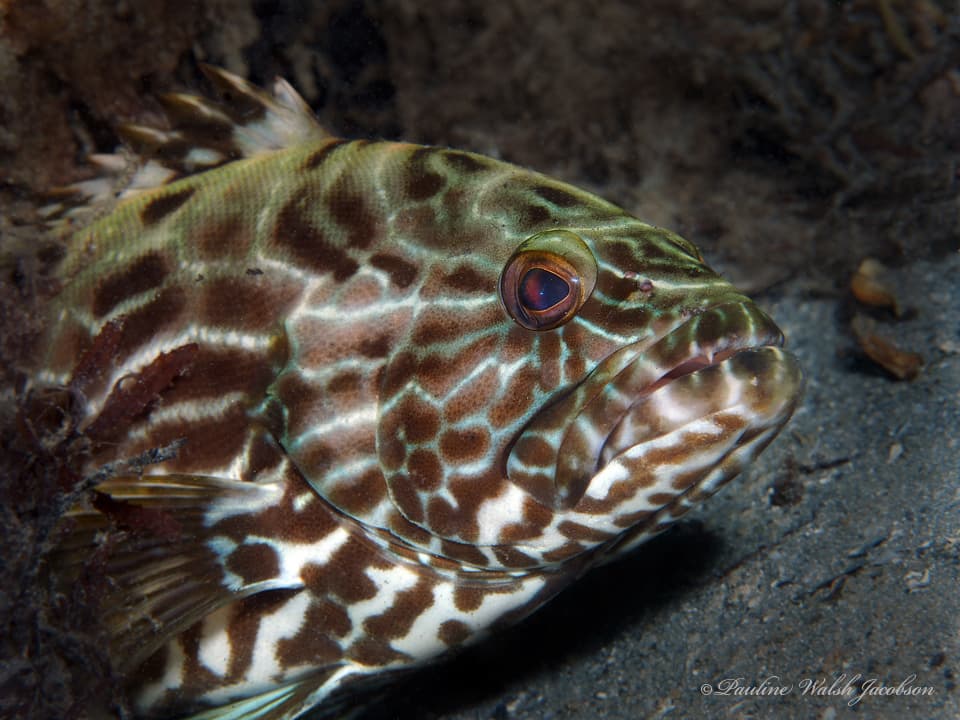
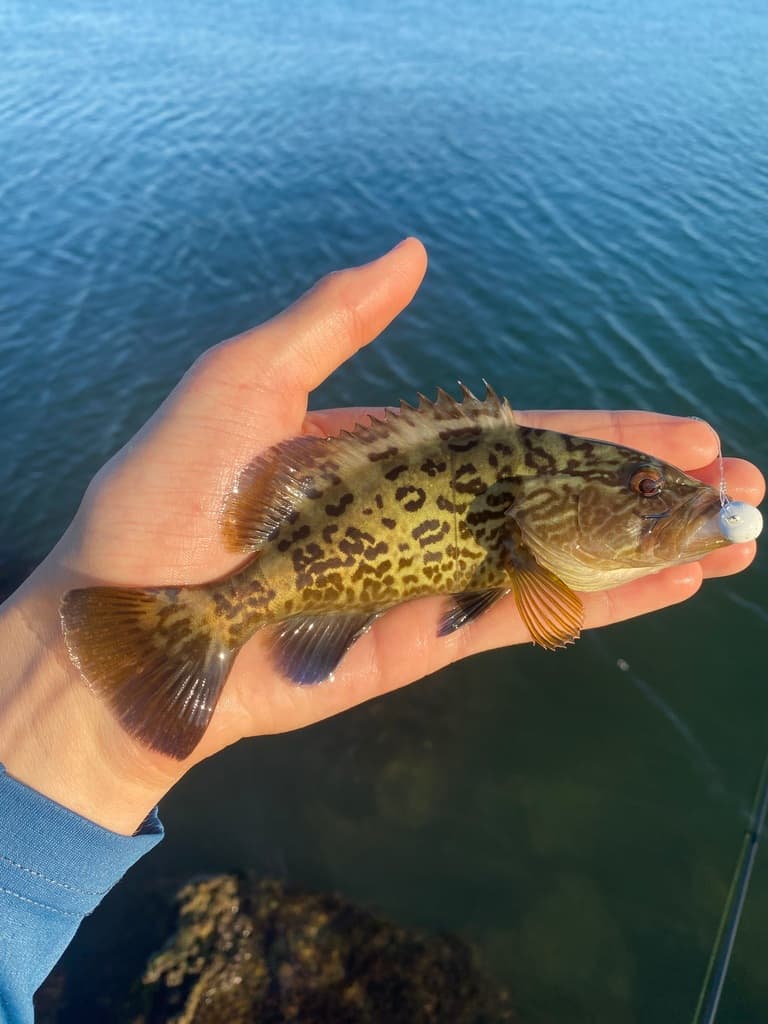
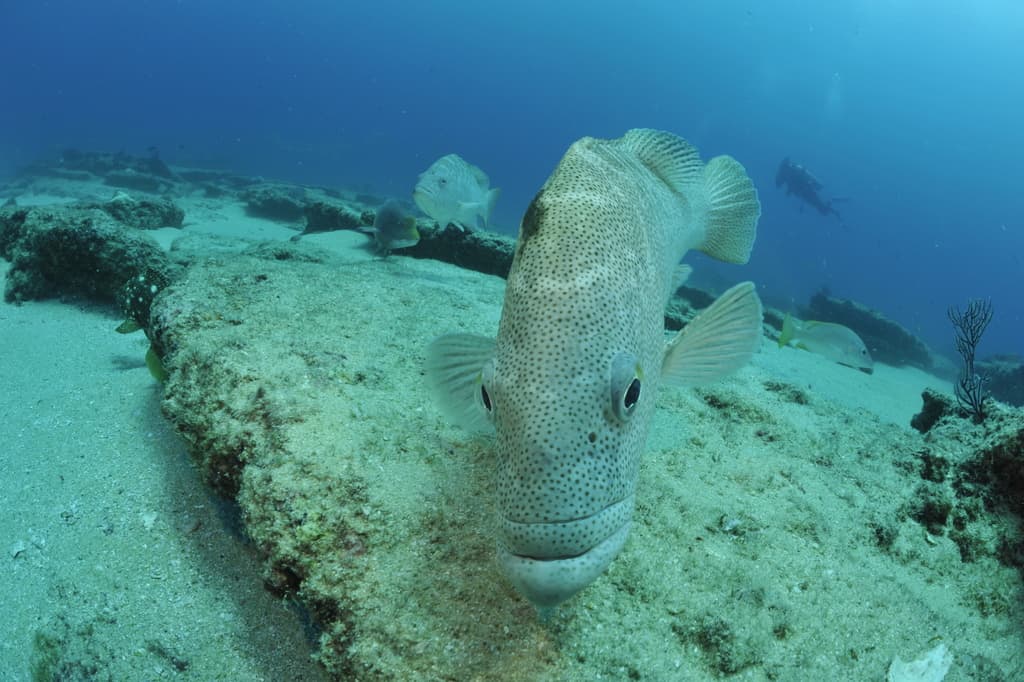
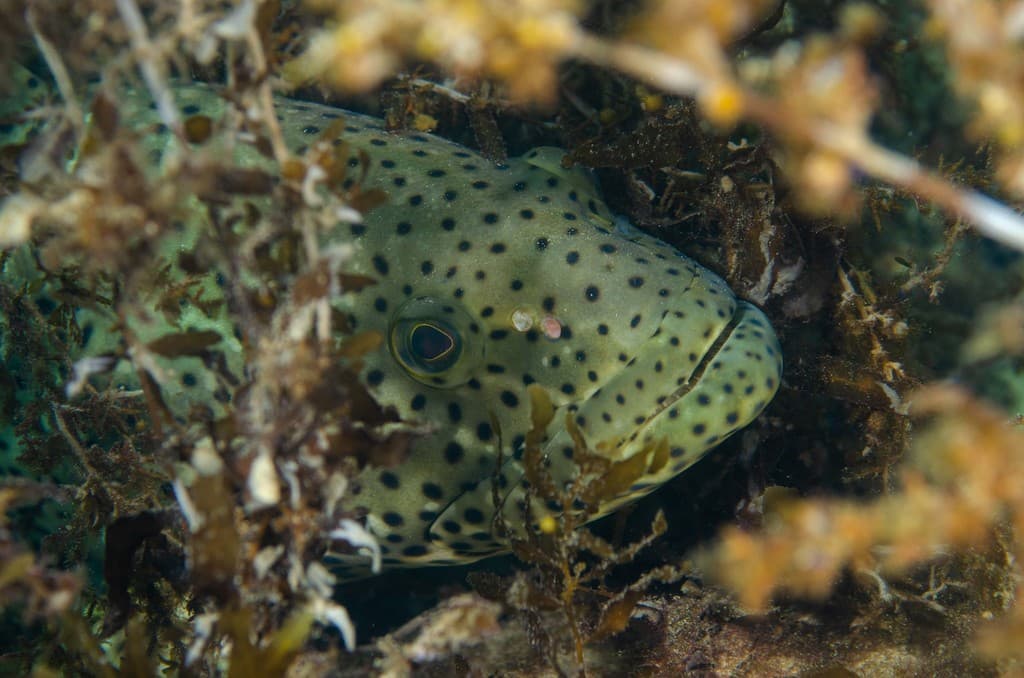
The Malabar Grouper is one of the largest bony fish in the world, capable of reaching an enormous 91 inches (over 7.5 feet) in length and weighing over 300 pounds. Its body is brownish to olive-green with numerous dark spots and blotches, and it has a massive, powerful build that makes it one of the most imposing fish on any reef it inhabits.
In the wild, Malabar Groupers have an extensive range throughout the Indo-Pacific, from the Red Sea and East Africa to Australia and the Western Pacific. They inhabit a wide variety of habitats including coral reefs, estuaries, mangroves, and even brackish waters. As apex predators, they feed on fish, crustaceans, and cephalopods, and have been known to consume small sharks and rays.
This species is strictly for public aquariums only. With a minimum tank requirement of 1,000 gallons and a maximum size approaching 8 feet, no home aquarium can adequately house an adult Malabar Grouper. Juveniles are sometimes offered in the aquarium trade but grow rapidly and will quickly outgrow any home system.
Feeding & Diet
Carnivore
An apex carnivore capable of consuming very large prey items including fish, crustaceans, cephalopods, and even small sharks. In institutional settings, feed whole fish, squid, and other large marine protein sources. Adults require feeding 2-3 times per week with substantial portions appropriate to their enormous size.
Compatibility
predatorpublic-aquariumapex-predatorhigh-bioload
The Malabar Grouper is an apex predator that will consume virtually any tankmate it can overpower. In public aquarium settings, house only with other enormous species such as large sharks, rays, and giant moray eels. Juveniles sold in the aquarium trade will rapidly outgrow any home system and should not be purchased by home aquarists.
Check CompatibilityBreeding
Not bred in captivity
Malabar Groupers are protogynous hermaphrodites. They have been successfully spawned in aquaculture facilities for food production, but ornamental captive breeding is not practiced. Wild populations form spawning aggregations that are increasingly vulnerable to overfishing.
Special Requirements
- Public aquarium species only — one of the largest bony fish in the world
- Requires enormous tank volume with industrial-grade life support systems
- Grows extremely rapidly — juveniles will quickly outgrow home aquariums
- Will consume any tankmate it can overpower, including small sharks
- Produces massive bioload requiring commercial-grade filtration
- Can tolerate brackish conditions but thrives in full marine salinity
Water Parameters
Temperature72–78°F
Specific Gravity1.02–1.025 sg
pH8.1–8.4
Alkalinity8–12 dKH
Coloration
brownolive greendark spotsdark blotches
Tags
predatorpublic-aquariumapex-predatorhigh-bioload