BeginnerPeacefulReef Safe with Caution
Harlequin Bass
Serranus tigrinus
Family: Serranidae · Groupers & Basslets
Also known as: Harlequin Seabass, Tiger Bass, Tiger Seabass
(c) James-LaFontaine, some rights reserved (CC BY)
Max Size
4"
Min Tank
30 gal
Lifespan
5-8 years
Origin
Caribbean, Western Atlantic
Diet
Carnivore
Swims
Middle
About
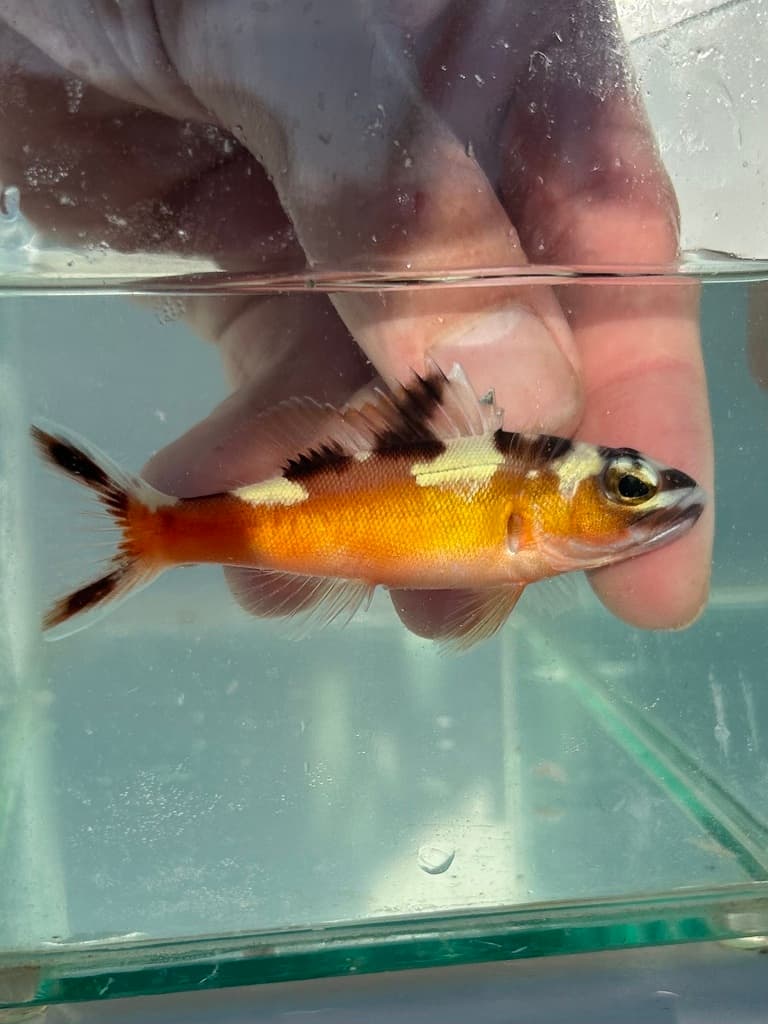
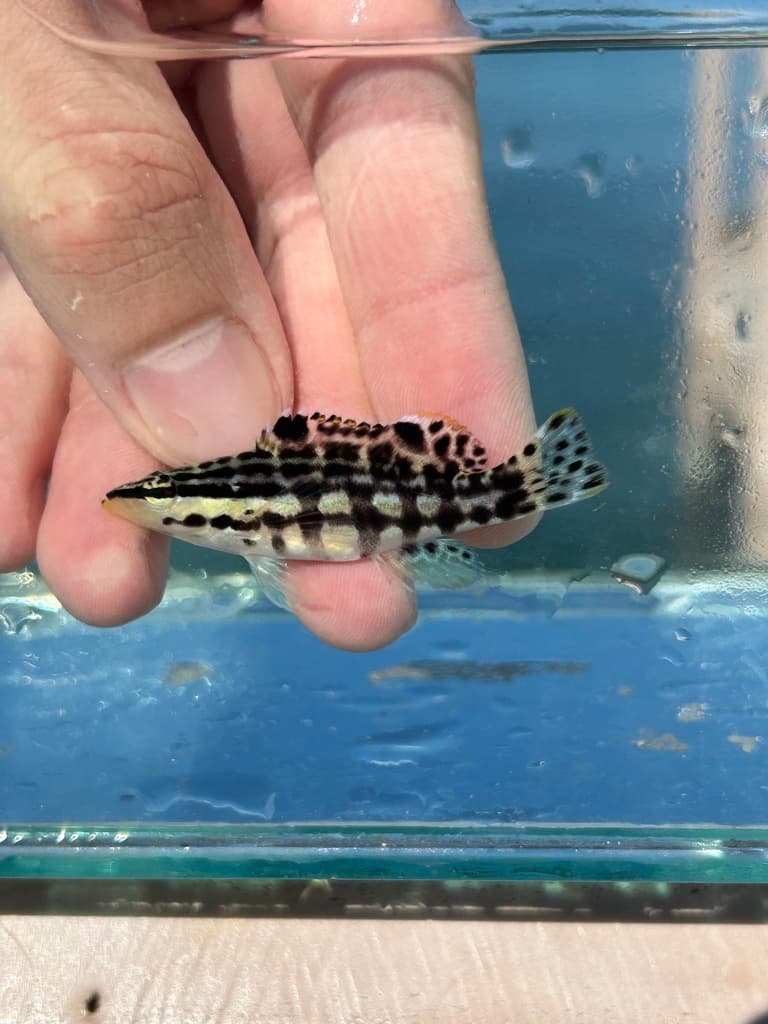
The Harlequin Bass is a delightful small member of the Serranidae family that stands apart from its massive grouper relatives. At a maximum size of just 4 inches, it is one of the smallest species in the grouper family, making it accessible to aquarists with modestly sized tanks. Its body features bold black tiger-like bars and spots on a pale cream to white background, creating a striking visual pattern.
In the wild, Harlequin Bass are found on coral reefs and rubble zones throughout the Caribbean and Western Atlantic, typically at depths of 3 to 40 meters. Unlike their larger grouper cousins, they are relatively peaceful and can be found in loose aggregations near reef structures. They feed on small crustaceans, worms, and tiny fish.
In captivity, the Harlequin Bass is an excellent choice for aquarists seeking a grouper-type fish for a smaller tank. A 30-gallon aquarium is sufficient for a single specimen. It is generally peaceful toward fish too large to eat and can be kept with caution in reef aquariums, though it may prey on very small ornamental shrimp and tiny invertebrates.
Feeding & Diet
Carnivore
A micro-predator that feeds on small crustaceans, worms, and tiny fish. In captivity, offer frozen mysis shrimp, brine shrimp, finely chopped krill, and small carnivore pellets. Feed daily as this small species has a higher metabolism than its larger grouper relatives.
Compatibility
communitysmall-predatorreef-cautionnano-compatible
The Harlequin Bass is peaceful toward most fish too large to eat, making it an excellent community fish for its size. It can be housed with other small to medium peaceful species. Use caution in reef tanks as it may prey on very small shrimp and invertebrates. Avoid housing with aggressive or very large species that may bully it.
Check CompatibilityBreeding
Difficult
Harlequin Bass are simultaneous hermaphrodites, possessing both male and female reproductive organs. They can form pairs and have been observed engaging in spawning behavior in captivity, though raising larvae is extremely challenging. Spawning typically occurs at dusk with pelagic egg release.
Special Requirements
- One of the few grouper-family species suitable for smaller aquariums
- May eat very small ornamental shrimp such as sexy shrimp
- Provide plenty of small caves and crevices for hiding
- Best kept singly or in mated pairs as they can be territorial with conspecifics
Water Parameters
Temperature72–78°F
Specific Gravity1.02–1.025 sg
pH8.1–8.4
Alkalinity8–12 dKH
Coloration
whitecreamblack barsblack spotstiger pattern
Tags
communitysmall-predatorreef-cautionnano-compatible