BeginnerPeacefulReef Safe
Chalk Bass Goby
Serranus tortugarum
Family: Serranidae · Gobies
Also known as: Chalk Bass, Tortuga Bass
(c) sea-kangaroo, some rights reserved (CC BY-NC-ND)
Max Size
3"
Min Tank
30 gal
Lifespan
3-5 years
Origin
Caribbean, Western Atlantic
Diet
Carnivore
Swims
Bottom
About
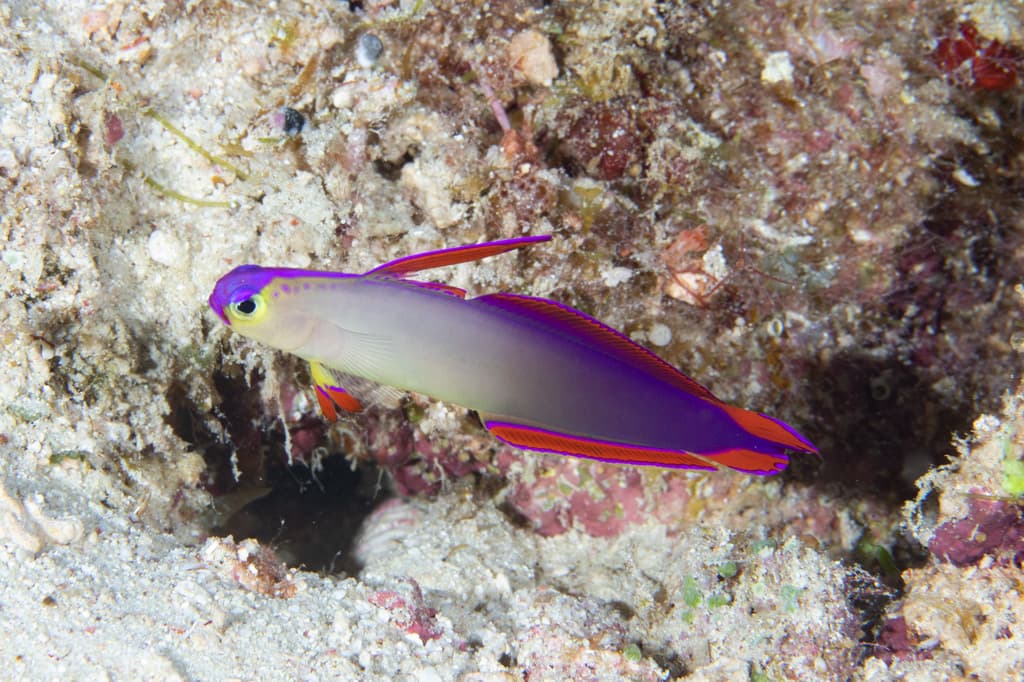
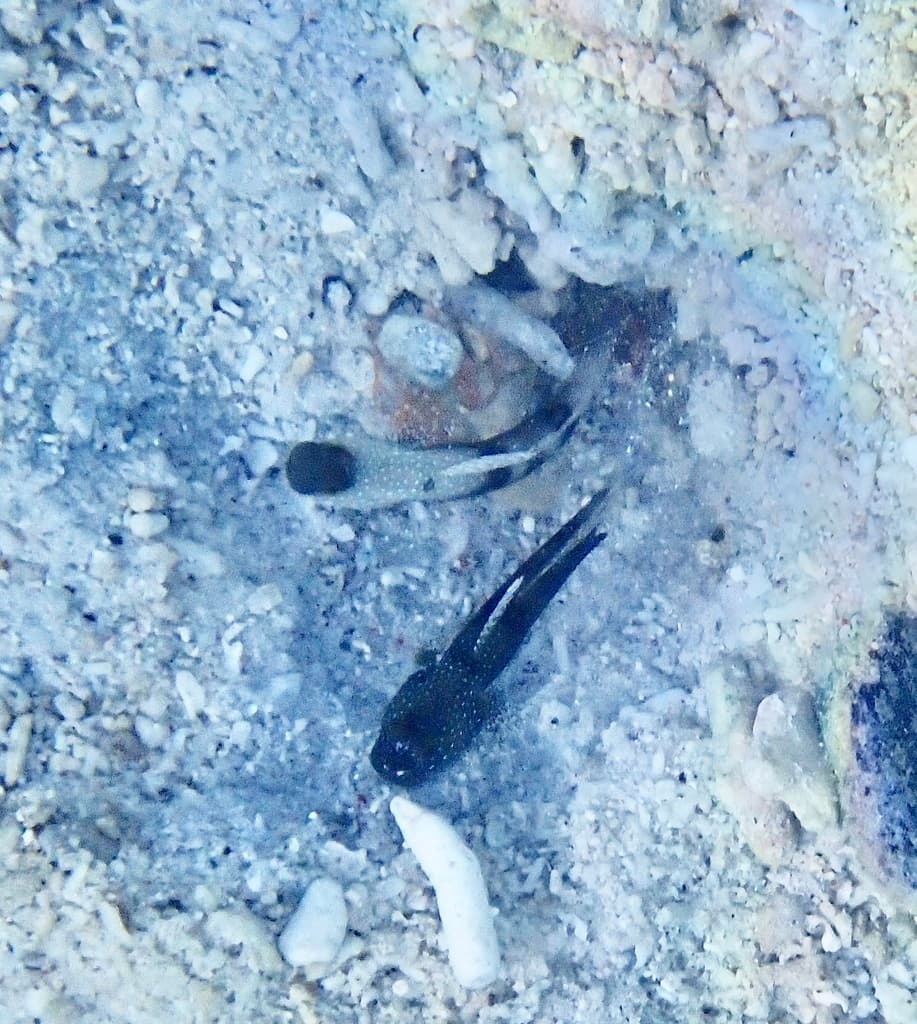
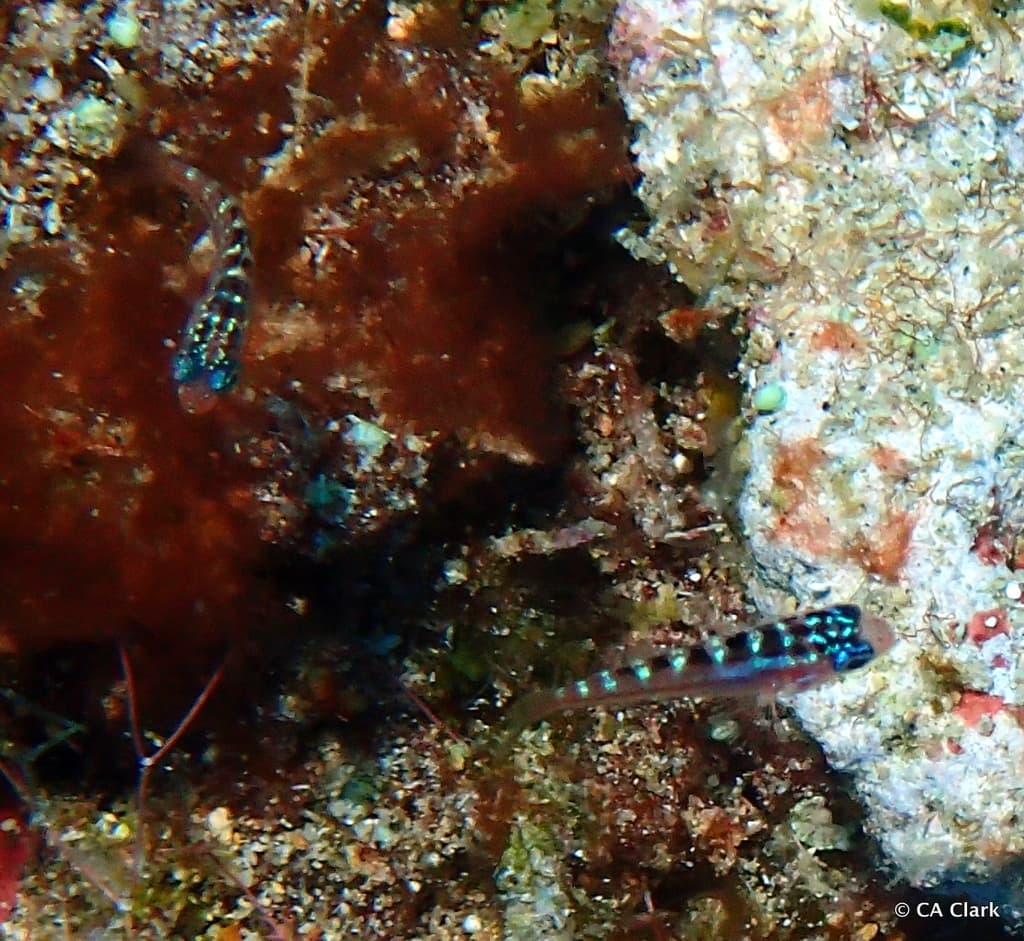
The Chalk Bass Goby is technically not a true goby at all but rather a small member of the sea bass family Serranidae. However, due to its small size, peaceful nature, and bottom-oriented behavior, it is frequently grouped with gobies in the aquarium trade. This attractive little fish reaches about 3 inches in length and features a pale lavender to chalky pink body with subtle darker bars and a series of faint horizontal lines. Its overall appearance is understated but elegant.
One of the most appealing aspects of the Chalk Bass is its schooling behavior. Unlike most small bass species that are territorial and solitary, Chalk Bass naturally form loose aggregations in the wild, hovering above reef rubble and sandy patches in the Caribbean. In captivity, they can be kept in small groups of three to five individuals in appropriately sized tanks, creating an active and visually pleasing display. They tend to swim in the lower to middle water column.
This is an excellent beginner species due to its hardiness, peaceful disposition, and willingness to accept a wide variety of prepared and frozen foods. It adapts quickly to captive conditions and rarely shows aggression toward tankmates. The Chalk Bass is completely reef-safe and poses no threat to corals or ornamental invertebrates, making it a versatile addition to community reef aquariums.
Feeding & Diet
Carnivore
Chalk Bass are carnivores that feed on small crustaceans and zooplankton in the wild. In captivity, they readily accept frozen mysis shrimp, enriched brine shrimp, finely chopped seafood, and high-quality pellet foods. Feed twice daily for optimal health and coloration.
Compatibility
reef-safepeacefulcommunity-safeschoolingbeginner-friendly
Chalk Bass are very peaceful and compatible with virtually all community reef fish. They can be kept in groups and rarely show aggression. Their small size makes them vulnerable to large predatory fish, so avoid housing with aggressive species.
Check CompatibilityBreeding
Moderate
Chalk Bass are simultaneous hermaphrodites, meaning each individual possesses both male and female reproductive organs. Pairs take turns releasing eggs and sperm during spawning bouts. Captive breeding is possible but larval rearing requires live microscopic foods.
Special Requirements
- Best kept in small groups of 3-5 for natural schooling behavior
- Provide open swimming space near the bottom and middle levels
- Peaceful tankmates essential as this species is timid
- 30+ gallon tank recommended for a small group
Water Parameters
Temperature72–80°F
Specific Gravity1.02–1.026 sg
pH8.1–8.4
Alkalinity8–12 dKH
Coloration
lavenderpinkwhite
Tags
reef-safepeacefulcommunity-safeschoolingbeginner-friendly