BeginnerPeacefulReef Safe
Clown Goby (Citrinus)
Gobiodon citrinus
Family: Gobiidae · Gobies
Also known as: Citron Goby, Yellow Clown Goby, Lemon Goby, Poison Goby
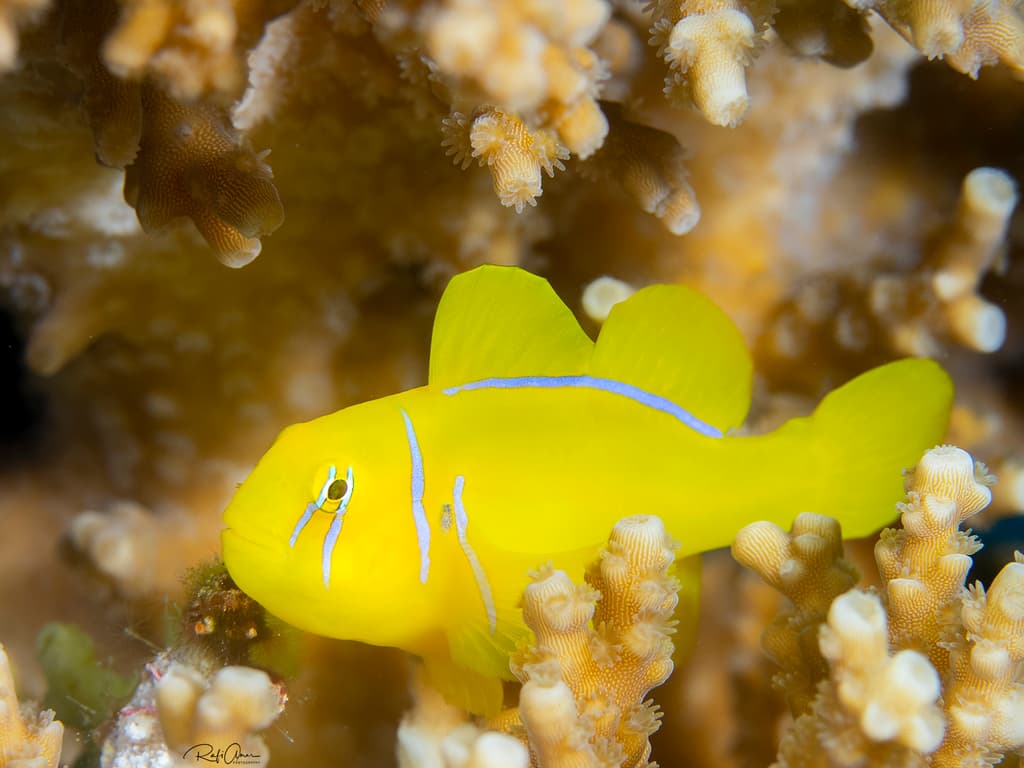
(c) Rafi Amar, some rights reserved (CC BY-NC)
Max Size
2"
Min Tank
10 gal
Lifespan
3-5 years
Origin
Indo-Pacific, Red Sea
Diet
Omnivore
Swims
Bottom
About
The Clown Goby (Citrinus) is a tiny, charming goby beloved for its vibrant lemon-yellow coloration and endearing habit of perching among the branches of SPS and soft corals. Reaching only about 2 inches in length, this rotund little fish has a large head relative to its body, giving it a comical, almost cartoon-like appearance that has made it one of the most popular nano reef fish in the hobby.
In the wild, Gobiodon citrinus lives exclusively among branching Acropora corals, using the coral's structure as both shelter and a spawning site. The goby produces a toxic mucus coating on its skin that deters predators, earning it the alternate name Poison Goby. Despite this defensive mechanism, the species is completely harmless to humans and other fish. In the aquarium, it will readily adopt branching corals, artificial coral inserts, or any structure with suitable perching spots.
This is an excellent beginner species that is exceptionally hardy and easy to feed. It accepts a wide variety of frozen and prepared foods and requires minimal tank space. A 10-gallon nano reef is sufficient for a single specimen or a pair. The only caveat is that Clown Gobies may occasionally nip at the tissue of SPS corals, particularly Acropora, when preparing a spawning site, though this damage is usually minor and localized.
Feeding & Diet
Omnivore
Clown Gobies are omnivores that feed on small crustaceans, zooplankton, and coral mucus in the wild. In captivity, they accept frozen mysis shrimp, brine shrimp, cyclops, and finely crushed flake or pellet foods. Feed twice daily with small portions appropriate for their tiny mouths.
Compatibility
reef-safepeacefulbottom-dwellernano-reefbeginner-friendly
Clown Gobies are peaceful and compatible with nearly all reef fish. They may squabble mildly with other Gobiodon species in small tanks. Their tiny size makes them vulnerable to large predatory fish. Multiple specimens can coexist in larger tanks with sufficient coral or perching structures.
Check CompatibilityBreeding
Moderate
Clown Gobies are protandrous hermaphrodites, starting life as males and transitioning to female. Pairs spawn on coral branches or flat surfaces, with the male guarding the eggs. Captive breeding has been achieved by dedicated hobbyists, though larval rearing is challenging.
Special Requirements
- Provide branching corals or structures for perching
- Suitable for nano reef aquariums of 10 gallons or more
- May occasionally nip at SPS coral tissue near spawning sites
- Produces toxic skin mucus that deters predators
- Tiny size requires appropriately small food particles
Water Parameters
Temperature72–80°F
Specific Gravity1.02–1.026 sg
pH8.1–8.4
Alkalinity8–12 dKH
Coloration
yellow
Tags
reef-safepeacefulbottom-dwellernano-reefbeginner-friendly