BeginnerPeacefulReef Safe
Buan Sand Goby
Amblygobius buanensis
Family: Gobiidae · Gobies
Also known as: Buan Goby, Buan's Sand-Sifting Goby, Dwarf Dragon Goby
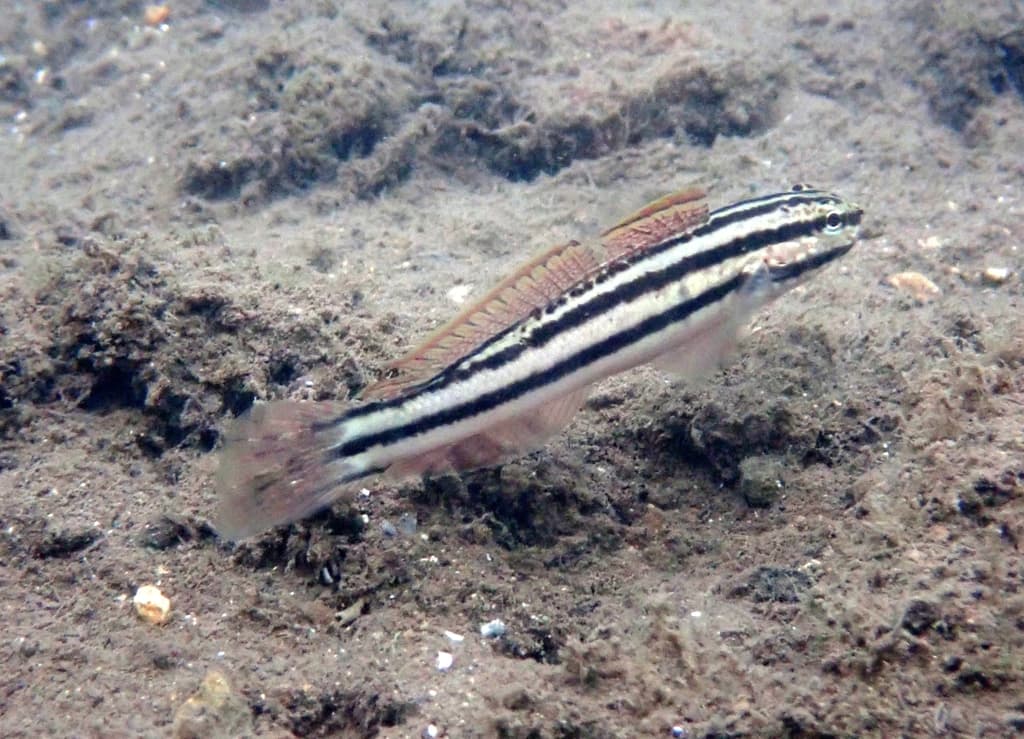
(c) Francois Libert, some rights reserved (CC BY-NC)
Max Size
3"
Min Tank
20 gal
Lifespan
3-5 years
Origin
Western Pacific, Philippines
Diet
Omnivore
Swims
Bottom
About
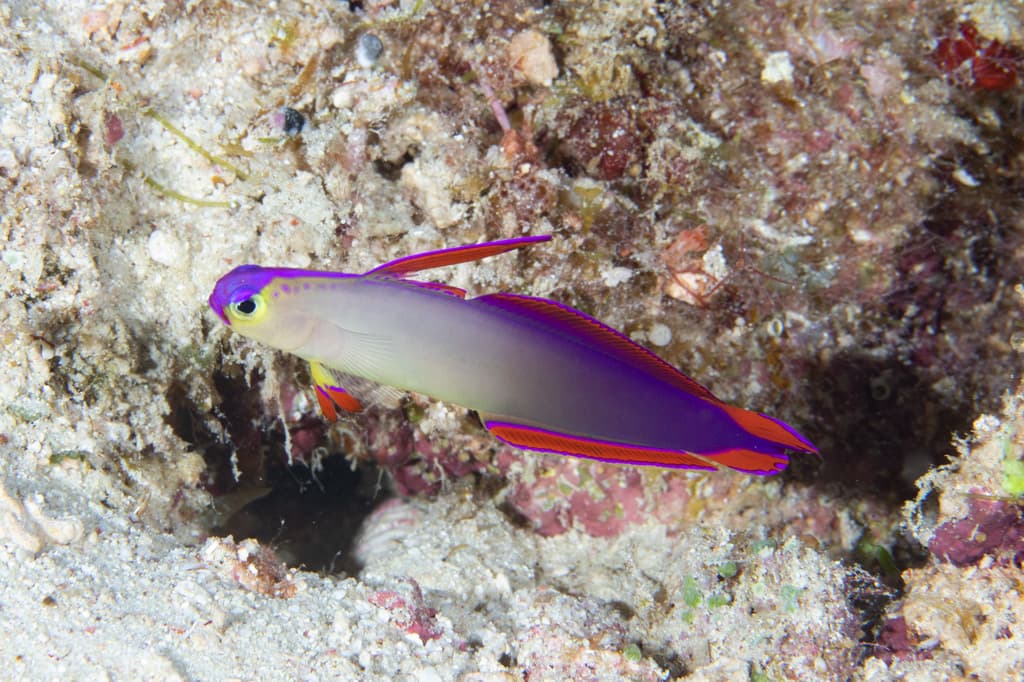
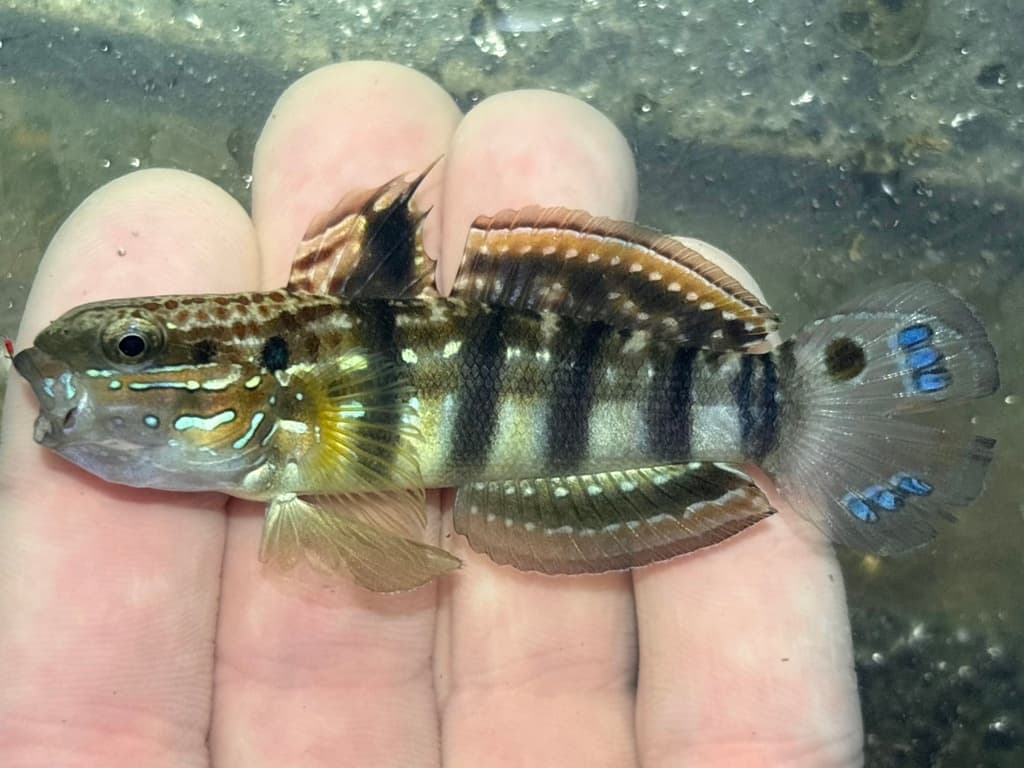
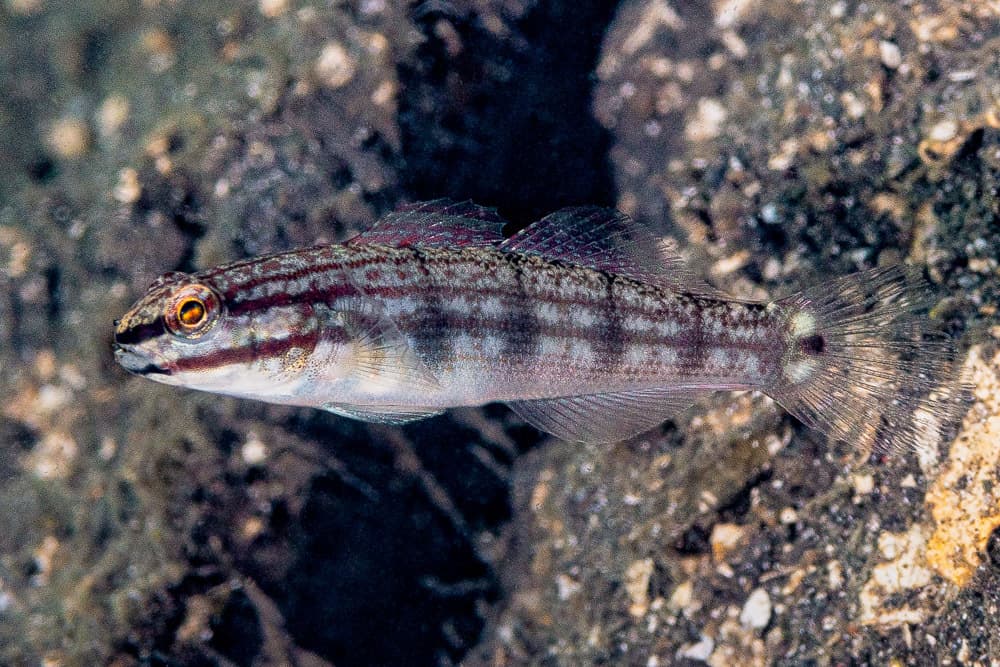
The Buan Sand Goby is a compact sand-sifting species from the Western Pacific that reaches approximately half the size of its more commonly kept relative, the Dragon Goby (Amblygobius phalaena). At just 3 inches maximum, this species is an excellent sand-sifting option for medium-sized reef aquariums where the larger Amblygobius species would be impractical. Its body features attractive horizontal stripes of brown and white with subtle blue-green highlights along the fins.
First captive bred by Biota Marine Life, the Buan Sand Goby has become increasingly available in the aquarium trade. Captive-bred specimens are significantly hardier than wild-caught individuals and accept prepared foods much more readily. This species spends the majority of its time hovering near the substrate, scooping mouthfuls of sand and sifting them through its gill rakers to extract tiny invertebrates, detritus, and algae.
The sand-sifting behavior of the Buan Sand Goby provides a valuable service in the home aquarium by keeping the substrate clean, aerated, and free of nuisance algae and detritus buildup. Unlike some larger sand-sifting species that can starve in tanks with insufficient sandbed fauna, the Buan Sand Goby's smaller size means it can thrive in moderately sized aquariums with a mature sand bed supplemented by regular feeding of prepared foods.
Feeding & Diet
Omnivore
Buan Sand Gobies are omnivorous sand sifters that extract tiny invertebrates, algae, and detritus from the substrate. In captivity, supplement their natural foraging with frozen mysis shrimp, brine shrimp, cyclops, and sinking pellets. A mature sand bed with healthy microfauna is beneficial.
Compatibility
reef-safepeacefulcommunity-safebottom-dweller
The Buan Sand Goby is very peaceful and compatible with virtually all reef-safe species. May have minor territorial disputes with other sand-sifting gobies occupying the same substrate area. Best kept singly or as a mated pair.
Check CompatibilityBreeding
Moderate
Buan Sand Gobies form monogamous pairs and spawn in burrows dug into the sand substrate. The male guards the eggs until hatching. Biota Marine Life has successfully bred this species commercially. Larvae require rotifers and copepod nauplii as first foods.
Special Requirements
- Fine sand substrate required for natural sifting behavior
- Mature sand bed with established microfauna is beneficial
- Approximately half the size of the Dragon Goby — suitable for smaller tanks
- Captive-bred specimens from Biota recommended
- Supplement natural foraging with frozen and prepared foods
- Provide a covered tank as sand gobies can jump when startled
Water Parameters
Temperature74–80°F
Specific Gravity1.02–1.026 sg
pH8.1–8.4
Alkalinity8–12 dKH
Coloration
brownwhitebluegreen
Tags
reef-safepeacefulcommunity-safebottom-dweller