AdvancedAggressiveReef Safe with CautionIUCN: Least Concern
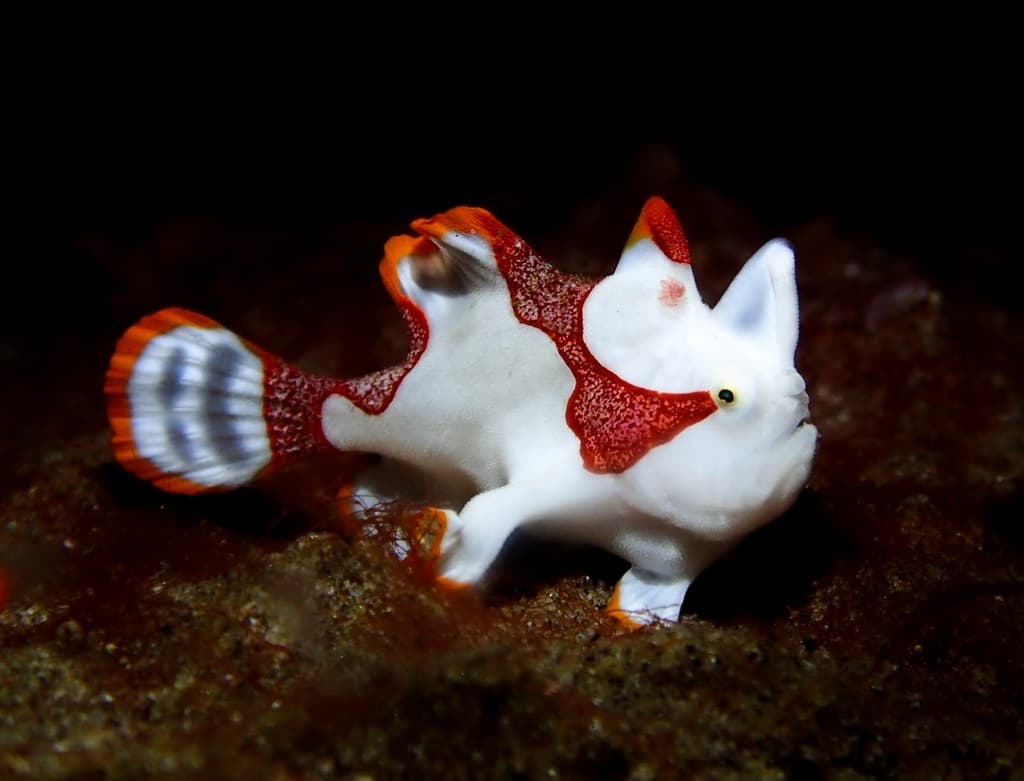
Painted Frogfish
Antennarius pictus
Family: Antennariidae · Frogfish
Also known as: Painted Anglerfish, Spotted Frogfish
(c) caleidoskopable, some rights reserved (CC BY-NC)
Max Size
6"
Min Tank
30 gal
Lifespan
5-10 years
Origin
Indo-Pacific, Red Sea
Diet
Carnivore
Swims
Bottom
Did You Know?
- Frogfish have the fastest strike of any vertebrate — they can engulf prey in just 6 milliseconds
- They can eat prey nearly as large as themselves thanks to their enormous, expandable mouths and stomachs
- Their modified pectoral fins function like tiny hands, allowing them to 'walk' across the substrate
About
The Painted Frogfish is one of the ocean's most bizarre and fascinating creatures — a master of camouflage and ambush predation. These stocky, globular fish bear little resemblance to typical fish, with modified pectoral fins that function as 'hands' for walking along the substrate, and a modified dorsal spine (illicium) topped with a fleshy lure (esca) used to attract prey.
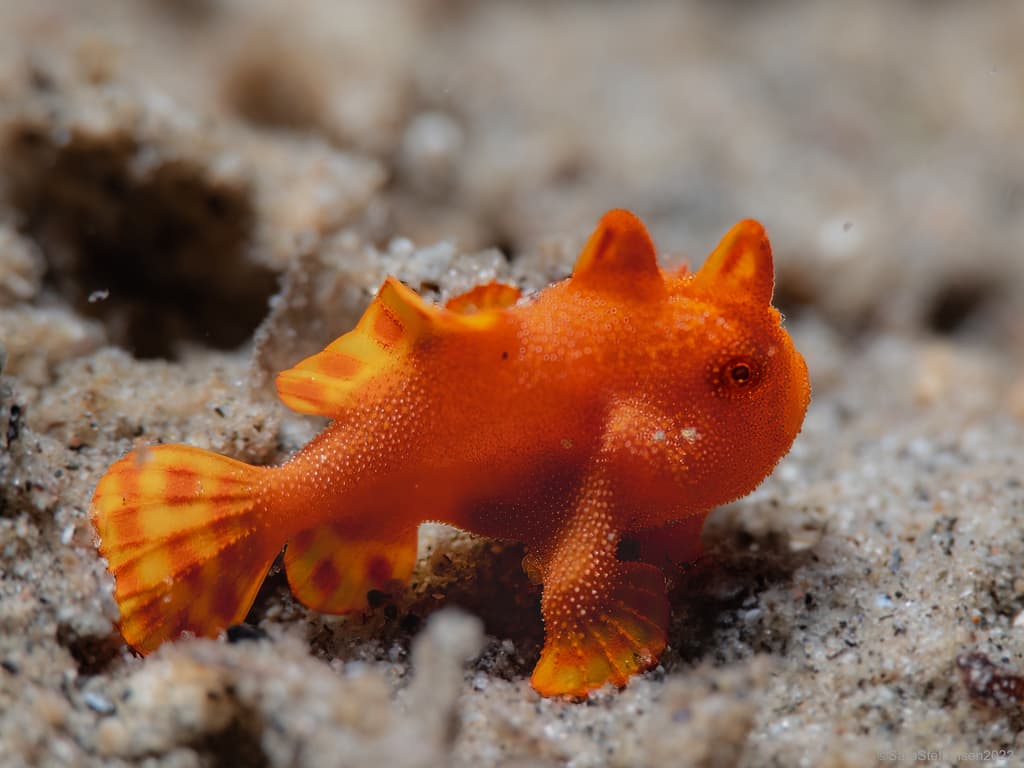
Painted Frogfish can change color over days to weeks, matching their surroundings in shades of yellow, orange, red, brown, black, or white. They are sit-and-wait predators that remain completely motionless for hours, wiggling their lure to attract small fish and crustaceans close enough to strike. Their strike is one of the fastest in the animal kingdom — they can engulf prey in just 6 milliseconds.
In the aquarium, frogfish are fascinating but challenging to keep. They require a species-appropriate setup with other slow, non-competitive fish. They will eat any tankmate that can fit in their enormous, expandable mouths — which can accommodate prey nearly as large as themselves. A small, dedicated tank of 30+ gallons with live rock and low flow is ideal.
Feeding & Diet
Carnivore
An ambush predator that feeds exclusively on live prey in the wild. In captivity, they must be trained to accept frozen foods by using feeding tongs to simulate live prey movement. Offer frozen silversides, ghost shrimp, and small pieces of raw shrimp on tongs. Feed 2-3 times per week — they have slow metabolisms. Never use freshwater feeder fish.
Compatibility
ambush-predatorslow-moverspecies-tankexpert-only
Frogfish should only be kept with fish too large to eat and too slow to outcompete them for food. Compatible tankmates include other frogfish of similar size (with caution), scorpionfish, and seahorses (in some cases). Never keep with fast, active fish that will steal food. They will eat any fish they can fit in their enormous mouths.
Check CompatibilityBreeding
Difficult
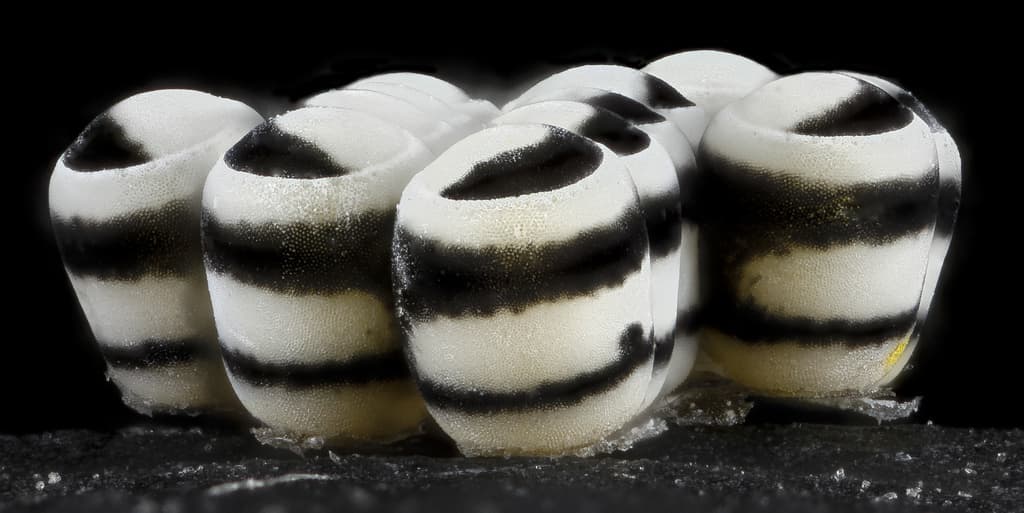
Frogfish produce large floating egg rafts containing up to 180,000 eggs. The male nudges the female to the surface where the egg mass is released. Larvae are pelagic and extremely difficult to raise in captivity, though it has been accomplished by a few dedicated breeders.
Special Requirements
- Will eat any fish or shrimp that can fit in its mouth — even similarly sized tankmates
- Must be trained to accept frozen food via feeding tongs
- Requires low water flow — strong currents will stress frogfish
- Sensitive to water quality — cannot tolerate ammonia or nitrite
- Best kept in a small, dedicated species tank
Water Parameters
Temperature72–78°F
Specific Gravity1.02–1.025 sg
pH8.1–8.4
Alkalinity8–12 dKH
Coloration
variable (yellow, orange, red, brown, black, white)
Tags
ambush-predatorslow-moverspecies-tankexpert-only
Scientific Resources & Research
Other Resources
FishBase: Antennarius pictusBest Tank Mates
Sources & References
- [1]FishBase: Antennarius pictusFishBase