IntermediateSemi-AggressiveNot Reef Safe
Whitemouth Moray Eel
Gymnothorax meleagris
Family: Muraenidae · Eels
Also known as: Turkey Moray, Guineafowl Moray, Spotted Moray Eel
(c) sea-kangaroo, some rights reserved (CC BY-NC-ND)
Max Size
48"
Min Tank
125 gal
Lifespan
15-20 years
Origin
Indo-Pacific, Hawaii
Diet
Carnivore
Swims
Bottom
About
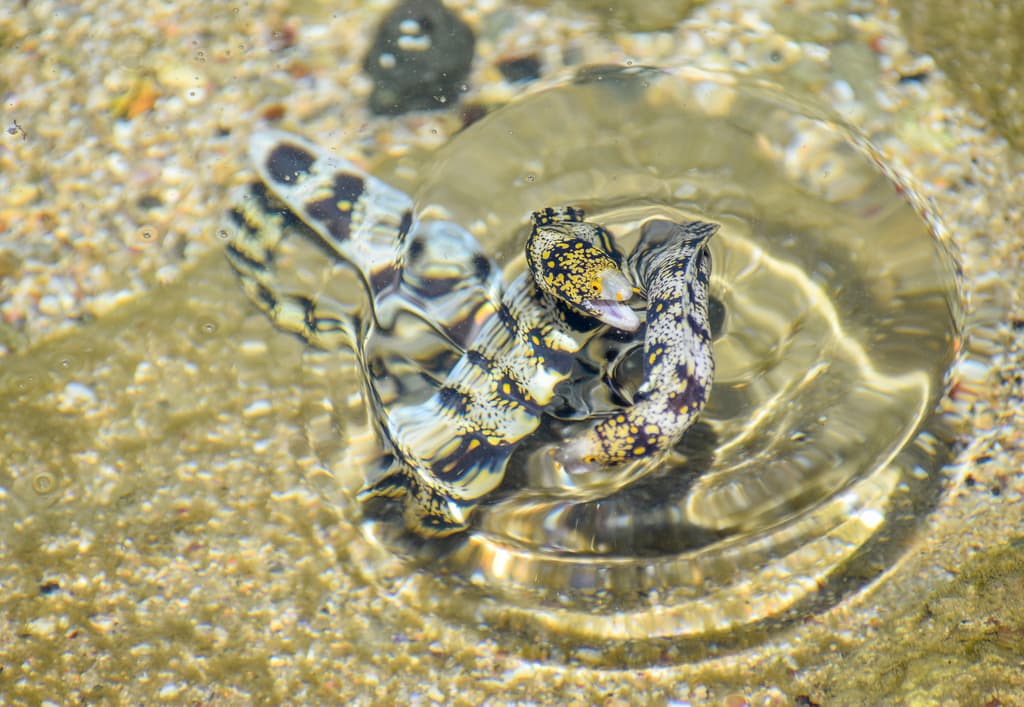
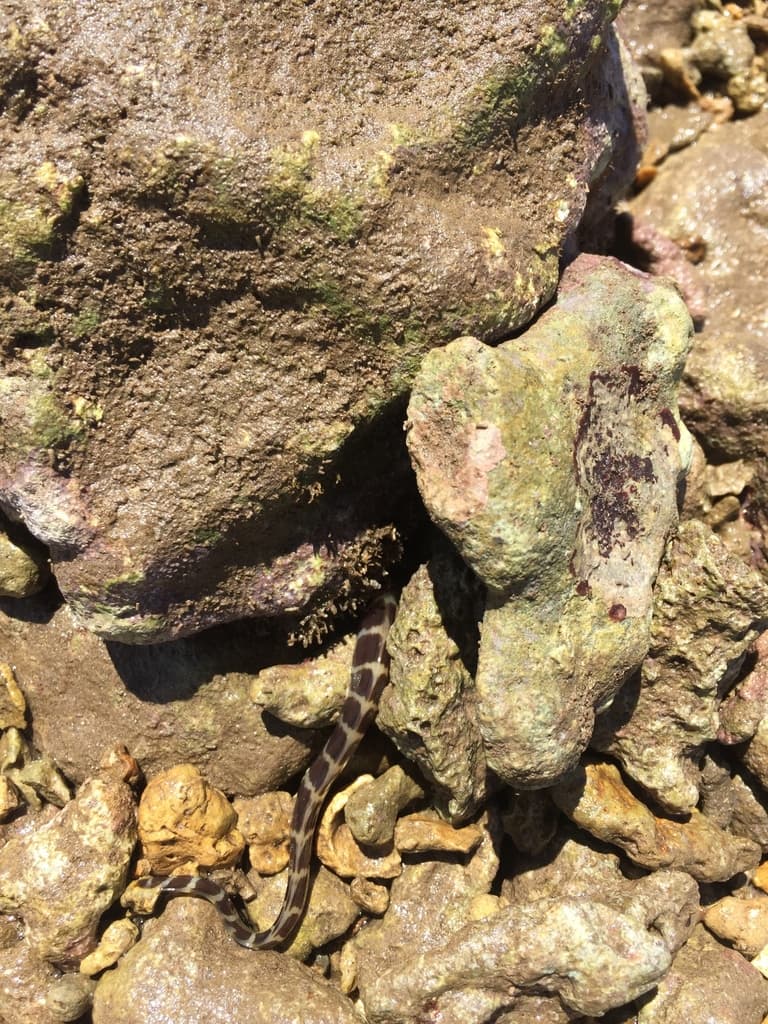
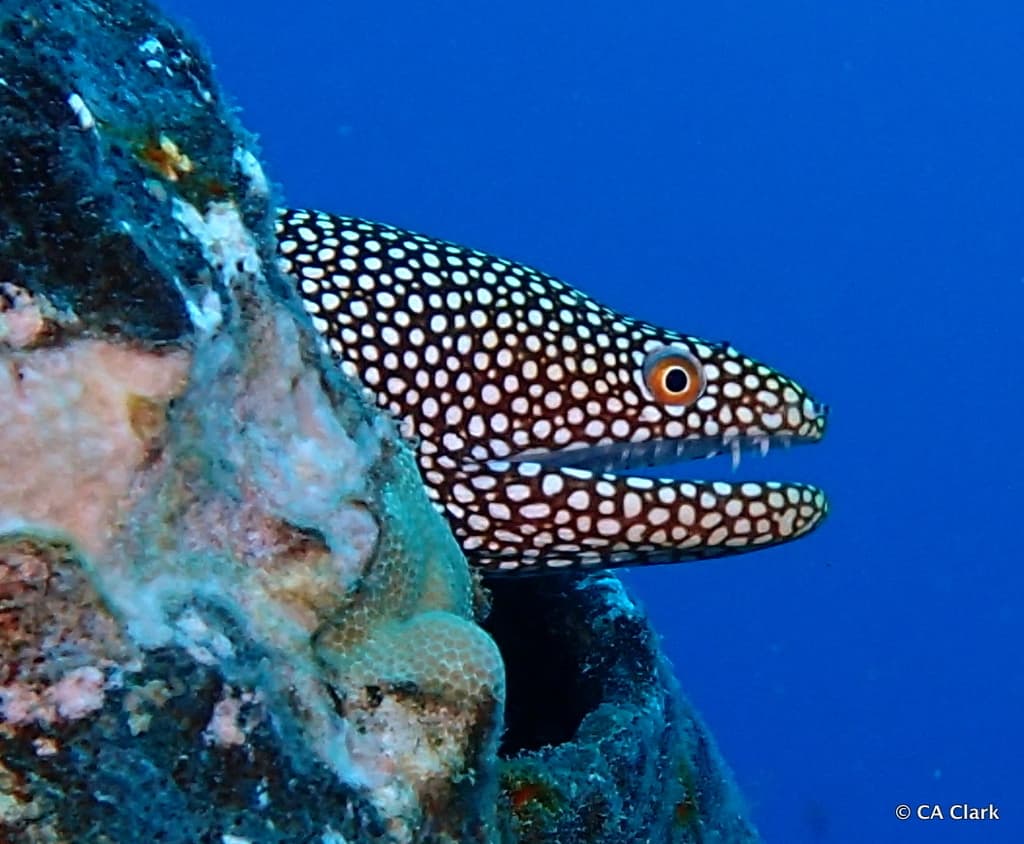
The Whitemouth Moray Eel is a striking and commonly encountered moray species named for the distinctive bright white interior of its mouth, which contrasts dramatically with its dark brown to chocolate-colored body covered in fine white spots. This polka-dot pattern, reminiscent of a guineafowl's plumage, gives it the alternative common name of Guineafowl Moray. When the eel opens its mouth in its characteristic gaping behavior, the flash of white creates a memorable visual display.
In the wild, Whitemouth Moray Eels are found throughout the Indo-Pacific in coral reefs, rocky shorelines, and tide pools. They are one of the more commonly observed moray species by divers, often seen with their heads protruding from reef crevices. Growing to about four feet in length, they are medium to large-sized morays that feed on fish, crustaceans, and occasionally octopus. Their sharp teeth are designed for gripping and holding slippery prey, and they frequently hunt cooperatively with roving coral groupers in the wild.
In the aquarium, the Whitemouth Moray Eel is a hardy and adaptable species that acclimates well to captive conditions. A minimum of 125 gallons is required to house an adult specimen comfortably. Like all moray eels, a secure, escape-proof lid is non-negotiable. This species is not reef-safe, as it will readily consume fish and crustacean tankmates. It is best suited for a predator or fish-only aquarium with large, robust companions. Despite its predatory nature, it can become quite tame and may learn to accept food from tongs held by its keeper.
Feeding & Diet
Carnivore
Whitemouth Moray Eels are carnivores that feed on fish, crustaceans, and cephalopods in the wild. In captivity, offer frozen silversides, shrimp, squid, krill, and whole fish. Use feeding tongs to present food directly. Feed two to three times per week for adults. They adapt well to frozen foods and become eager feeders once established. Vary the diet for nutritional balance.
Compatibility
not-reef-safesemi-aggressivefish-predatorcrustacean-predatorescape-artistpredator-tank
The Whitemouth Moray Eel will consume any fish or crustacean small enough to overpower. Compatible with medium to large predatory fish such as groupers, large triggers, puffers, and lionfish. Other moray eels can coexist in sufficiently large aquariums if introduced simultaneously. Avoid all small fish, ornamental shrimp, and crabs. This species is not reef-safe and belongs in a predator or fish-only system.
Check CompatibilityBreeding
Not bred in captivity
Whitemouth Moray Eels have not been bred in home aquariums. Like other moray eels, they produce pelagic eggs that develop into transparent leptocephalus larvae. These larvae undergo an extended oceanic planktonic phase before metamorphosing into juvenile eels. The complexity of this developmental cycle prevents captive breeding.
Special Requirements
- Secure, escape-proof lid is absolutely essential
- Provide large caves and crevices for hiding
- Use feeding tongs for safe food delivery
- Will consume fish and crustacean tankmates
- Strong filtration and protein skimming recommended
- Not suitable for reef aquariums
- Can become tame and interact with keeper during feeding
Water Parameters
Temperature72–80°F
Specific Gravity1.02–1.026 sg
pH8.1–8.4
Alkalinity8–12 dKH
Coloration
brownwhitedark brownchocolate
Tags
not-reef-safesemi-aggressivefish-predatorcrustacean-predatorescape-artistpredator-tank