IntermediateAggressiveNot Reef Safe
Kidako Moray
Gymnothorax kidako
Family: Muraenidae · Eels
Also known as: Kidako Moray Eel, Brown Moray Eel, Japanese Moray
(c) Albert Kang, some rights reserved (CC BY-NC)
Max Size
31.5"
Min Tank
125 gal
Lifespan
12-18 years
Origin
Western Pacific, Japan
Diet
Carnivore
Swims
Bottom
About
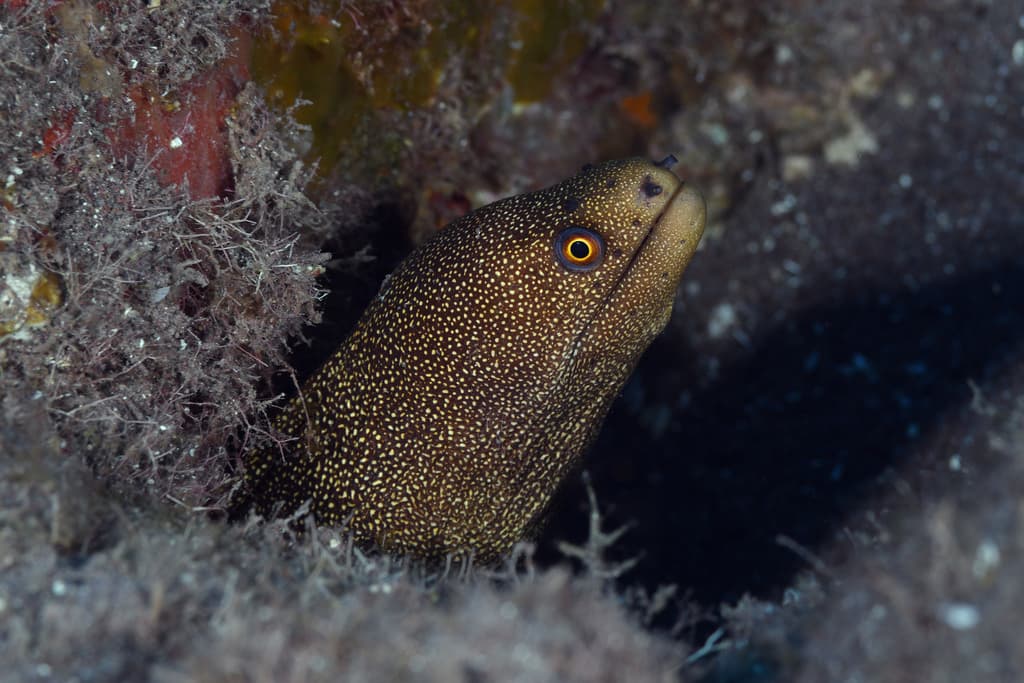
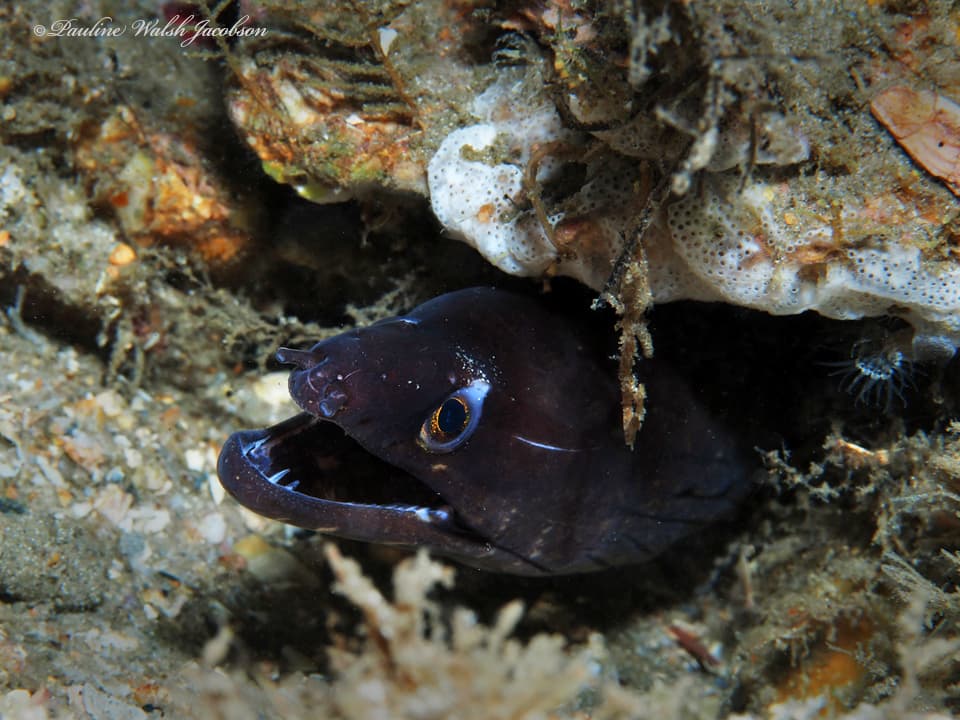
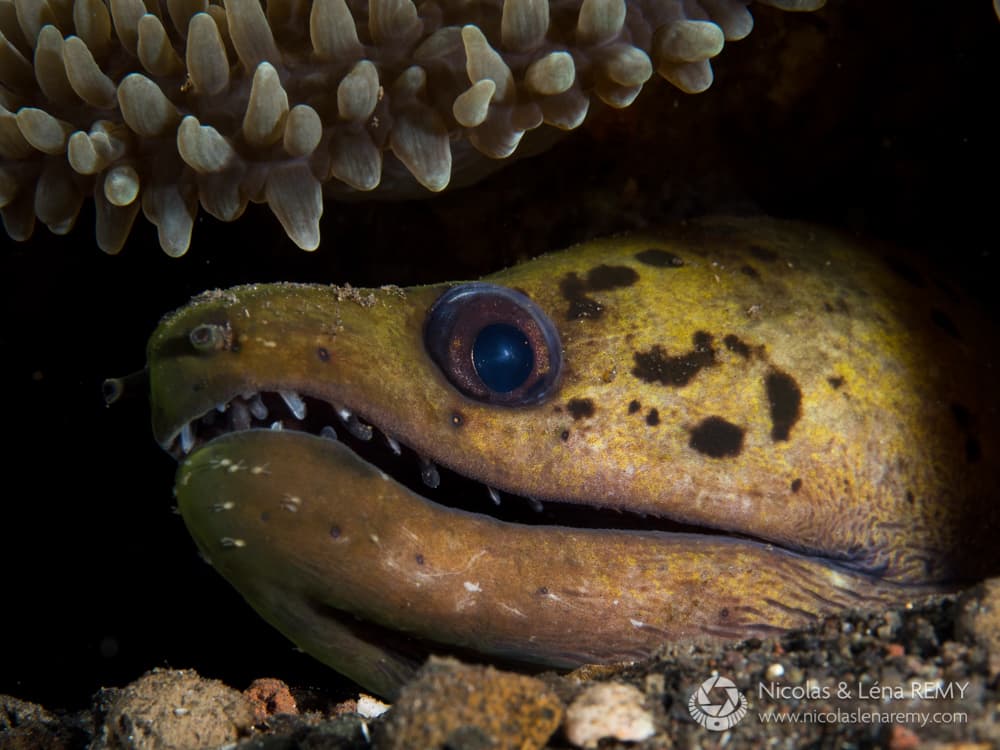
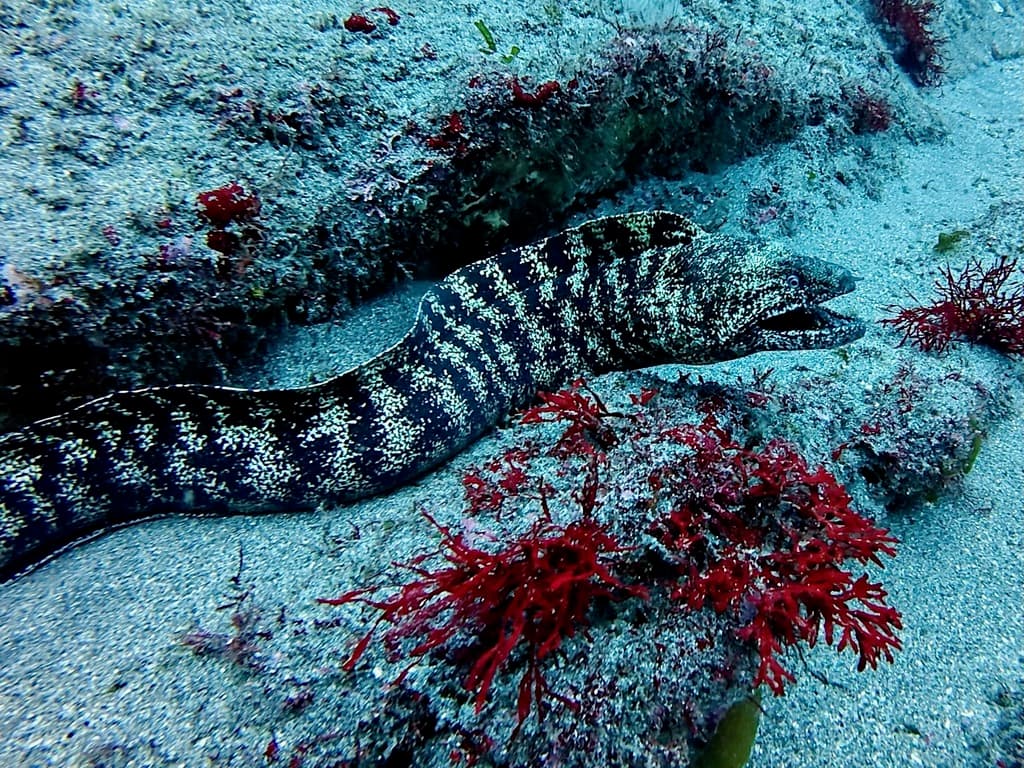
The Kidako Moray is a robust temperate to subtropical moray eel native to the Western Pacific, particularly common around the waters of Japan, South Korea, and Taiwan. Its body is uniformly dark brown to brownish-gray, sometimes with a subtle mottled or reticulated pattern that becomes more visible under close inspection. Reaching approximately 31.5 inches in length, it is a solidly built medium-sized moray with a muscular body typical of the Gymnothorax genus.
In the wild, the Kidako Moray inhabits rocky reefs, boulder fields, and temperate coral communities in relatively cool subtropical waters. It is a nocturnal predator that shelters in crevices and under ledges during the day, venturing out at night to hunt fish, crustaceans, and cephalopods. The species is well-adapted to cooler water temperatures compared to most tropical moray species, and this is an important consideration for aquarium care. In Japan, it is one of the most commonly encountered moray species by divers and fishermen.
In the aquarium, the Kidako Moray requires a well-established system with cooler water temperatures reflecting its temperate origins. It is an aggressive predator not suitable for reef or community aquariums. A secure lid is absolutely essential. This species can be hardy and long-lived in captivity when maintained at appropriate temperatures and provided with a varied diet of meaty marine foods. It is less commonly available in the aquarium trade compared to tropical morays.
Feeding & Diet
Carnivore
Kidako Morays are aggressive carnivores that feed on fish, crustaceans, and cephalopods in the wild. In captivity, offer frozen silversides, shrimp, squid, and other meaty marine foods. Use long feeding tongs to present food safely. Feed two to three times per week. This species has a robust appetite and typically accepts frozen foods well after a brief adjustment period.
Compatibility
not-reef-safeaggressivefish-predatorescape-artistpredator-tanktemperate-species
The Kidako Moray is an aggressive predator that should only be kept with similarly sized or larger tankmates. Compatible with large, robust species that can tolerate cooler water temperatures. Not suitable for reef or community aquariums. Temperature requirements may limit compatible tankmates to other temperate species.
Check CompatibilityBreeding
Not bred in captivity
Kidako Morays have not been bred in home aquariums. In the wild, they are believed to follow the typical moray reproduction pattern of pelagic egg release with an extended leptocephalus larval phase. The complex larval development cycle prevents captive propagation.
Special Requirements
- Requires cooler water temperatures (64-76F) - temperate species
- Secure, heavy lid is mandatory - powerful escape artist
- Extensive rockwork with caves and crevices for hiding
- Use long feeding tongs during all feeding sessions
- Will consume fish and crustaceans - predator tank only
- Strong filtration and protein skimming essential
- May require a chiller to maintain appropriate temperatures in warm climates
Water Parameters
Temperature64–76°F
Specific Gravity1.02–1.026 sg
pH8.1–8.4
Alkalinity8–12 dKH
Coloration
browngraydark brown
Tags
not-reef-safeaggressivefish-predatorescape-artistpredator-tanktemperate-species