IntermediateAggressiveNot Reef Safe
Gray Face Moray
Gymnothorax thyrsoideus
Family: Muraenidae · Eels
Also known as: Greyface Moray Eel, White-eyed Moray, Slender Giant Moray
(c) Dan Schofield, some rights reserved (CC BY)
Max Size
24"
Min Tank
125 gal
Lifespan
10-15 years
Origin
Indo-Pacific, Red Sea
Diet
Carnivore
Swims
Bottom
About
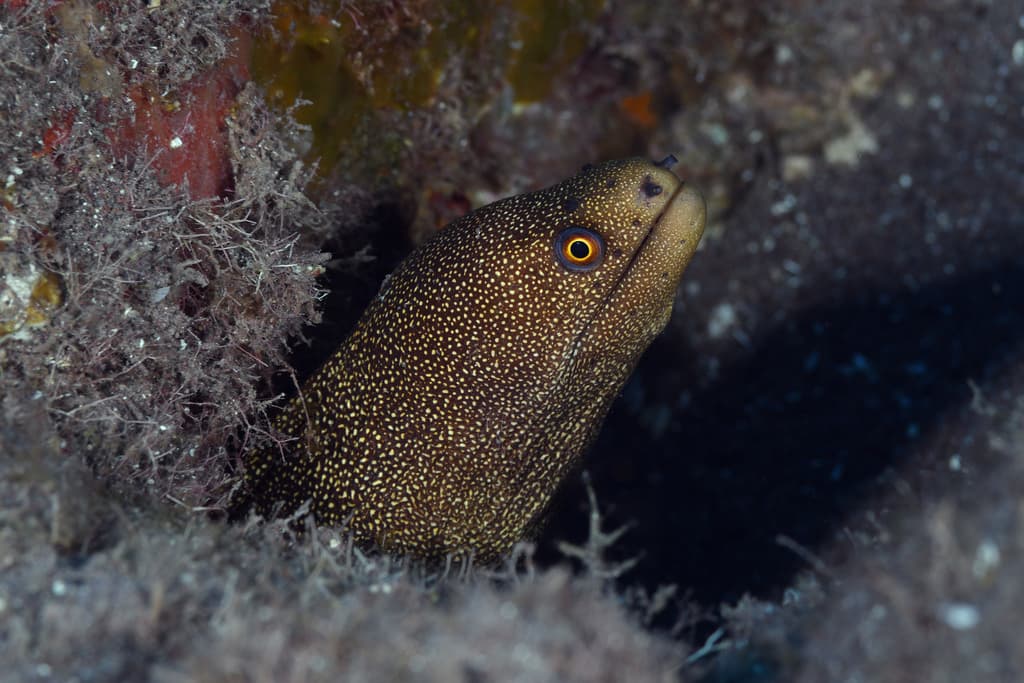
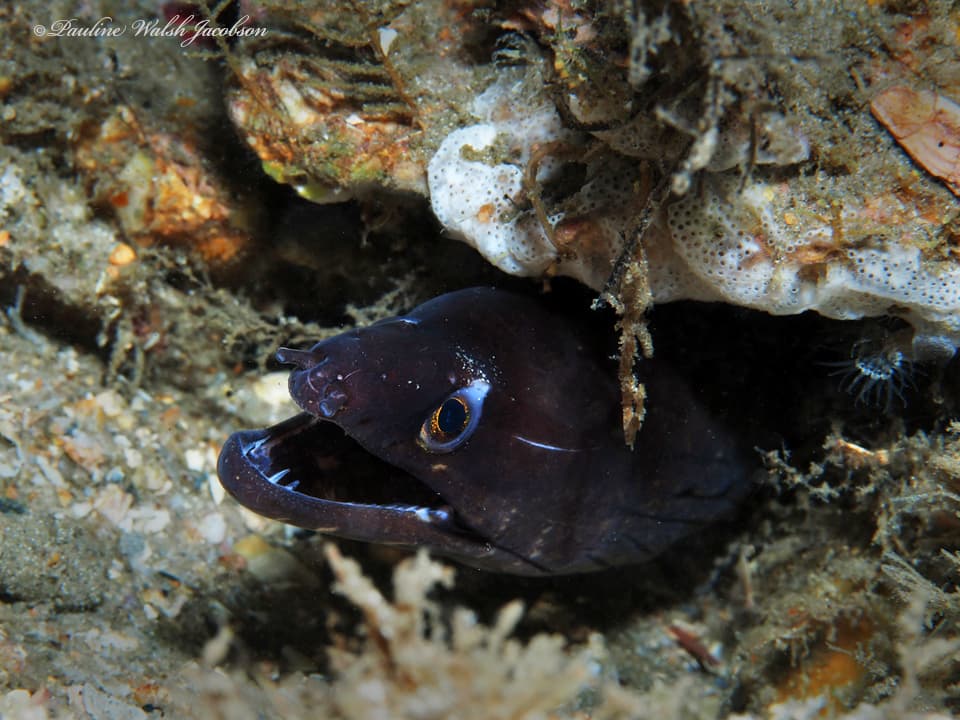
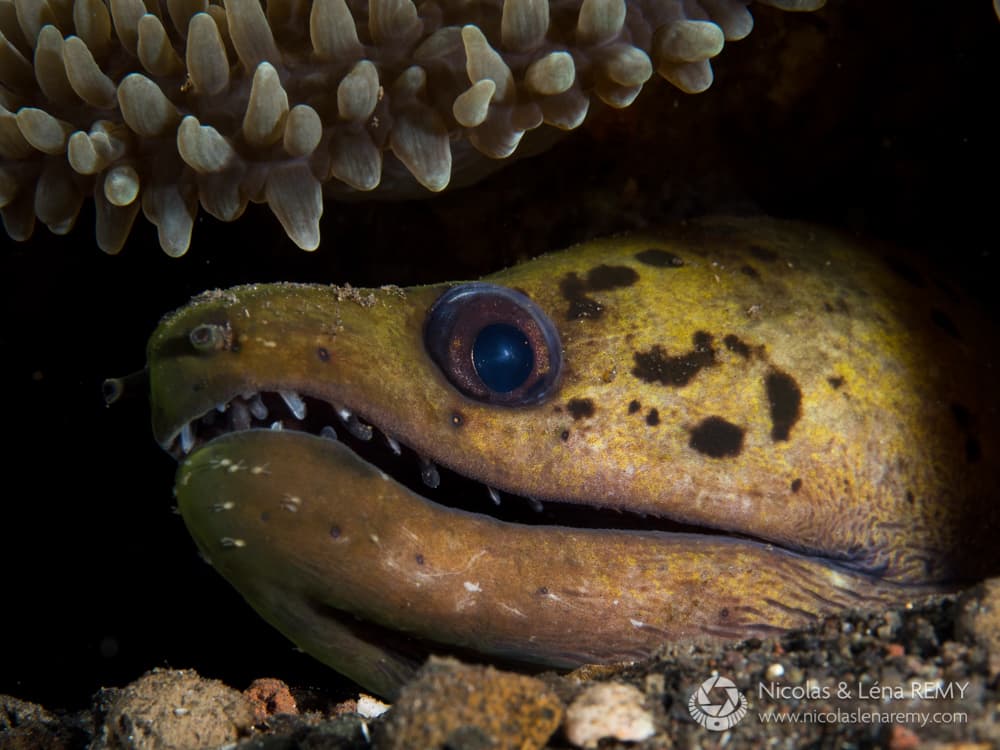
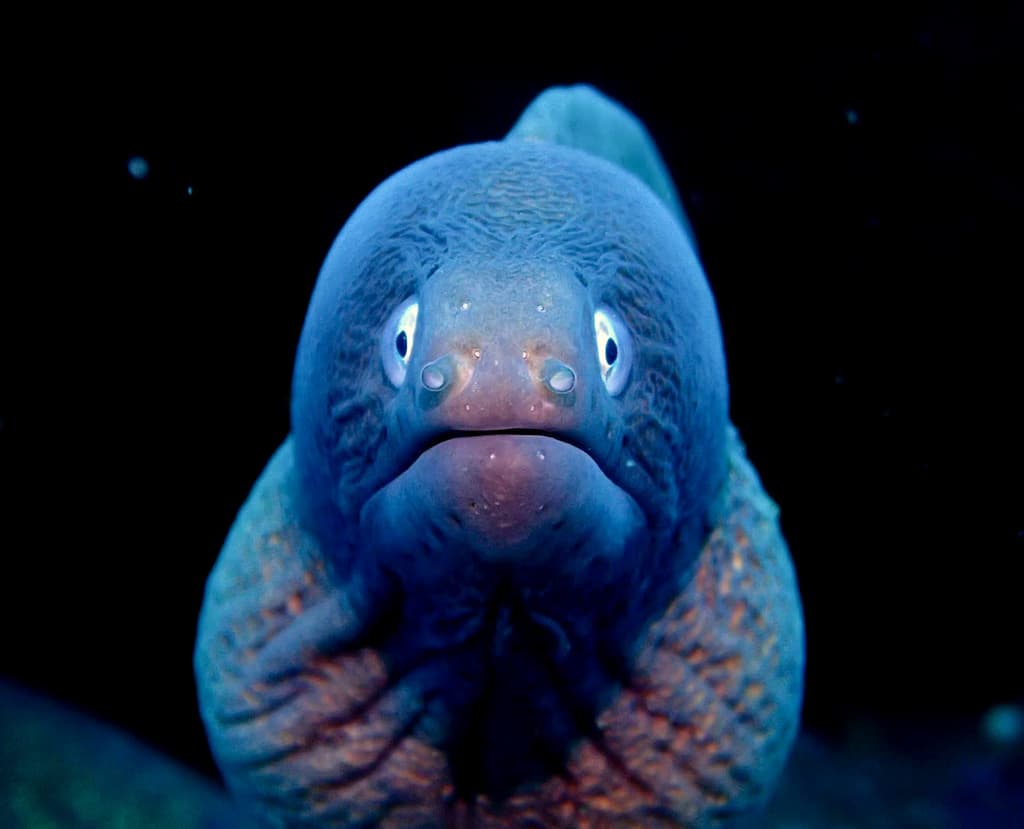
The Gray Face Moray is a distinctive Indo-Pacific moray eel characterized by its pale gray face that contrasts with its spotted or mottled body. The body is typically brownish to olive with scattered darker spots and blotches, while the head and snout area display the characteristic grayish coloration that gives this species its common name. Reaching approximately 24 inches in length, it is a moderately sized moray that falls within the manageable range for dedicated marine aquarists.
In the wild, the Gray Face Moray inhabits coral reefs and rocky substrates across a wide range of the Indo-Pacific. It is typically found in crevices and caves at moderate depths, emerging at night to hunt for small fish and crustaceans. Like other Gymnothorax species, it is equipped with sharp, recurved teeth that are highly effective at capturing and holding slippery prey. It is generally a solitary species, though multiple individuals may share a particularly favorable reef structure.
In the aquarium, the Gray Face Moray requires a well-established system with extensive rockwork and multiple hiding places. It is an aggressive predator that is not suitable for reef or community aquariums, as it will readily consume smaller fish and crustaceans. A secure lid and sealed plumbing openings are essential. While not as commonly available as some other moray species, it is a hardy captive that can thrive for many years when provided with appropriate housing and diet.
Feeding & Diet
Carnivore
Gray Face Morays are aggressive carnivores feeding on fish and crustaceans in the wild. In captivity, offer frozen silversides, shrimp, squid, and other meaty marine foods. Use feeding tongs to present food directly to the eel. Feed two to three times per week. Maintain varied diet to ensure complete nutrition. Overfeeding should be avoided as it can lead to liver problems.
Compatibility
not-reef-safeaggressivefish-predatorescape-artistpredator-tank
The Gray Face Moray is an aggressive predator that will consume any fish or invertebrate small enough to overpower. It should be housed only with similarly sized or larger tankmates such as large tangs, groupers, and triggerfish. Not suitable for reef or community aquariums. Can coexist with other moray eels in sufficiently large systems with ample hiding spots for each individual.
Check CompatibilityBreeding
Not bred in captivity
Gray Face Morays have not been bred in home aquariums. Like other Gymnothorax species, they likely exhibit protogynous hermaphroditism and produce pelagic eggs. The extended leptocephalus larval phase makes captive breeding impractical with current aquaculture techniques.
Special Requirements
- Secure lid and sealed plumbing openings are essential
- Extensive rockwork with multiple caves and crevices required
- Use long feeding tongs during all feeding sessions
- Will consume small fish and crustaceans - predator tank only
- Strong filtration and protein skimming recommended
- Provide dimmer lighting or shaded areas to reduce stress
Water Parameters
Temperature72–80°F
Specific Gravity1.02–1.026 sg
pH8.1–8.4
Alkalinity8–12 dKH
Coloration
graybrownolivespotted
Tags
not-reef-safeaggressivefish-predatorescape-artistpredator-tank