IntermediateAggressiveNot Reef Safe
Chestnut Moray
Gymnothorax castaneus
Family: Muraenidae · Eels
Also known as: Chestnut Moray Eel, Panamic Green Moray, Dark Green Moray
(c) Pat Webster @underwaterpat, all rights reserved
Max Size
24"
Min Tank
75 gal
Lifespan
10-15 years
Origin
Eastern Pacific, Gulf of California
Diet
Carnivore
Swims
Bottom
About
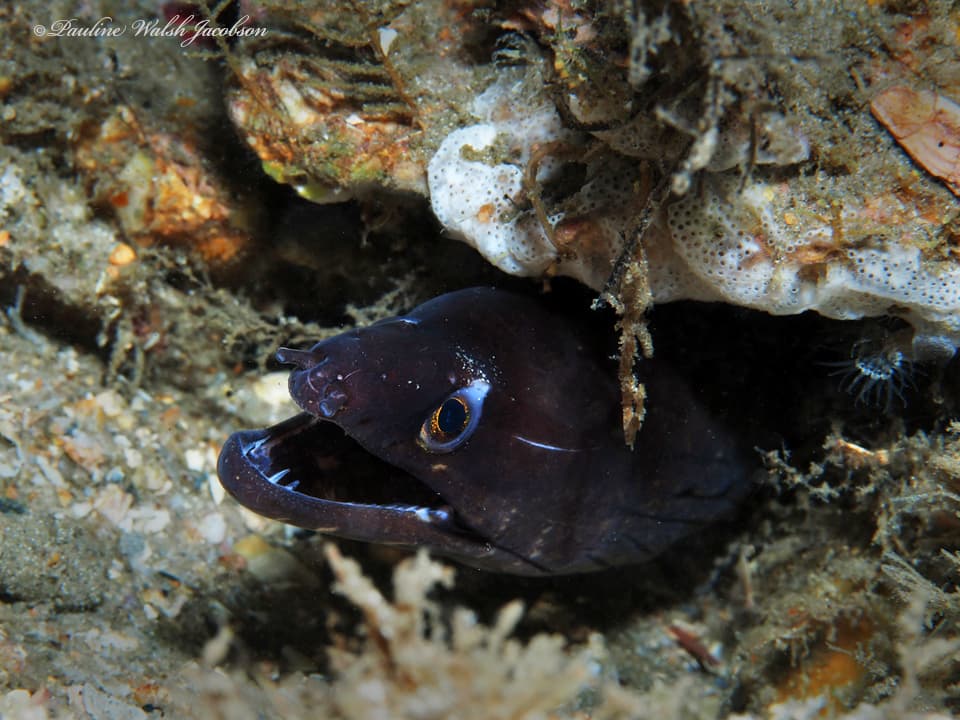
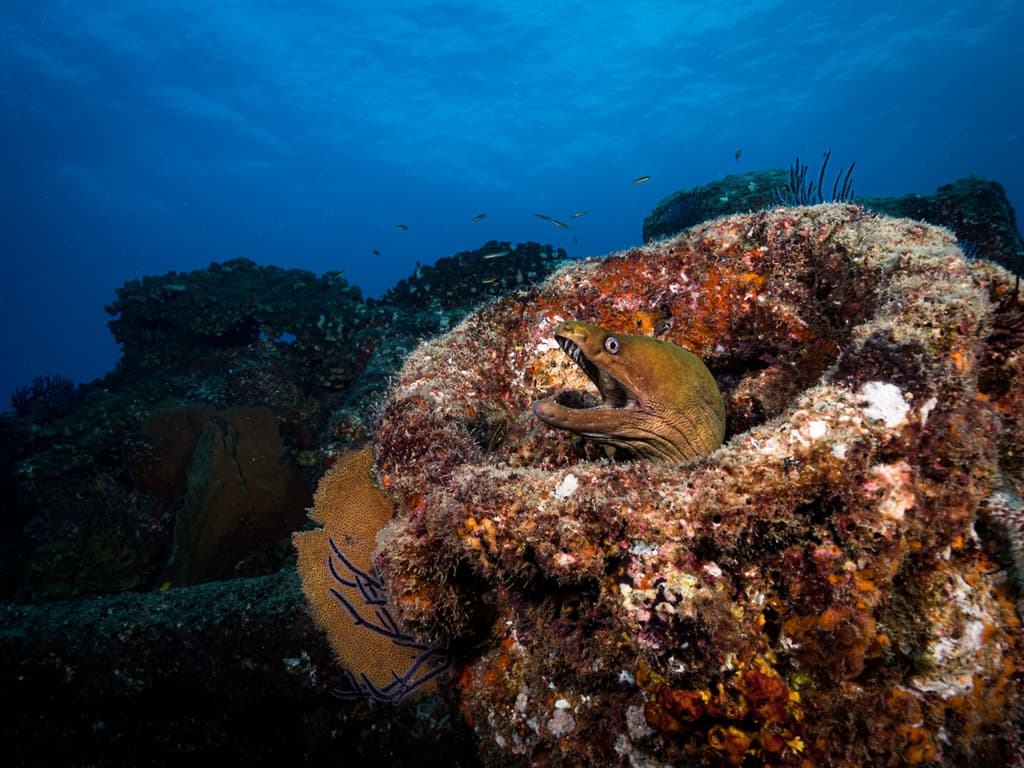
The Chestnut Moray is a robust and attractively colored moray eel native to the Eastern Pacific, ranging from the Gulf of California south to the Galapagos Islands. Its body is uniformly dark brown to chestnut in coloration, sometimes with a subtle greenish or olive tinge, giving it a handsome and somewhat understated appearance compared to more flamboyantly patterned moray species. Reaching a maximum size of approximately 24 inches, it is one of the smaller Gymnothorax species, making it somewhat more manageable for dedicated aquarists.
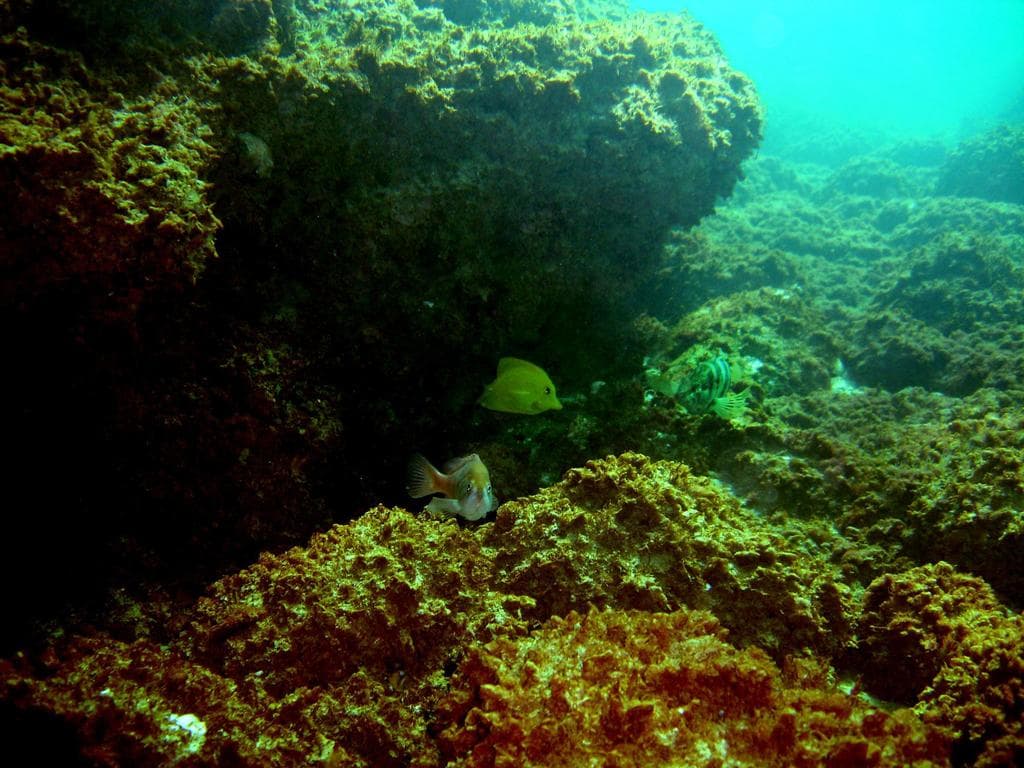
In the wild, the Chestnut Moray inhabits rocky reefs, tide pools, and boulder-strewn coastlines, where it shelters in crevices during the day and emerges at night to hunt fish, octopuses, and crustaceans. It is a voracious predator with the typical sharp, recurved teeth of the Gymnothorax genus, capable of seizing and holding struggling prey with remarkable efficiency. This species is known for its bold and sometimes aggressive temperament, readily defending its territory against perceived intruders.
In the aquarium, the Chestnut Moray requires a well-established tank with abundant rockwork providing multiple caves and hiding spots. It is decidedly not reef-safe and will consume any fish or crustacean small enough to capture. A heavy, secure lid is mandatory, as this species is a powerful and persistent escape artist. Strong filtration is essential due to the messy feeding habits characteristic of predatory moray eels.
Feeding & Diet
Carnivore
Chestnut Morays are aggressive carnivores that feed on fish, octopuses, and crustaceans in the wild. In captivity, offer frozen silversides, shrimp, squid, and other meaty marine foods. Use long feeding tongs to avoid bites. Feed two to three times per week. This species has a strong feeding response and may strike aggressively at food, so exercise caution during feeding sessions.
Compatibility
not-reef-safeaggressivefish-predatorescape-artistpredator-tank
The Chestnut Moray is an aggressive predator that will consume any fish or crustacean small enough to fit in its mouth. It should only be kept with tankmates of similar size or larger, such as large tangs, groupers, triggerfish, or other moray eels. Not suitable for community aquariums or reef tanks. Can be territorial toward other eels if insufficient hiding spots are provided.
Check CompatibilityBreeding
Not bred in captivity
Chestnut Morays have not been bred in home aquariums. In the wild, they are believed to be protogynous hermaphrodites, transitioning from female to male as they grow. Spawning involves pelagic eggs released into the water column, with larvae undergoing an extended leptocephalus phase before settling onto the reef.
Special Requirements
- Heavy, secure lid is mandatory - powerful escape artist
- Extensive rockwork with multiple caves and crevices required
- Use long feeding tongs - aggressive feeding response
- Will consume fish and crustaceans - predator tank only
- Strong filtration and protein skimming essential
- Not suitable for reef or community aquariums
Water Parameters
Temperature68–78°F
Specific Gravity1.02–1.026 sg
pH8.1–8.4
Alkalinity8–12 dKH
Coloration
brownchestnutolivedark green
Tags
not-reef-safeaggressivefish-predatorescape-artistpredator-tank