IntermediateSemi-AggressiveReef Safe with Caution
Ghost Eel
Pseudechidna brummeri
Family: Muraenidae · Eels
Also known as: White Ghost Moray, Brummer's Moray, Ghost Moray Eel, White Ribbon Moray
(c) ulexeuropaeus, some rights reserved (CC BY-NC)
Max Size
40"
Min Tank
55 gal
Lifespan
10-15 years
Origin
Indo-Pacific, Indonesia
Diet
Carnivore
Swims
Bottom
About
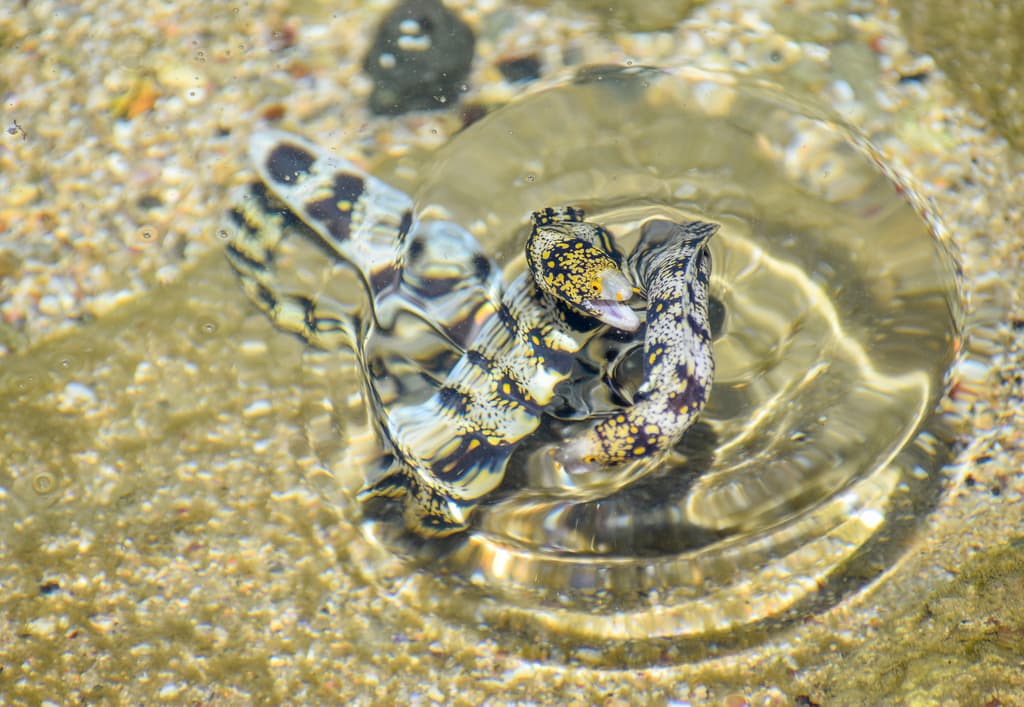
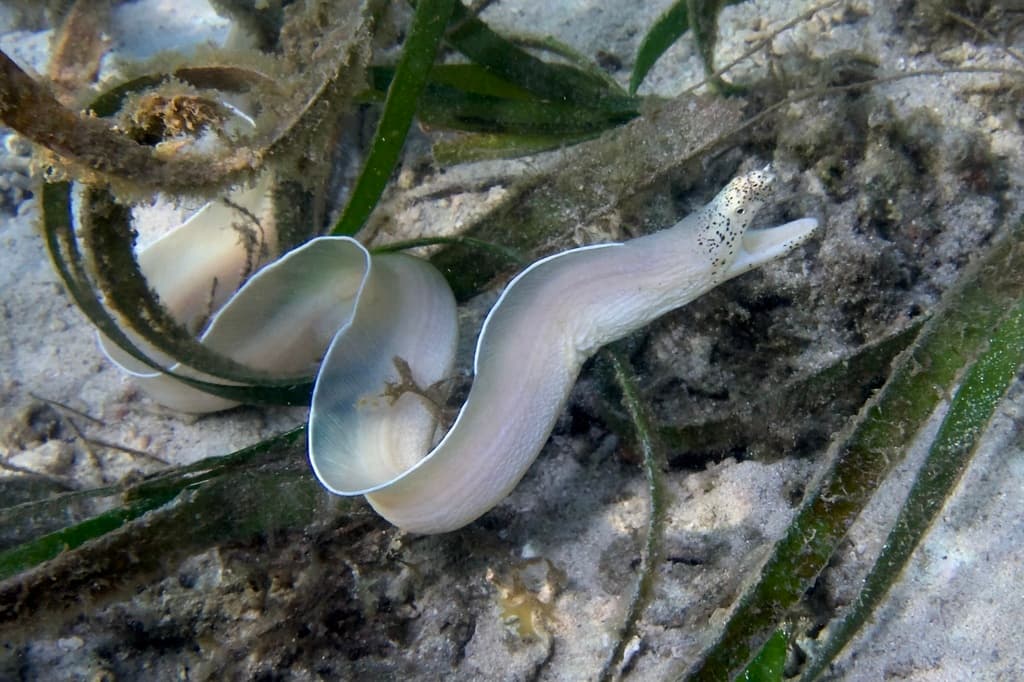
The Ghost Eel is an ethereal and unusual moray species that lives up to its spectral name with a pale white to ghostly cream-colored body that appears almost translucent in certain lighting conditions. Its slender, ribbon-like body and relatively small head give it a distinctly different profile from the stockier, more muscular moray eels commonly seen in the aquarium trade. This otherworldly appearance makes it a prized species among eel enthusiasts seeking something truly unique.
In the wild, Ghost Eels inhabit shallow reef flats, lagoons, and seagrass beds throughout the Indo-Pacific, where they thread through rubble and coral crevices in search of small prey. They are more active and open-water oriented than many moray species, often seen swimming freely across the substrate rather than remaining tucked into a single home crevice. This more adventurous personality makes them more visible and engaging aquarium inhabitants than many of the more reclusive moray species.
The Ghost Eel adapts well to aquarium conditions and is considered one of the more manageable medium-sized moray eels for intermediate aquarists. While it can reach up to 40 inches in length, its slender build means it has a much smaller bioload than a more heavily bodied moray of similar length. A secure lid is essential, and the aquascape should include a network of caves and crevices. It is reef-safe with caution, as it will not damage corals but will consume ornamental shrimp and very small fish.
Feeding & Diet
Carnivore
Ghost Eels are carnivores that feed on small fish and crustaceans in the wild. In captivity, offer frozen silversides, shrimp, squid, krill, and other meaty marine foods. Use feeding tongs for safe food delivery. Feed every two to three days. Most specimens adapt well to frozen foods. Enriched foods are recommended for optimal health and coloration.
Compatibility
reef-cautionsemi-aggressivecrustacean-predatorescape-artistcommunity-compatible
The Ghost Eel is moderately aggressive and will consume any fish or crustacean small enough to swallow. It is compatible with medium to large community fish such as tangs, angelfish, larger wrasses, and clownfish. Avoid very small species that could become prey. It can coexist with other moray eels in sufficiently large aquariums. Its more active, free-swimming nature means it may interact more with tankmates than more sedentary moray species.
Check CompatibilityBreeding
Not bred in captivity
Ghost Eels have not been bred in home aquariums. Like other moray eels, they produce pelagic eggs that hatch into leptocephalus larvae requiring an extended planktonic developmental phase. Captive breeding has not been attempted or achieved for this species.
Special Requirements
- Secure, tight-fitting lid essential - escape artist
- Provide caves and crevices for hiding
- More active and visible than many moray species
- Will consume ornamental shrimp and very small fish
- Use feeding tongs for safe food delivery
- Slender build means lower bioload than bulkier morays
Water Parameters
Temperature72–80°F
Specific Gravity1.02–1.026 sg
pH8.1–8.4
Alkalinity8–12 dKH
Coloration
whitecreampale yellow
Tags
reef-cautionsemi-aggressivecrustacean-predatorescape-artistcommunity-compatible