BeginnerAggressiveReef Safe
Three Stripe Damsel
Dascyllus aruanus
Family: Pomacentridae · Damselfish
Also known as: Three Stripe Humbug, Whitetail Dascyllus, Humbug Damselfish, Humbug Dascyllus
(c) Peter, some rights reserved (CC BY-NC)
Max Size
3"
Min Tank
30 gal
Lifespan
5-10 years
Origin
Indo-Pacific, Red Sea
Diet
Omnivore
Swims
All
About
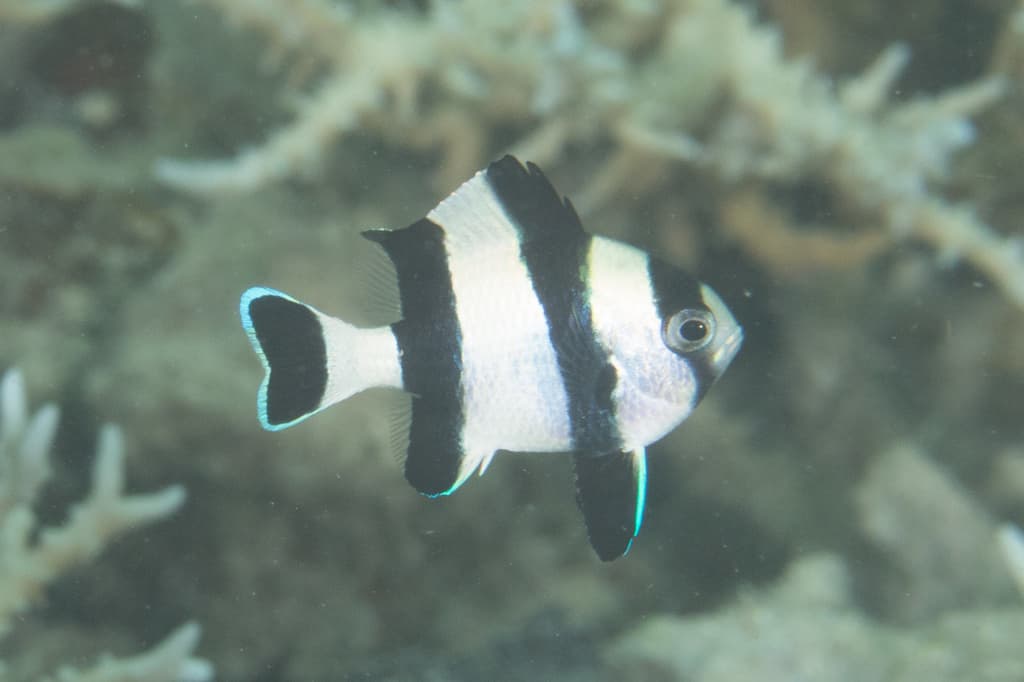
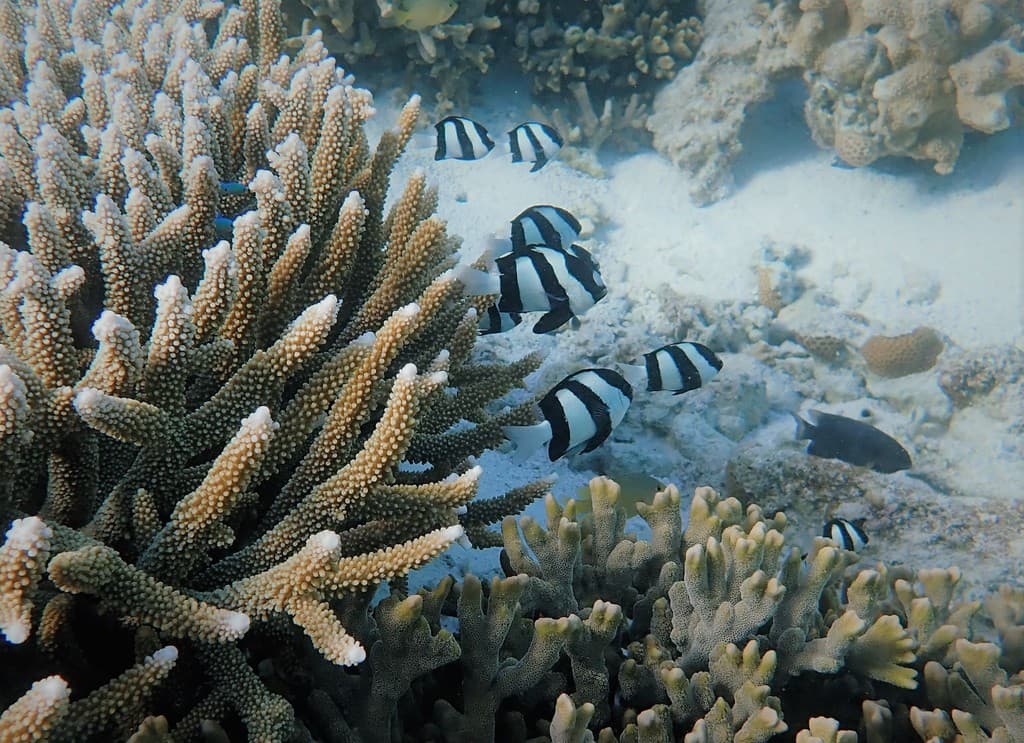
The Three Stripe Damsel, commonly known as the Humbug Damselfish, is one of the most iconic and easily identified reef fish in the Indo-Pacific. Its bold pattern of three black vertical bars on a clean white body creates a stark, graphic appearance that has made it a popular aquarium species for decades. This hardy little fish reaches about 3 inches in length and is a staple of the marine aquarium trade, widely available and inexpensively priced.
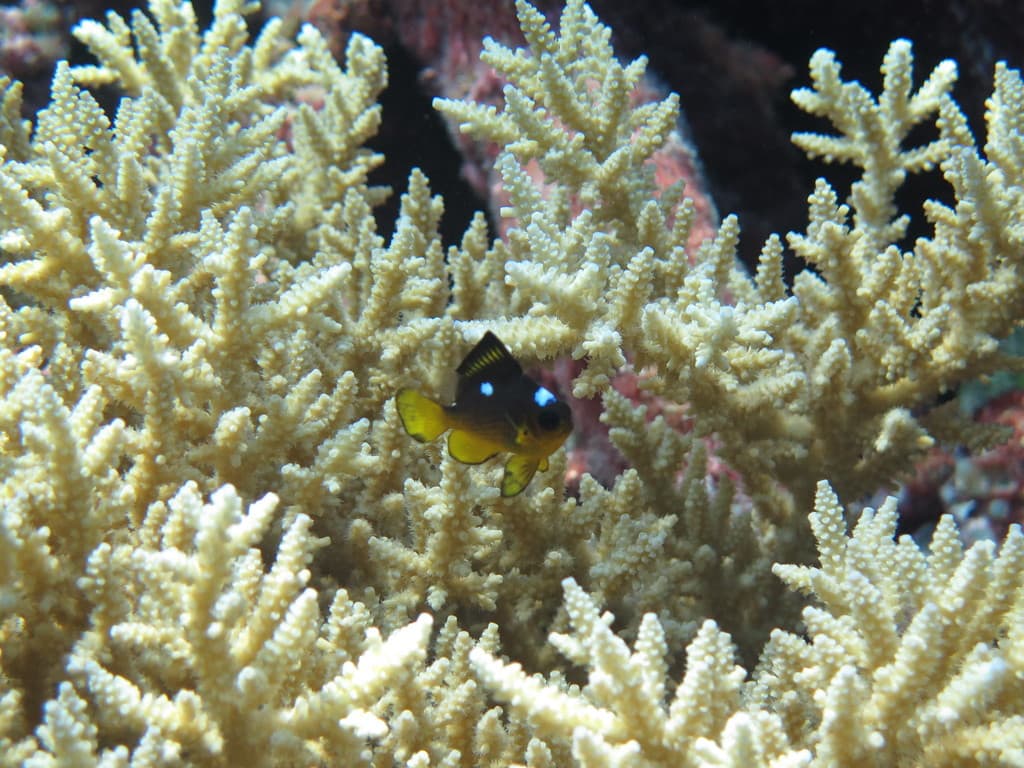
In the wild, Dascyllus aruanus is one of the most abundant reef fish across its enormous range, from the Red Sea and East Africa to the central Pacific. It forms tight aggregations around branching coral heads, particularly Acropora, Stylophora, and Pocillopora species, rarely straying more than a few inches from the protective coral branches. These groups typically consist of one dominant male, several females, and numerous juveniles, with a strict social hierarchy that determines access to food and shelter. When threatened, the entire group retreats into the coral branches simultaneously.
Despite its appealing appearance and extreme hardiness, the Three Stripe Damsel is notoriously territorial and aggressive for its size. In the aquarium, it will vigorously defend its chosen coral head or rock formation against all comers, including fish significantly larger than itself. This behavior makes it a challenging community fish, though its small size limits the actual damage it can inflict. It is best added last to a community tank and housed with moderately assertive species. The Three Stripe Damsel is completely reef-safe and makes an excellent inhabitant for reef aquariums where its territorial tendencies can be managed through careful stocking and adequate space.
Feeding & Diet
Omnivore
Three Stripe Damsels are omnivorous feeders that consume zooplankton, algae, and small benthic invertebrates in the wild. In captivity, they eagerly accept marine flakes, micro-pellets, frozen mysis shrimp, enriched brine shrimp, and cyclops. Include algae-based foods for balanced nutrition. They are enthusiastic feeders that rarely refuse any food offered. Feed small amounts two to three times daily.
Compatibility
reef-safeaggressiveterritorialhardy
The Three Stripe Damsel is territorial and will aggressively defend its chosen shelter against similarly sized fish. Despite its small size, it is surprisingly confrontational and will chase fish much larger than itself. House with moderately assertive species such as clownfish, tangs, and wrasses. Avoid keeping with other small damsels in tight quarters. In larger tanks, small groups can coexist with adequate rockwork. Completely reef-safe with all corals and invertebrates.
Check CompatibilityBreeding
Moderate
Three Stripe Damsels are protogynous hermaphrodites, meaning females can change sex to male if the dominant male is removed from the group. Males prepare nest sites and guard eggs until hatching. The species has been bred in captivity, with eggs hatching in approximately 3 days. Larvae require rotifers and phytoplankton for first foods. Social dynamics within groups play a crucial role in breeding behavior.
Special Requirements
- Provide branching coral or complex rockwork for shelter
- Territorial despite small size - add last to community tanks
- Can be kept in small groups with sufficient space and structure
- Associates closely with branching corals in nature
Water Parameters
Temperature72–82°F
Specific Gravity1.02–1.026 sg
pH8.1–8.4
Alkalinity8–12 dKH
Coloration
blackwhite
Tags
reef-safeaggressiveterritorialhardy