BeginnerAggressiveNot Reef Safe
Blue-green Damsel
Neoglyphidodon oxyodon
Family: Pomacentridae · Damselfish
Also known as: Neon Velvet Damsel, Black Neon Damselfish, Blue Velvet Damselfish
(c) Mark Rosenstein, some rights reserved (CC BY-NC)
Max Size
6"
Min Tank
55 gal
Lifespan
8-12 years
Origin
Western Pacific, Indonesia
Diet
Omnivore
Swims
All
About
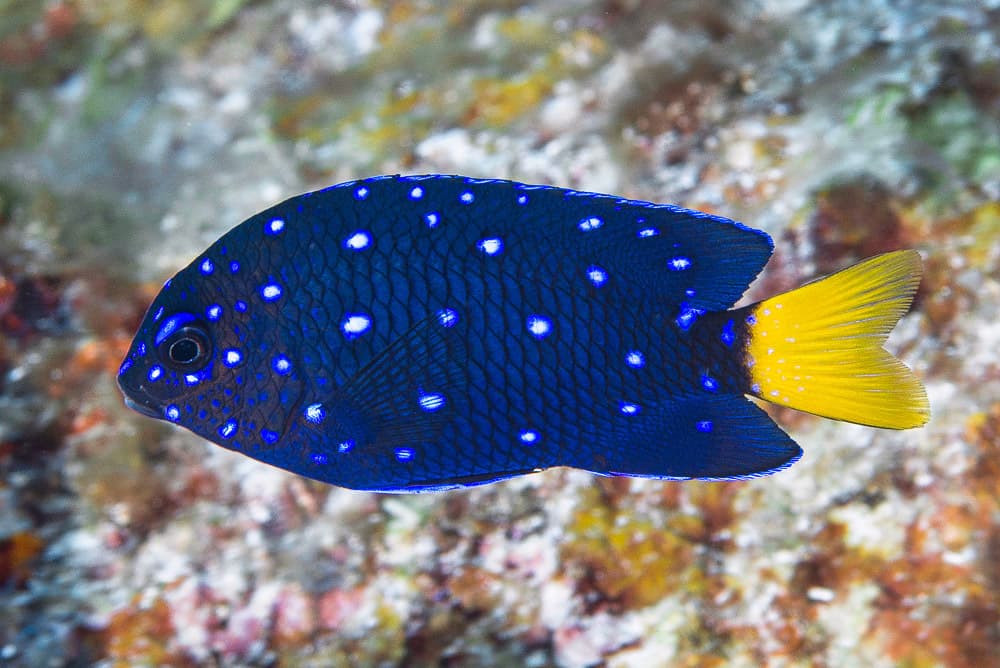
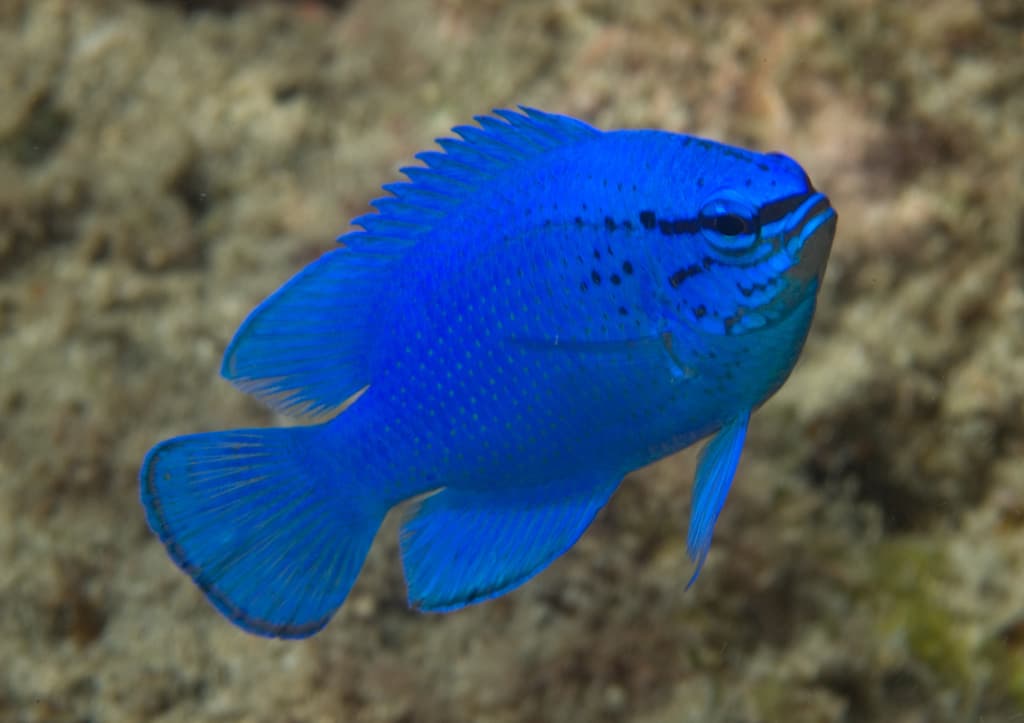
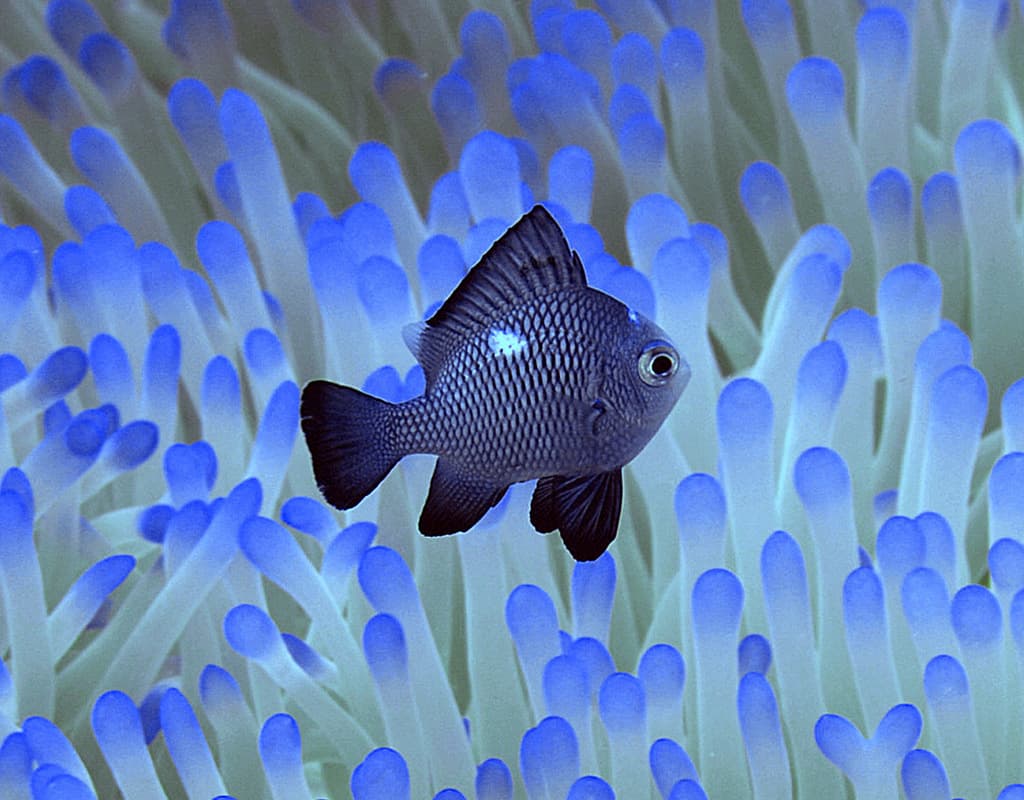
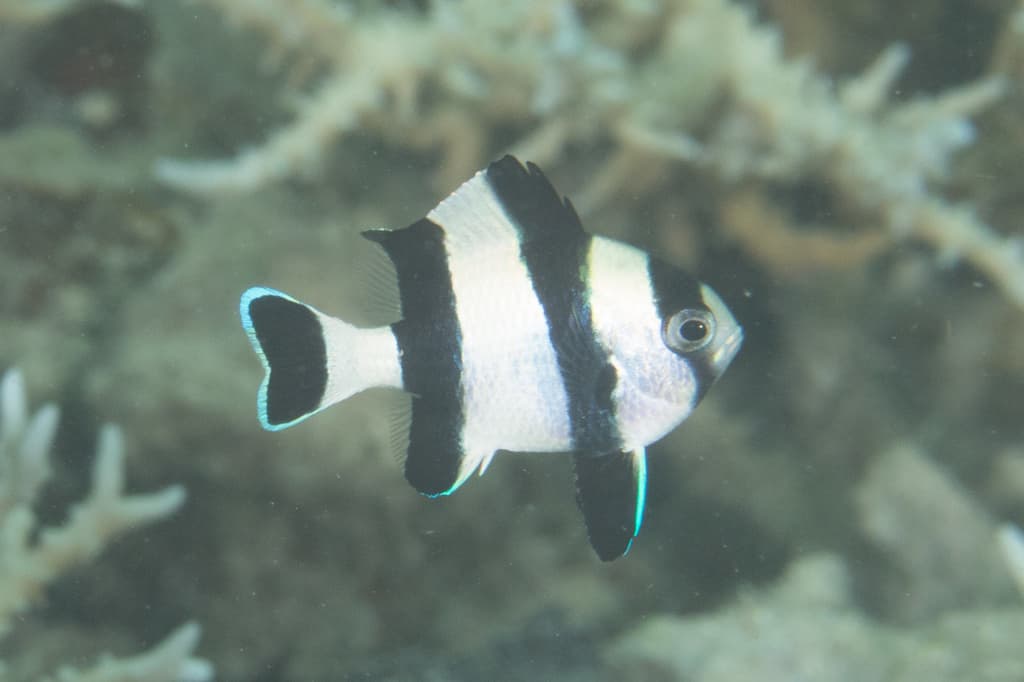
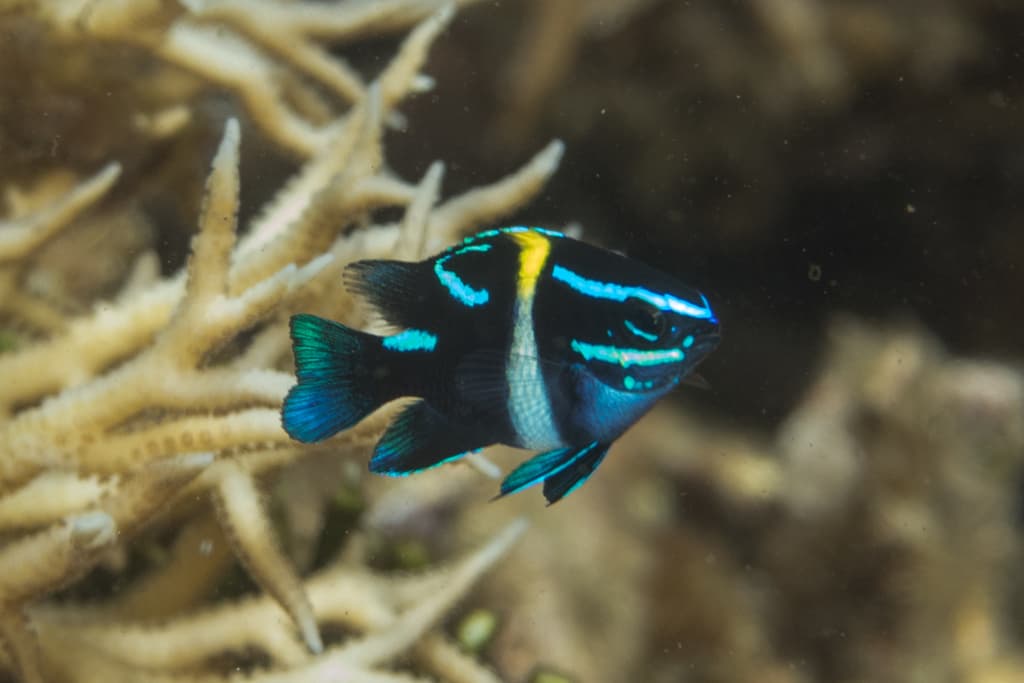
The Blue-green Damsel is a striking but challenging damselfish species that undergoes a dramatic color transformation as it matures. Juveniles are spectacularly colored, displaying vivid neon blue and green stripes along a dark body that makes them one of the most visually appealing small reef fish available. However, as they grow toward their adult size of around 6 inches, they undergo a stark metamorphosis, turning almost entirely dark brown or black with only hints of their former brilliance remaining. This Jekyll-and-Hyde transformation catches many aquarists off guard.
In nature, Neoglyphidodon oxyodon inhabits coral-rich reef slopes and lagoons across the Western Pacific, where it feeds on a variety of foods including algae, small invertebrates, and notably, coral polyps. This dietary preference for coral tissue makes it unsuitable for reef aquariums containing prized stony or soft corals. Adults become increasingly bold and territorial, claiming large sections of reef as their own and aggressively driving away intruders many times their size.
Due to its eventual large size, aggressive disposition, and tendency to nip at corals, the Blue-green Damsel is best suited for fish-only or fish-only-with-live-rock systems. Aquarists who purchase juveniles for their stunning coloration should be prepared for a fish that will grow into a dark, pugnacious territory holder. A minimum tank size of 55 gallons is recommended, with plenty of rockwork for shelter. Despite these challenges, the species is extremely hardy, disease-resistant, and long-lived, making it an easy fish to maintain from a husbandry standpoint.
Feeding & Diet
Omnivore
Blue-green Damsels are omnivores that consume algae, zooplankton, small benthic invertebrates, and coral polyps in the wild. In captivity, they readily accept flakes, pellets, frozen mysis shrimp, brine shrimp, and chopped seafood. Include algae-based foods for balanced nutrition. Their willingness to consume coral polyps makes them unsuitable for reef tanks with prized coral colonies. Feed two to three times daily.
Compatibility
aggressiveterritorialnot-reef-safefish-only
The Blue-green Damsel becomes increasingly aggressive as it matures and will bully smaller, more timid tankmates. It is best housed with similarly sized or larger assertive fish such as tangs, large angelfish, and triggerfish. Keep only one per tank unless the system is very large with distinct territories. Its habit of nipping coral polyps makes it unsuitable for reef aquariums with valued coral colonies.
Check CompatibilityBreeding
Difficult
Little is documented about captive breeding of the Blue-green Damsel. Like other damselfish, they are likely substrate spawners with the male guarding the eggs. The species' aggressive nature and large adult size make breeding pairs difficult to establish without conflict. Larvae would require standard damselfish rearing protocols with rotifers and copepods.
Special Requirements
- Not reef safe - will nip at coral polyps
- Juveniles undergo dramatic color change to dark adults
- Requires large tank due to adult size and territorial nature
- Best suited for fish-only or FOWLR setups
- Provide ample rockwork for territories
Water Parameters
Temperature72–82°F
Specific Gravity1.02–1.026 sg
pH8.1–8.4
Alkalinity8–12 dKH
Coloration
bluegreenblackneon
Tags
aggressiveterritorialnot-reef-safefish-only